7 Books That Celebrate Black Women
Books centered on Black women challenge narratives, and capture the full range of Black womanhood.
 Black News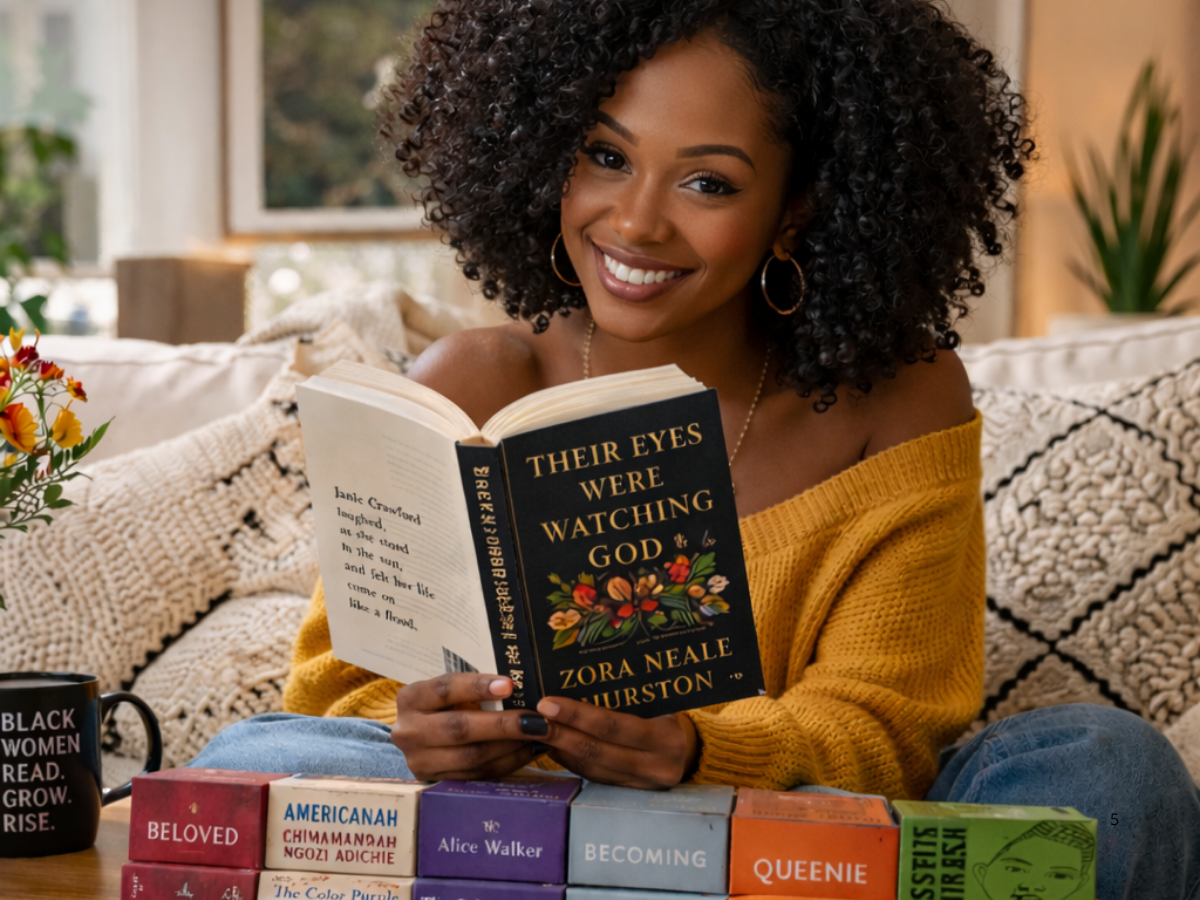

There is something powerful and sacred about seeing yourself on the page. Not as a stereotype or a side character. But fully formed. Complex, soft and strong at the same time.
At a moment when conversations around representation, identity, and cultural ownership are louder than ever, books centered on Black women aren’t just stories—they’re necessary. They preserve history and challenge narratives while reminding Black women that their lives are not only valid but worthy of being centered.
Here are seven books that celebrate Black women in all their brilliance.
1. Their Eyes Were Watching God — Zora Neale Hurston

A cornerstone of Black literature, this novel follows Janie Crawford’s journey through love, independence, and self-discovery in the early 20th century South.
Why it resonates:
Hurston gave us a Black woman who wasn’t defined solely by struggle, but by her search for fulfillment and voice—something still radical today.
Themes: Love, autonomy, self-realization
Why read it now:
Because the idea of Black women claiming their own happiness—on their own terms—still feels like an act of rebellion.
2. Beloved — Toni Morrison

A haunting and layered story about Sethe, a formerly enslaved woman forced to confront the trauma of her past—literally and spiritually.
Why it resonates:
Morrison doesn’t just tell a story—she excavates history. She forces readers to sit with the emotional aftermath of slavery through a deeply personal lens.
Themes: Trauma, motherhood, memory, survival
Why read it now:
Because understanding the depth of generational trauma is key to understanding the present.
3. Americanah — Chimamanda Ngozi Adichie

This contemporary novel follows Ifemelu, a Nigerian woman navigating race, identity and belonging in America.
Why it resonates:
It captures the layered experience of Blackness across cultures, especially through the lens of immigration and assimilation.
Themes: Identity, race, love, diaspora
Why read it now:
Because conversations about race in America are still evolving—and this book remains one of the sharpest examinations of it.
4. Finding Me — Viola Davis

In this raw and deeply personal memoir, Viola Davis traces her journey from a childhood marked by poverty and trauma to becoming one of the most celebrated actresses of her generation.
Why it resonates:
Davis doesn’t just share her success—she lays bare the pain, insecurity and survival that shaped her. It’s a reminder that behind every “strong Black woman” narrative is often a story of being forced to endure far too much, far too soon.
Themes: Trauma, resilience, identity, self-worth
Why read it now:
Because “finding yourself” isn’t a one-time moment—it’s a lifelong process, especially for Black women who’ve had to fight to be seen, heard and valued.
5. Becoming — Michelle Obama

A deeply personal memoir tracing Obama’s journey from the South Side of Chicago to the White House.
Why it resonates:
It offers a rare, intimate look at ambition, doubt, and grace under pressure—from one of the most visible Black women in modern history.
Themes: Ambition, identity, public life, resilience
Why read it now:
Seeing a Black woman navigate power with authenticity remains both inspiring and instructive.
6. Queenie — Candice Carty-Williams

A raw, modern story about a young Black British woman navigating heartbreak, mental health, and self-worth.
Why it resonates:
It’s messy. It’s honest. And it refuses to present Black women as perfect or unbreakable.
Themes: Mental health, identity, relationships, healing
Why read it now:
Because vulnerability deserves just as much space as strength.
7. Sister Outsider — Audre Lorde

A collection of essays and speeches that confront racism, sexism, homophobia, and the power of speaking truth.
Why it resonates:
Lorde’s words feel as urgent today as they did decades ago—challenging readers to confront injustice head-on.
Themes: Activism, identity, intersectionality, power
Why read it now:
Because silence has never been an option—and Lorde reminds us why.