Alternative Leadership As A Decolonial Paradigm
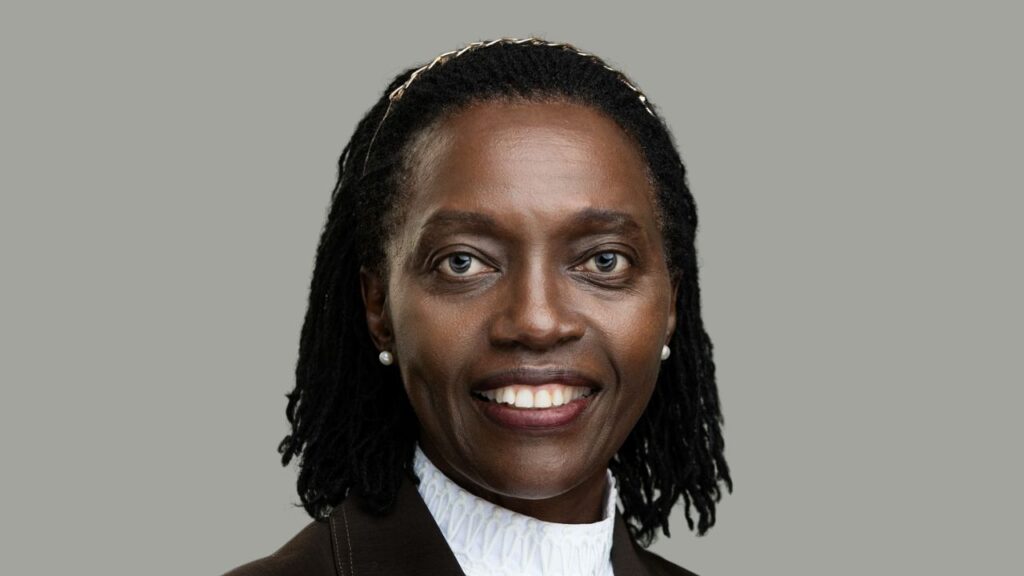
A keynote address by Hon. Martha Karua at the launch of the Inuka! Angaza Kura campaign and platform. The post Alternative Leadership As A Decolonial Paradigm first appeared on The Elephant.
 Black News

Sarova Stanley, Nairobi | 11 November 2026
Theme: Reimagining Leadership, Reclaiming Citizen Agency
Dr. Kawive Wambua;
The leadership and team of Inuka Kenya Ni Sisi!;
Representatives of civil society;
Distinguished guests;
Fellow Kenyans:
Good morning.
Thank you for inviting me to join you at the launch of the Inuka! Angaza Kura Campaign.
Your theme, “Reimagining Leadership, Reclaiming Citizen Agency,” brings us to the central question of our democracy: The Constitution proclaims Sovereignty of the people, but who truly exercises power in Kenya?
Is it the citizen whose taxes sustain the state, whose labour builds the economy, and whose vote confers authority? Or is it the officeholder who, once elected, hijacks power and behaves like the master, relegating citizens to subjects?
What must the citizens do to reclaim their agency, their power?
You have asked me to reflect on “Alternative Leadership as a Decolonial Paradigm.”
The language may sound academic, but the issue is profoundly practical.
It concerns the relationship between a Kenyan citizen and the person entrusted to serve them. It concerns whether a police officer offers protection or inspires fear; whether a public office provides a service or demands a favour; whether public money builds opportunity or finances private privilege.
Above all, it concerns whether independence has become an everyday experience of dignity and quality services for us.
From subjects to citizens
The colonial state was organised to control people and extract resources. Its authority flowed downwards. The population was expected to comply, while those who governed were insulated from meaningful accountability to the governed.
Independence was supposed to transform that relationship.
Yet changing the nationality of those occupying public office could not, by itself, dismantle the habits, incentives and institutions of domination, without changing the mindset of the office holders. Understanding leadership to be service and sacrifice, rather than entitlement and a life of privilege at the expense of basic needs for the people. Imagining leadership as an opportunity to ensure protection of the rights of the people and to uphold and affirm the dignity of the people you serve. Ensuring that, as a leader, you remain loyal to the purpose- service with openness and accountability. These are the minimum standards demanded by the constitution we gifted ourselves.
Whenever leadership demands obedience without accountability, the colonial model or inheritance survives. Whenever citizens must seek political patronage to obtain public services, it survives. Whenever criticism is treated as disloyalty, it survives.
Decolonising leadership therefore requires us to confront the exercise of power in our own time.
We must ask whether the state serves citizens as people with rights, or manages them as subjects who should remain grateful for favours.
A hospital is a public responsibility. A road is a public investment. Education is an investment in the nation’s future. Every service by leaders is part of their duty to us, funded by our taxes, not a favour.
None of these should become a personal gift for which citizens owe a politician their silence. Service should not be in exchange for citizens losing their freedom to exercise their right to demand accountability. Service must never be at the cost of citizens losing their agency, their power to oversee leaders, the government.
An alternative must be radically different in word and deed.
Comrades,
The word “alternative” carries an obligation.
Those of us who seek to offer alternative leadership must demonstrate how we would govern differently. We must affirm our allegiance to the Constitution, whose main objective is to restrain, or in other words, limit the exercise of power. Alternative leadership must affirm citizens’ right to seek accountability and readiness to vacate office should citizens unequivocally so demand. The Alternative leadership must pledge allegiance to the Constitution and the people of Kenya, and affirm the sovereignty of the people. Demonstrate an understanding that leadership is a privilege to serve, not a title deed to rule over the people. Our utterances and actions as alternative leadership must so demonstrate.
It is insufficient to condemn arrogance in government while practising it within our political parties. We cannot promise inclusion while silencing young people and women in our own organisations. We cannot demand transparency from others while avoiding scrutiny ourselves.
Our credibility begins with our conduct.
An alternative worthy of public trust must be rule-based, and must make room for disagreement. It must select leaders through fair processes, disclose conflicts of interest, reject political violence, and accept that public office is a temporary responsibility.
This includes me and all my colleagues. I believe this is our obligation, as people offering an alternative, rather than more of the same.
I have offered myself for the presidency in the 2027 General Election because I believe Kenya deserves an alternative. An alternative grounded in constitutionalism, integrity, economic justice, and respect for the sovereignty of the people. I believe we can build a government that treats public resources as a trust, not a source of private enrichment; an economy that rewards hard work and creates opportunity; and institutions that serve citizens rather than those who happen to occupy positions of power.
Citizens should scrutinise my record, question my proposals and hold me to the standards I ask of others. No leader should seek exemption from accountability because of past service, personal sacrifice or political popularity.
This is the alternative I offer to Kenyans. But let me also say that the transformation of a nation cannot be the work of one individual. No president, however capable, can substitute for strong institutions, active citizens, and a society that demands accountability. That is why we should be individually and collectively intentional, as we elect all six leaders on the ballot, not just the president.
Reclaiming the citizen’s voice
This is why the Inuka! Angaza Kura Campaign matters.
By inviting Kenyans to define the leadership values they expect, identify potential leaders, and share electoral experiences, this initiative can help reverse a familiar political habit: politicians prescribing the choices while citizens are asked only to applaud.
The conversation should begin with the citizen.
What does a mother seeking treatment for her child expect from government? What does a graduate searching for work need from the economy? What does a farmer require to earn a fair return? What would make a person living with a disability an equal participant in public life?
Citizens’ experiences must shape our political priorities.
Citizen agency means having the knowledge, confidence, organisation and freedom to influence decisions. It extends beyond voting day into public budgeting, community organising, oversight and the daily demand for fair treatment.
A citizen who asks how money was spent is exercising responsibility. A journalist investigating wrongdoing is performing a public service. A young person questioning authority deserves an answer. A citizen scrutinizing the record of aspiring leaders, including incumbents who put themselves forward for re-election, is exercising responsibility, and sovereignty as the employer for the journalist b being sought.
Leadership should welcome that scrutiny.
Dignity must govern the use of power
A different political culture must begin with respect for human life and dignity.
No administration should treat abduction, torture or unlawful killing as instruments of governance. No family should have to search for a loved one while public institutions evade responsibility.
Security must mean that people are safe, including when they disagree with those in power.
Likewise, accountability must reach those who command institutions, authorise expenditure and make decisions. It cannot end with the most junior officer while the powerful remain beyond examination.
We must build a culture in which evidence matters, investigations are credible, and justice is pursued without political favour or revenge.
The same principle applies to public resources.
Every diverted shilling has a human consequence: medicine unavailable, a classroom unfinished, a supplier unpaid, an opportunity lost.
Alternative leadership must make public expenditure understandable and open to scrutiny. Citizens should be able to establish what was purchased, what it cost, who supplied it and whether it was delivered.
Economic freedom and freedom of thought
Political freedom becomes fragile when poverty leaves citizens vulnerable to coercion.
When access to work, relief or opportunity depends on political loyalty, hardship becomes a means of control.
Our responsibility is to expand people’s independence through education, productive work, accessible services and fair economic opportunity, as well as continuous civic engagement.
We must free political debate from the assumption that ethnicity determines judgment.
Our communities give us identity, belonging and cultural richness. But no politician owns a community’s conscience. No Kenyan should be instructed to excuse misconduct because the person responsible speaks their language.
We can cherish our identities while demanding the same standards of every leader.
Turning participation into lasting power
As this campaign develops, I encourage you to connect digital participation with community engagement.
Reach citizens who lack smartphones or reliable internet. Use accessible formats and languages people understand. Protect participants’ personal information. Make space for disagreement, and establish fair ways to assess the information people submit.
Above all, show citizens what happens after they contribute.
Participation loses meaning when people speak, and nothing responds. Its value grows when their concerns become public questions, their proposals shape commitments, and those commitments can be tracked.
Let this platform help citizens ask every aspiring leader:
What have you done? What are you proposing? How will it be financed? How will we measure delivery? And how will you answer for failure?
These questions should follow us beyond the campaign platform and into office.
The republic we must build
Fellow Kenyans,
The biggest change we seek is a relationship in which public power recognises its limits and citizens recognise their strength.
We should judge leadership by whether institutions work fairly even when the leader is absent; whether services reach people without political intervention; and whether citizens can challenge authority without fear.
That is the promise we must make real.
Let us build a Kenya in which dignity requires no connection, opportunity requires no patron, and justice requires no permission from the powerful.
As we launch the Inuka! Angaza Kura Campaign, let us commit to an active, informed and organised citizenry that can choose leaders wisely and hold them accountable consistently.
Inuka, Kenya. Ask the difficult questions. Examine the answers. Organise peacefully. Participate fully.
The republic belongs to its people, and its leadership must always answer to them.
Thank you.
The post Alternative Leadership As A Decolonial Paradigm first appeared on The Elephant.