Are Ethiopia and Eritrea already at war?
Ethiopia’s Prime Minister Abiy Ahmed Ali began a new term this October facing renewed instability in the north of the country, while renewing a commitment to regain his country’s maritime access. Is the Horn of Africa close to an interstate war, or is it already in one? Just hours after PM Abiy Ahmed was sworn […] The post Are Ethiopia and Eritrea already at war? appeared first on New African Magazine.
 Black News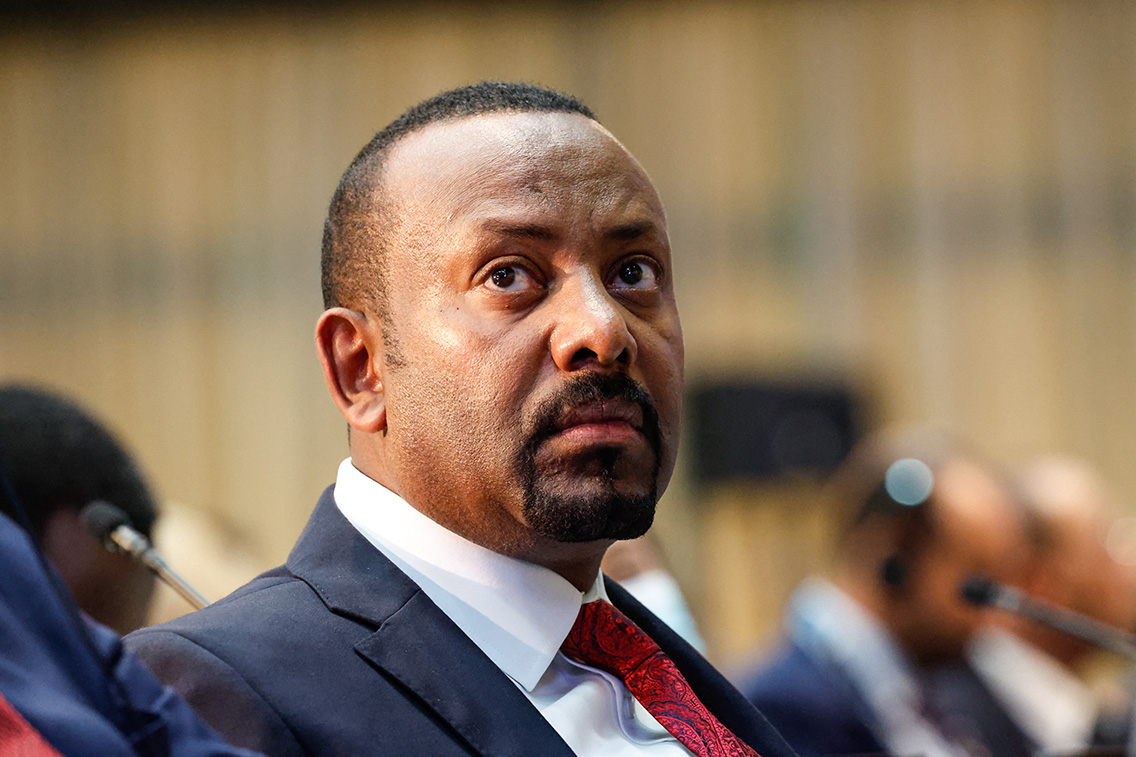
Ethiopia’s Prime Minister Abiy Ahmed Ali began a new term this October facing renewed instability in the north of the country, while renewing a commitment to regain his country’s maritime access. Is the Horn of Africa close to an interstate war, or is it already in one?
Just hours after PM Abiy Ahmed was sworn in 5th October, the Tigray People’s Liberation Front (TPLF) confirmed to the BBC that it had withdrawn from Mekelle, the capital of the Tigray region in northern Ethiopia, in what it said is a deliberate strategy to choose the staging ground for conflict with the Ethiopian federal forces.
Ethiopia has accused its neighbour Eritrea of sending troops across the border into northern Tigray to support the TPLF, and the two countries have since severed all diplomatic ties with each other. Eritrea has denied all claims that it has sent troops across the border.
A recent Reuters report indicates that Ethiopian troops have moved into a town in the northernmost part of the country, near the border with Eritrea, stoking fears of direct conflict between the two forces.
The reports and preceding events have triggered a renewed flurry of diplomatic effort to avert an all-out war, as analysts rightly fear such escalation would not be contained.
“Outright conflict between Ethiopia and Eritrea would likely spread to the Red Sea, disrupting the African side of this strategic waterway,” the International Crisis Group said in a recent analysis. “It could also prove to be yet another front in the Horn that is easy to open and hard to close, especially once it becomes entangled in the mesh of disputes among neighbours and across the region.”
The real question right now might be whether the two countries are not headed into war, but are already in one.
Schrodinger’s war
Both Asmara and Addis Ababa have sent letters to the United Nations Security Council, stating starkly different positions.
In his letter, Eritrea’s foreign minister Osman Saleh said that escalation would ‘destabilise the whole region’ while Ethiopia’s new foreign minister Gedion Timothewos said Asmara’s actions ‘engage Ethiopia’s inherent right to self-defence.’
In his letter, Saleh accuses Addis Ababa of a ‘declaration of war’ to forcibly regain ‘sovereign access to the sea,’ while Timothewos’ letter accuses Eritrea of an ‘all-out invasion,’ following reports that Eritrean troops had crossed the border to support the TPLF’s rear flank.
That distinction in perspective matters, as it shows one side believes interstate war has already begun, while the other denies it.
What’s clear, though, is that Ethiopia’s periodic internal conflicts have escalated.
In September, the TPLF and six other groups formed a loose coalition that they said was focused on toppling Abiy’s Medemer government. The TPLF, which formed the core of Ethiopia’s power structures before 2018, has said it has many grievances, including that crucial parts of a previous peace deal had not been met.
This led to an internal power struggle that saw the deposition and exile of Tigray’s interim president Getachew Reda from Mekelle to Addis Ababa in mid-2024, where he became Abiy Ahmed’s advisor. Reda has since returned to the Tigrayan capital after federal forces retook it.
The dispute has also drawn in Sudan, which neighbours both Ethiopia and Eritrea. Khartoum accuses Addis Ababa of harbouring a Rapid Support Forces (RSF) camp, a claim supported by a Reuters investigation in February.
Addis Ababa, in turn, has accused Khartoum of hosting a rebel outfit called Army 70, and deploying it against the RSF in Sudan’s civil war, as well as allowing its territory to be used by other Ethiopian militant groups.
Access to the sea
While the immediate cause of the conflict might be Ethiopia’s internal conflicts, it is also deeply linked to Addis Ababa’s changing political and economic structures, and its lasting ambition of maritime access.
During his first speech after being sworn in for a new term, Ahmed said that his government “…will work diligently to ensure that Ethiopia has an outlet to the sea.”
The commitment was not new, and it has been repeated several times, much to the chagrin of Ethiopia’s Red Sea-facing neighbours. It has been particularly unnerving for Eritrea, whose secession in 1991-1993 left Ethiopia landlocked. Addis Ababa dissolved its navy three years later, but has been planning to revive it as part of military reforms since at least 2010.
Perhaps more telling of its ambitions, Ethiopia retained the national shipping line owned and run by the country’s sovereign wealth fund, which has restructured the company in recent years.
Ethiopia now relies primarily on the Port of Djibouti and Somaliland’s Berbera port for maritime trade, and has been exploring other regional port options in Somalia and Kenya. But the lasting ambition to restore its own direct access to the sea has remained, and now forms a core ambition of PM Abiy Ahmed’s government.
What was new about the ‘access to the sea’ statement was that by October, both Ethiopia and Eritrea were on the brink of war, or at least one side believed the other had already crossed a red line.
Where all this sits in the next few weeks and months will depend on whether diplomatic efforts can pull the two countries and the broader region from the brink of war, and finally find lasting solutions to the core issues.
The post Are Ethiopia and Eritrea already at war? appeared first on New African Magazine.