‘Craziest Thing I’ve Ever Seen’: Black Woman Forced to Attend Florida Court Hearing from Hospital Bed After Refusing C-Section During 12-Hour Labor
A Black mother of three went to the hospital to give birth to her fourth child — but was shocked to find that 12 hours […] ‘Craziest Thing I’ve Ever Seen’: Black Woman Forced to Attend Florida Court Hearing from Hospital Bed After Refusing C-Section During 12-Hour Labor
 Black News

A Black mother of three went to the hospital to give birth to her fourth child — but was shocked to find that 12 hours into her labor, she was forced to attend a virtual court hearing to decide whether she should undergo a C-section against her will.
Cherise Doyley was admitted to the University of Florida Health in downtown Jacksonville last September after her water broke, ProPublica reported. As an experienced birthing doula, she had a plan for how she wanted to deliver her baby.
After three prior C-sections, including one that resulted in a hemorrhage and a lengthy recovery, she wanted to avoid a fourth to steer clear of any potential complications. She sought to deliver her baby vaginally and told doctors again and again that she wouldn’t undergo a cesarean unless the vaginal delivery failed.
Hours into her contractions, her doctors started to stress that Doyley could suffer a uterine rupture, a potentially deadly complication, if she didn’t undergo a C-section.
Doyley refused.
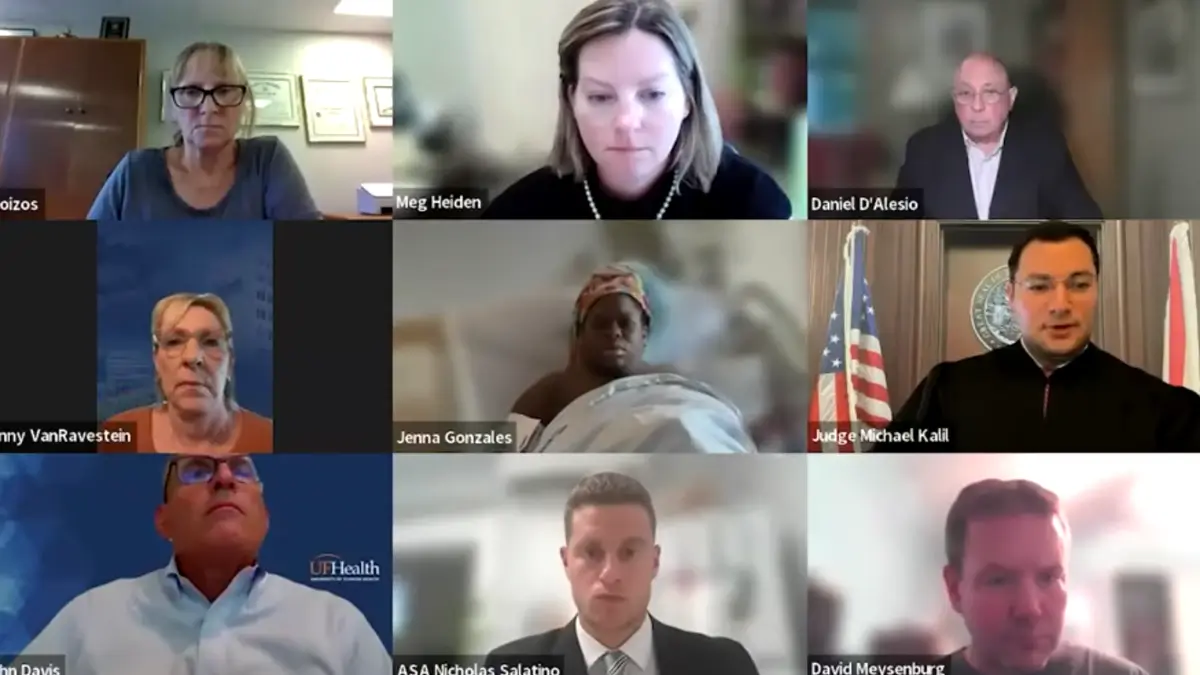
After her 12th hour in labor, hospital staff members wheeled a table carrying an electronic tablet into Doyle’s hospital room. On the tablet was a Zoom meeting with a Florida judge and several doctors and attorneys, most of them white. Doyley is seen on screen covered by a sheet and hooked up to IVs and monitors.
She’s greeted by Judge Michael Khalil, who informs her that the state of Florida is requesting a court order to perform an emergency C-section.
“It’s a real judge in there?” Doyley asked one of the nurses. “Now this is the craziest thing I’ve ever seen.”
During the three-hour hearing, Doyley testified that she understood there is less than a 2 percent risk of suffering a uterine rupture during vaginal delivery and noted that her situation was not an emergency. A doctor on Zoom argued that a long labor could increase the likelihood of the complication, which could kill Doyley and her baby.
At one point, Doyley asked whether there were any Black doctors she could see and to be transferred to another hospital.
When a judge questioned how race factored into the quality of care she was receiving, Doyley informed him that she had a better chance of receiving better care from a hospital staff with her background.
“It’s nobody Black in here,” Doyley said to a crowd of still faces. “I’m over this whole situation.”
In the end, the judge did not order an immediate C-section and ordered that Doyley not undergo the procedure unless it was an emergency.
Hours later, Doyley was rushed into surgery after the baby’s heart rate dropped for several minutes, and she gave birth via C-section.
The next morning, she was brought back into a final virtual hearing, even though she still hadn’t been taken to see her daughter in the neonatal intensive care unit.
“Tell them I don’t want to be on,” she said. “Y’all can have your own meeting. I want to see my child.”
Judge Khalil dismissed the case after learning the child had been born.
In Florida, fetal personhood is a concept with considerable backing. These policies regard unborn babies as people who have legal rights from the moment they’re conceived. Back in November, the Florida Senate passed a controversial bill that would preserve this concept as a law and give people the power to sue for damages for the wrongful deaths of unborn children.
The legislation has intensified debate around the concept. While supporters believe it gives unborn children equal legal standing in criminal law, critics argue that it could nullify a pregnant patient’s health care decisions and make it so that they are forced to undergo care and treatment against their will.
According to ProPublica, lawyers representing women in fetal personhood cases reported a higher number of forced C-sections in Florida than in other states.
Months after her daughter was born, Doyley said she’s still left shaken at the thought that the hospital could force her to have surgery.
“When we use the courts to basically strong-arm, bully someone into an unnecessary medical procedure against their will, it’s akin to torture, in my eyes,” Doyley said.