Dangote Picks Kenya’s Lamu for Second Refinery In Africa
Aliko Dangote has chosen Lamu, Kenya for his second oil refinery — a rare move, as almost no African businessman has built refining capacity at this scale.
 Black News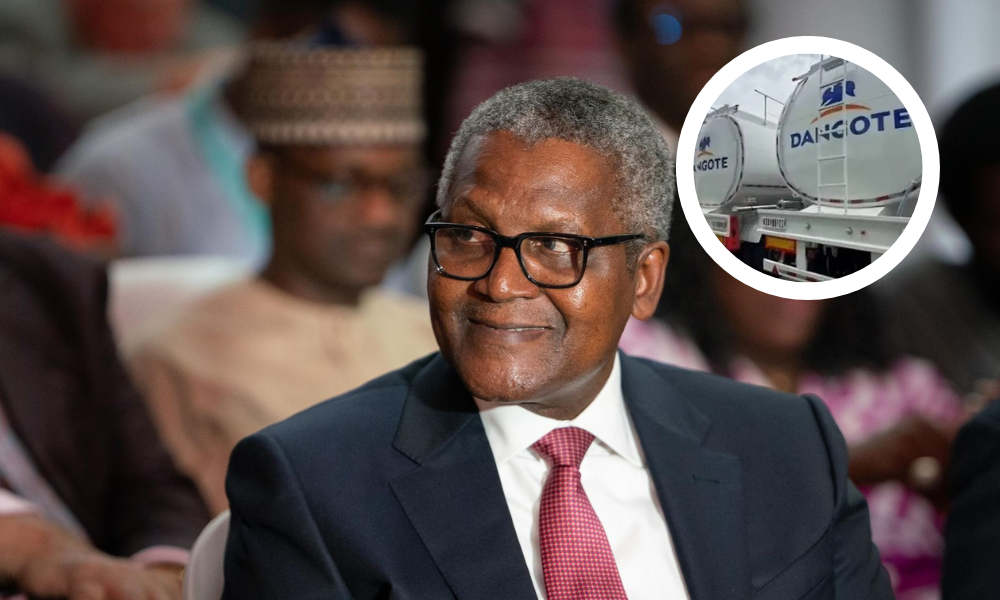
Nigerian billionaire Aliko Dangote has settled on Lamu, an island off Kenya’s northern coast, as the site for his second oil refinery — and his first anywhere outside Nigeria. The move positions Lamu as the next hub for Dangote Group’s refining ambitions in East Africa.
Why Lamu Won
Dangote had initially explored building the refinery at Tanga, a port city on Tanzania’s northeastern coast, in a plan that would have linked the facility to Mombasa by pipeline. That changed after Tanzanian President Samia Suluhu Hassan did not align with the proposal, capping months of competition between the two countries to host the project.
Edwin Devakumar, Dangote Group’s vice president for oil and gas, said the switch to Kenya came down to commercial, logistics and infrastructure advantages — Lamu’s deep natural harbor can accommodate large crude tankers that cannot call at Mombasa, giving the site both import and export capability. Site selection is complete, soil testing is underway, and design and engineering work has started.
ALSO READ: Investing in Africa’s Future: Impactful Projects and Case Studies
A Rare Move for an African Industrialist
Building a second refinery in a different country would be unusual anywhere — but it’s especially rare in Africa, where large-scale refining has almost entirely stayed in state hands. Roughly 46 refineries operate across the continent, the vast majority state-owned, and many run well below capacity after years of underinvestment.
Nigeria’s own state refineries — in Port Harcourt, Warri and Kaduna — remain largely non-functional despite billions of dollars in maintenance spending over two decades. Dangote’s Lagos facility is widely credited as Nigeria’s only fully operational refinery, public or private.
No other African businessman has built and operated a refinery at comparable scale, which is part of why analysts see the Lamu project as a genuine industry first rather than simply an expansion.
What the Kenya Plant Would Do
The planned refinery would process 700,000 barrels of crude a day, making it East Africa’s largest, and would supply refined fuel to Kenya and neighboring markets that currently import nearly all their petroleum products.
That mirrors the role the Lagos refinery has played in West Africa since starting commercial operations in 2024, where it has already begun supplying countries including Ghana, Cameroon and Angola.
Financing and Ownership
According to Reuters, Dangote Group plans to fund the Kenya project through a mix of internally generated cash, bond issuance and proceeds from a planned initial public offering, as part of a broader $40 billion investment strategy across the continent that also covers petrochemicals, fertilizer and mining. Kenyan President William Ruto announced in May that construction was expected to begin this year.
The Precedent Dangote Set
Industry analysts say the fact that Dangote has already built and operated a refinery of comparable scale — using a private-sector balance sheet rather than state or multilateral financing — is the single strongest signal of the Kenya project’s credibility.
Earlier attempts to build large refineries in East Africa have stalled over funding gaps and shifting government priorities. Dangote’s Lagos track record is seen as changing that calculus, even as the Kenya project’s ultimate success will still depend on financing, regulatory support and execution.
Quick Facts
- Where is Dangote building his Kenya refinery? Lamu Island, off Kenya’s northern coast.
- Is this Dangote’s first refinery outside Nigeria? Yes — his only other refinery is in Lagos, Nigeria.
- How big will the Kenya refinery be? 700,000 barrels of crude a day, making it East Africa’s largest.