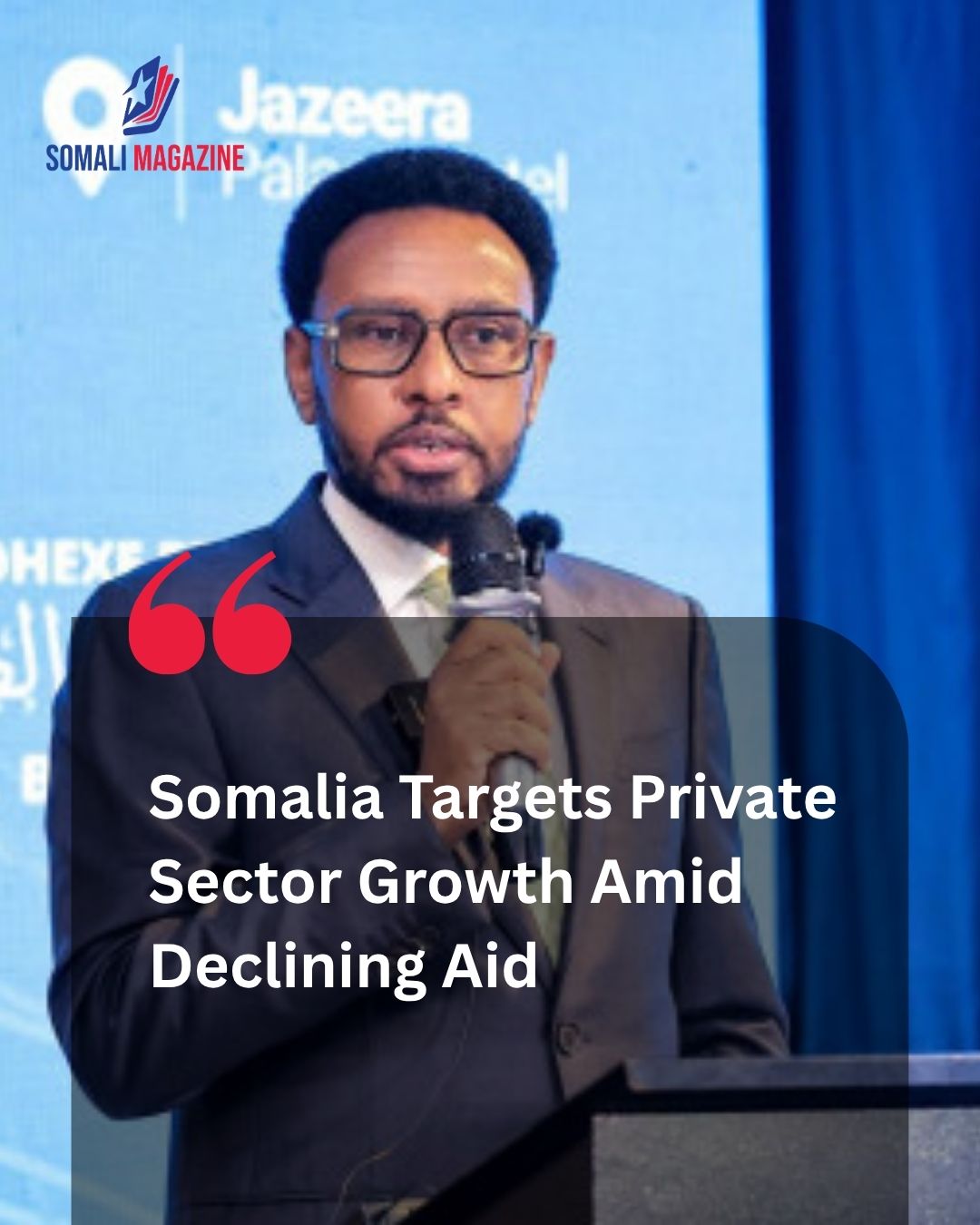
Somali finance minister warns of falling income, urges private sector growth as the Federal Government navigates a tightening fiscal environment characterized by a significant reduction in international financial support. Speaking on Tuesday at the 4th Economic Policy Conference in Mogadishu, organized by the Central Bank of Somalia, Minister Bihi Imaan Egeh revealed that foreign assistance to the country has declined by 25 percent over the 2024 and 2025 fiscal years. Describing the trend as a serious challenge to long-term stability, Egeh cautioned that between $450 million and $600 million in historical annual inflows is currently disappearing, necessitating an urgent pivot toward self-reliance.
The minister emphasized that the changing global funding landscape should be viewed as a strategic opportunity for Somalia to strengthen its own economic foundations. While acknowledging that the Somali economy has expanded significantly over the past decade—rising from approximately $150 million to $2.3 billion—Egeh stressed that current reliance on external grants, which account for nearly 65 percent of the national budget, remains unsustainable. To mitigate the risks associated with donor funding fluctuations, the government is prioritizing modernized tax administration, expanded customs collection, and the creation of an investment-friendly climate to drive domestic revenue generation.
A key pillar of this reform agenda is the empowerment of the private sector, which the minister identified as the “backbone of economic development”. Data from the financial sector indicates positive momentum; commercial bank lending to private enterprises has nearly doubled over the last five years, reaching roughly $500 million. However, Egeh noted that a persistent structural challenge remains: capital is not yet sufficiently flowing into productive sectors—such as agriculture, livestock, and industry—that are essential for job creation and sustainable GDP growth. He called upon financial institutions to realign their portfolios to support domestic production rather than focusing exclusively on short-term service-oriented trade.
As Somalia implements IMF-supported economic reforms, the government’s focus remains on institutional strengthening and financial inclusion. With the 2026 federal budget projecting a fiscal deficit of approximately $29 million, officials argue that broadening the tax base and fostering a competitive business environment are no longer optional. By transitioning away from aid dependence, the administration aims to secure the fiscal autonomy necessary to fund essential public services and infrastructure, ensuring that Somalia’s growth is driven by local innovation and resilient market activity rather than external volatility.


 Black News