Ethiopia’s Election and the Death of Political Choice
When people say Ethiopia’s 2026 election will not be free or fair, they are right. But that description is still too soft for what is taking shape. It suggests a flawed democratic exercise. What Ethiopia is facing is even more serious. The problem is no longer just about how votes will be counted on election day. It is about how the political field has been emptied long before ballots are cast. The governing Prosperity Party has preserved the outer shell of electoral democracy while stripping away the conditions that give elections meaning. Parties still exist on paper. Election institutions still […] The post Ethiopia’s Election and the Death of Political Choice appeared first on African Arguments.
 Black News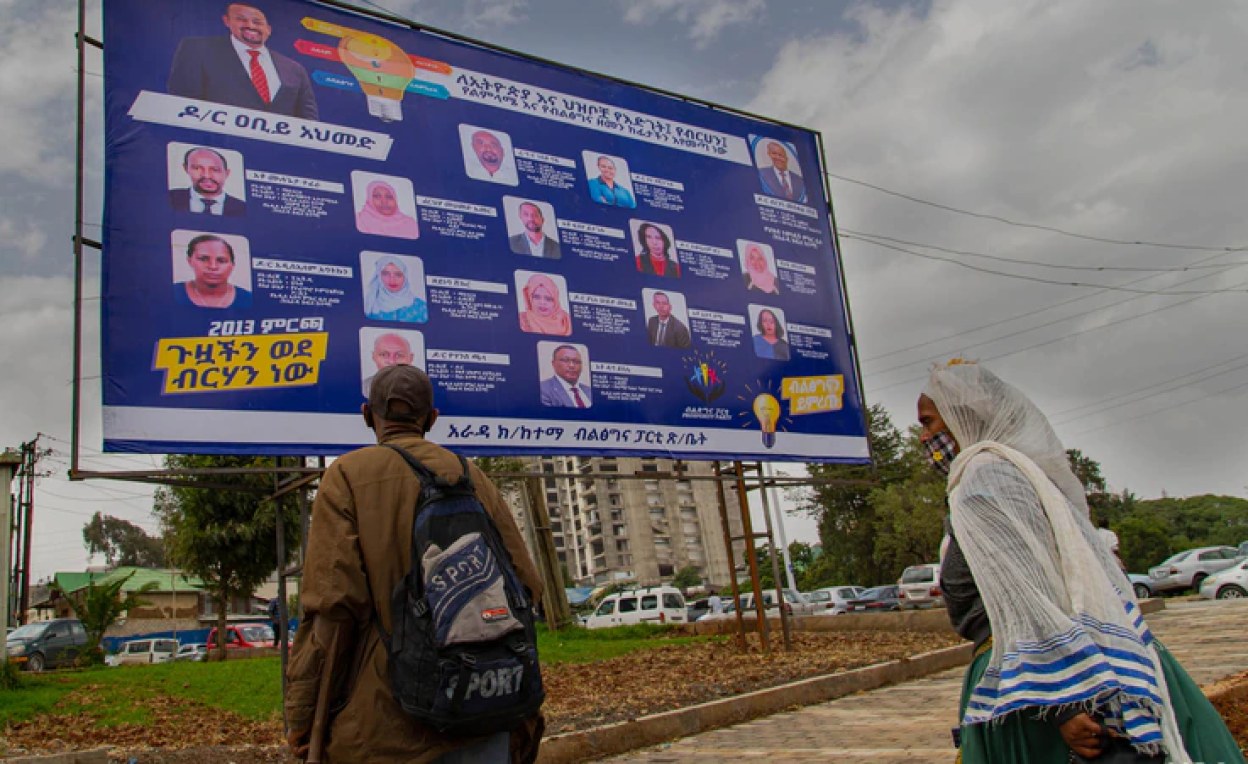
When people say Ethiopia’s 2026 election will not be free or fair, they are right. But that description is still too soft for what is taking shape. It suggests a flawed democratic exercise. What Ethiopia is facing is even more serious. The problem is no longer just about how votes will be counted on election day. It is about how the political field has been emptied long before ballots are cast.
The governing Prosperity Party has preserved the outer shell of electoral democracy while stripping away the conditions that give elections meaning. Parties still exist on paper. Election institutions still operate. Laws are still passed through parliament. Electoral procedures are still invoked. Yet the substance of democratic choice has been systematically removed.
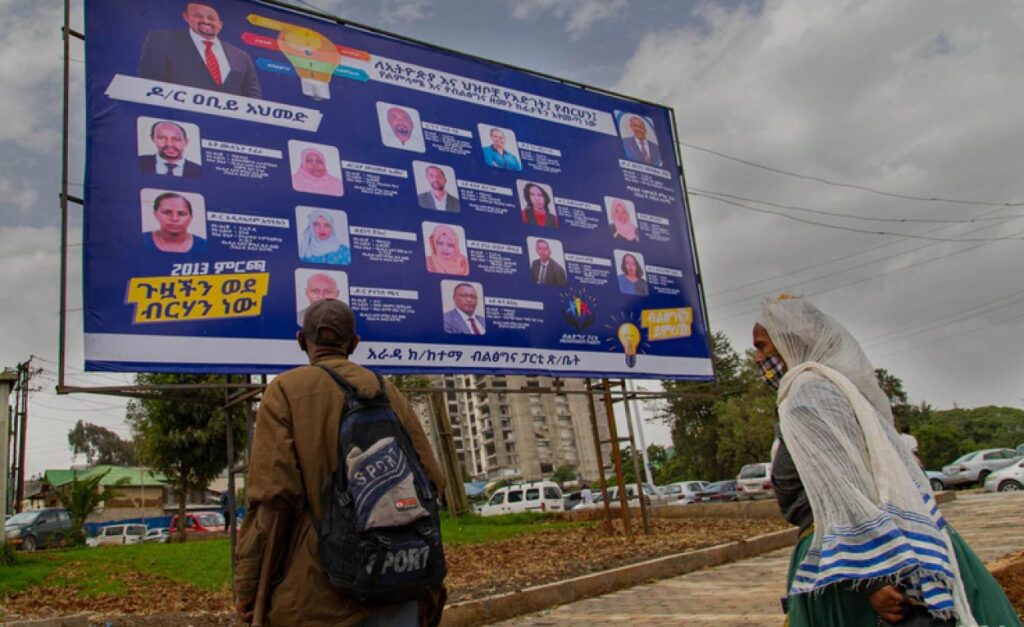
This is why the usual language of electoral malpractice does not fully capture the moment. Ethiopia is moving toward a form of rule that can be called procedural authoritarianism. That means a system in which authoritarian power is entrenched through legal forms, administrative rules, and institutional procedures rather than through the open cancellation of pluralist politics. It is harder to confront because it looks disciplined, regulated, and formally lawful. That is what makes it dangerous.
The 2021 election was the warning. The Prosperity Party won 455 of 471 contested seats. However, entire constituencies could not vote because of war entire constituencies could not vote because of war. In Oromia, more than a hundred constituencies were contested by a single candidate. Even then, the result was often described as a democratic exercise that had fallen short. That reading missed the point. The election showed that a government could preserve the machinery of elections while removing the conditions that make elections able to expressing the popular will.
In June 2025, parliament adopted a new Civil Society and Media law that bars organizations receiving foreign support from engaging in voter education, election monitoring, or political advocacy. In a country where independent observation has long depended on some external technical or financial support, that restriction is devastating. It shuts down the civic infrastructure needed to scrutinize an election before the election even begins. Because the law leaves key terms vague, especially around what counts as political advocacy, enforcement can become whatever the state wants it to be.
The same pattern appears in the media environment. In April 2025, parliament amended the media law to increase journalists’ criminal exposure for inaccurate reporting. In Ethiopia’s present context, that functions less as regulation than as intimidation. When reporters already struggle to access conflict-affected areas, and when information from those areas is already difficult to verify, the threat of criminal sanction encourages self-censorship.
The damage is not abstract. Journalists have fled. Others have been detained. Internet shutdowns in conflict zones have cut communities off from the wider country and from the outside world. A state cannot claim to hold a meaningful election while depriving large parts of the country of the basic ability to speak, report, organize, and document.
The same logic is visible in the treatment of opposition parties. The National Election Board of Ethiopia revoked the registration of the Tigray People’s Liberation Front (TPLF) in May 2025. In democratic terms, the significance is not merely that a well-known party was delisted, but that the TPLF remains the dominant political force in Tigray, so its exclusion narrows the main channel through which many Tigrayans can participate in federal politics at the very moment when the post-Pretoria order is supposed to restore Tigray’s representation within the constitutional system. Major opposition parties later declared jointly that there is no foundation for democratic process in the country. The Oromo Federalist Congress has said it cannot carry out meaningful political activity outside Addis Ababa. Senior Oromo political figures were detained for years despite court orders for their release. These are not isolated defects. Together, they describe a system in which organized opposition is allowed to exist in theory while being neutralized in practice.
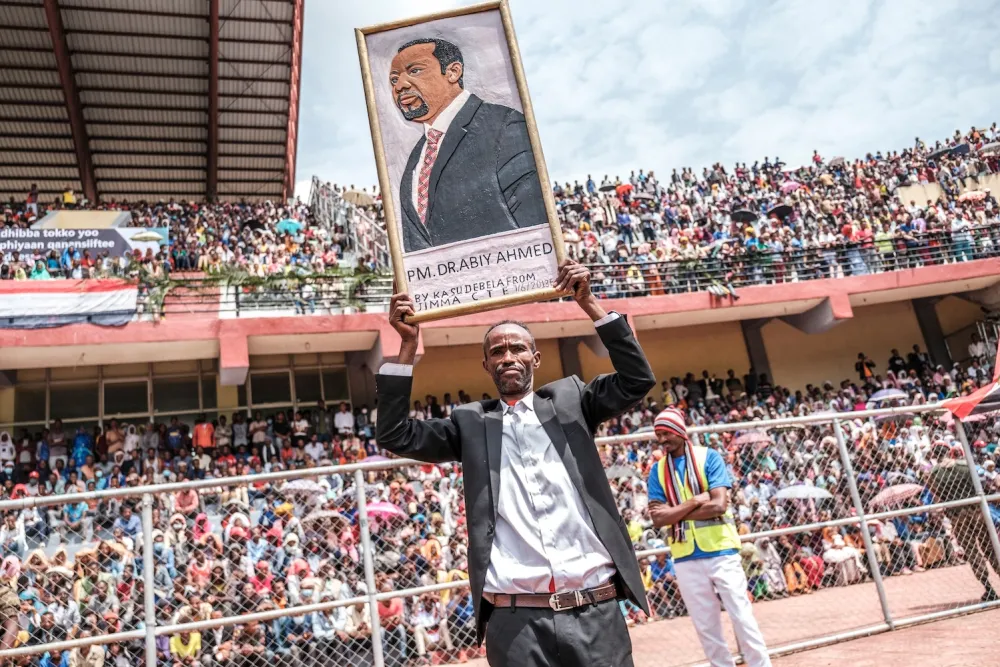
And then there is territory. A credible national election requires a political community able to participate across a national space. Ethiopia does not meet that condition. In Amhara, the conflict between government forces and Fano has made large areas effectively inaccessible to normal political life. In Oromia, the conflict involving the Oromo Liberation Army continues to make whole zones insecure. In Tigray, disputes over contested districts leave the legal and practical basis of voting unresolved. The election board’s own security classification for areas acknowledges the obvious fact that large parts of the country cannot participate on equal terms. The practical result is that voting will be concentrated in government-controlled urban spaces while much of the rest of the country remains politically disabled.
Under Article 25 of the International Covenant on Civil and Political Rights, citizens have the right to vote and be elected in genuine periodic elections guaranteeing the free expression of the will of the electors. The Human Rights Committee has made clear that freedoms of expression, assembly, and association are essential conditions for the effective exercise of voting rights. Without them, the vote becomes hollow even if ballots are physically cast.
The same principle runs through the African Charter and the African Charter on Democracy, Elections and Governance. Elections are not legitimized by the mere existence of polling stations, electoral calendars, and official results. They derive legitimacy from open political competition, independent scrutiny, freedom to organize, and the possibility of genuine choice. Where those conditions are absent, procedure cannot save substance.
That is why Ethiopia’s 2026 election should not be understood simply as an unfair contest. It is closer to the formal ratification of a political monopoly. The outcome may produce a government. It will not produce a democratic mandate in any meaningful sense.
This should matter far beyond Ethiopia. Across Africa, incumbents have long pursued the same objectives: how to eliminate real political competition without paying the full diplomatic cost of coups, term-limit removal, or blatant ballot fraud. Ethiopia’s emerging model offers an answer. Keep the institutions. Preserve the legal forms. Regulate civic life into submission. Fragment the opposition. Restrict the media. Allow insecurity to swallow whole regions. Then hold the election anyway and present the result as constitutional order.
That model is far more difficult for regional and international institutions to challenge because it arrives with paperwork rather than military uniform. That is precisely why it can travel so well across borders.
This is where the African Union faces a serious test. If democratic standards on the continent are applied only against crude forms of authoritarianism, while legally managed political closure passes without consequence, then the continent’s normative framework will be weakened from within.
The Prosperity Party will almost certainly win the 2026 election, and the scale of that victory will be used to claim public endorsement. However, an election whose result is shaped in advance by repression, exclusion, fear, institutional capture, and territorial fragmentation does not express the will of the people. It records the success of a system designed to prevent that will from being freely formed and politically expressed.
The central question, then, is not whether Ethiopia can hold an election on 1 June 2026. It can.
The real question is whether an election held after political choice has been dismantled should still be called democratic at all.
The post Ethiopia’s Election and the Death of Political Choice appeared first on African Arguments.