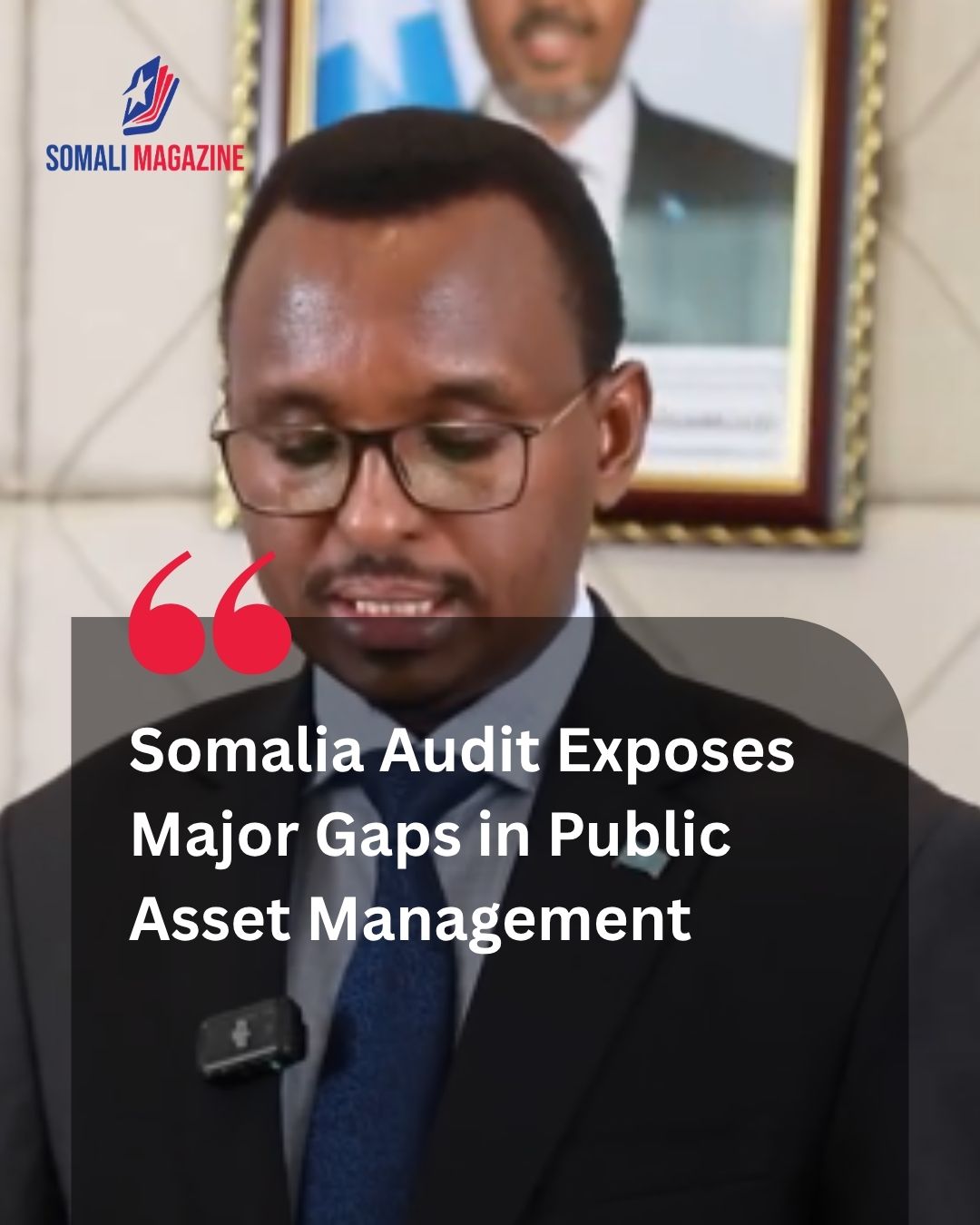
The Auditor General exposes weak public asset controls in Somalia following an extensive nationwide review that uncovered systemic gaps in legal compliance, internal auditing, and the management of public resources across federal institutions. Delivering the findings in Mogadishu, Auditor General Ahmed Isse Guutaale outlined widespread administrative irregularities across government ministries, state-owned enterprises, and internationally funded development projects. The comprehensive governance audit revealed that half of the reviewed federal agencies failed to fully operationalize or utilize internal audit systems, exposing public financial frameworks to significant operational risks.
Among the specific compliance failures highlighted in the report, the Ministry of Foreign Affairs deployed fourteen diplomats abroad without fully meeting prerequisite administrative conditions. Furthermore, nineteen employees were assigned to foreign diplomatic missions without completing mandatory diplomatic training, raising serious concerns regarding human resource oversight. The audit also identified significant verification gaps in major revenue-sharing agreements, noting that over forty-two million dollars in port revenues collected under private management concessions could not be fully verified due to missing independent financial documentation.
In addition to personnel and revenue discrepancies, the oversight body identified persistent shortcomings in the registration and tracking of government vehicles, foreign donation records, and public endowments. Financial analysts point out that seven government revenue systems remain unintegrated with the central Somali Financial Management Information System, creating serious obstacles for real-time monitoring and transparent record-keeping. Despite these institutional weaknesses, the audit noted positive developments in project oversight, successfully completing financial audits for thirty development projects funded by international partners like the World Bank and African Development Bank.
To address these systemic vulnerabilities, the Office of the Auditor General has submitted formal corrective recommendations to Parliament and the affected ministries. Officials emphasized that enforcing mandatory compliance, integrating digital revenue networks, and establishing robust asset registers are essential steps toward building public trust and satisfying international transparency benchmarks. As the federal administration evaluates the audit’s findings, governance experts stress that institutionalizing rigorous internal controls will remain fundamental to safeguarding state assets and sustaining long-term economic reforms across the nation.

 Black News