French soldiers revive a painful African memory; now the military is taking action
The French Ministry of the Armed Forces has initiated formal disciplinary proceedings against several French soldiers seen displaying flags associated with Rhodesia, the former southern African territory governed by a white minority before the establishment of modern-day Zimbabwe.
 Black News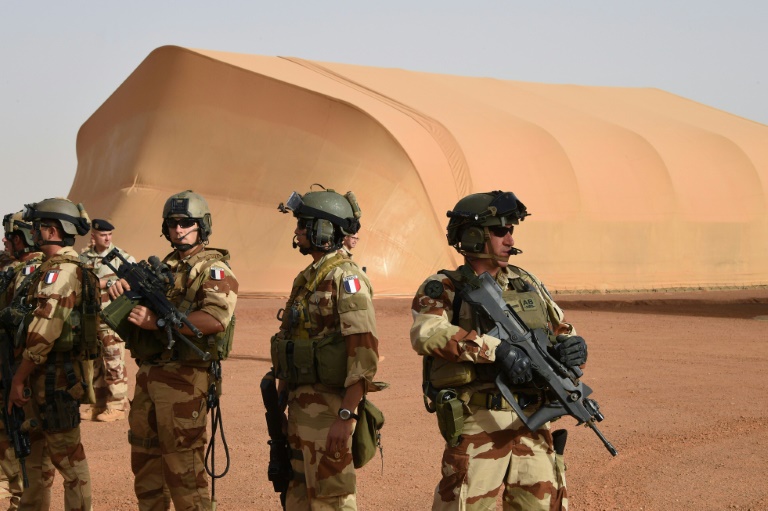

The French Ministry of the Armed Forces has initiated formal disciplinary proceedings against several French soldiers seen displaying flags associated with Rhodesia, the former southern African territory governed by a white minority before the establishment of modern-day Zimbabwe.
- The French Ministry of the Armed Forces has started disciplinary actions against service members who displayed Rhodesian flags, a symbol associated with white-minority rule.
- Those involved have been identified, and the Ministry stressed zero tolerance for racism, extremism, or supremacism in the military.
- The incidents happened separately—in Nîmes, France, and the United Arab Emirates—and there is no evidence of collusion among the individuals.
- Images of the soldiers with the Rhodesian flag were shared on social media, sometimes alongside content endorsing Rhodesia's white-minority government.
The ministry confirmed that the soldiers in question have been identified and are subject to disciplinary measures.
“The ministry's position is unambiguous: French armed forces do not tolerate any manifestation of a racist, supremacist or extremist nature,” it said.
“Military personnel are subject to a particular requirement of exemplary conduct and neutrality, which also applies to their behaviour and posts on social media.”
Furthermore, officials emphasized that the incidents were separate and distinct, with no evidence indicating collusion or a structural link between the individuals involved.
The flag in question was displayed in two separate instances involving French military personnel: one happening in Nîmes, located in southern France, and the other involving troops deployed in the United Arab Emirates.
Subsequently, the images were disseminated across social media platforms accompanied by content endorsing Rhodesia and its former white-minority government.
One of the photographs shows three military officers carrying a flag with three green and white stripes, with a coat of arms in the center featuring a pickaxe on a green background, flanked by antelopes and topped by a golden bird, investigative website Mediapart revealed, as seen on Radio France International.
Another picture shows four French troops holding a similar banner in front of a tank.
Rhodesia
Originally administered by Cecil Rhodes’ British South Africa Company, the southern African region historically called Rhodesia eventually transitioned into the modern nation of Zimbabwe.
The area was established as a self-governing British territory under the name Southern Rhodesia in 1923.
Southern Rhodesia was later incorporated into the Federation of Rhodesia and Nyasaland from 1953 to 1963, joining neighboring territories that correspond to present-day Zambia (Northern Rhodesia) and Malawi (Nyasaland).
Following the collapse of this federation, British colonial governance over Southern Rhodesia resumed.
Throughout this era, governance and political power remained concentrated within the nation's white minority population, even though black Africans comprised the vast majority of the inhabitants.
DON'T MISS THIS: France's largest carmaker sees record sales in Africa’s top car manufacturing country
Ian Smith's declaration of Zimbabwe's independence
Rhodesia's most controversial period began in 1965
On November 11 that year, Prime Minister Ian Smith and his government unilaterally declared independence from Britain in an attempt to prevent the transition to majority rule.
Britain refused to recognize the declaration, while the United Nations condemned Rhodesia and imposed sanctions.
Rhodesia subsequently became internationally isolated, although it maintained commercial, political and military relationships with several countries and companies.
In 1970, Rhodesia formally declared itself a republic.