From Chibok to Borno school attack: How Nigeria’s classrooms remain targets for kidnappers
As Nigeria continues to face a worsening security crisis, the classroom, is becoming a prime target for terrorist attacks and kidnapping. The post From Chibok to Borno school attack: How Nigeria’s classrooms remain targets for kidnappers appeared first on New York Amsterdam News.
 Black News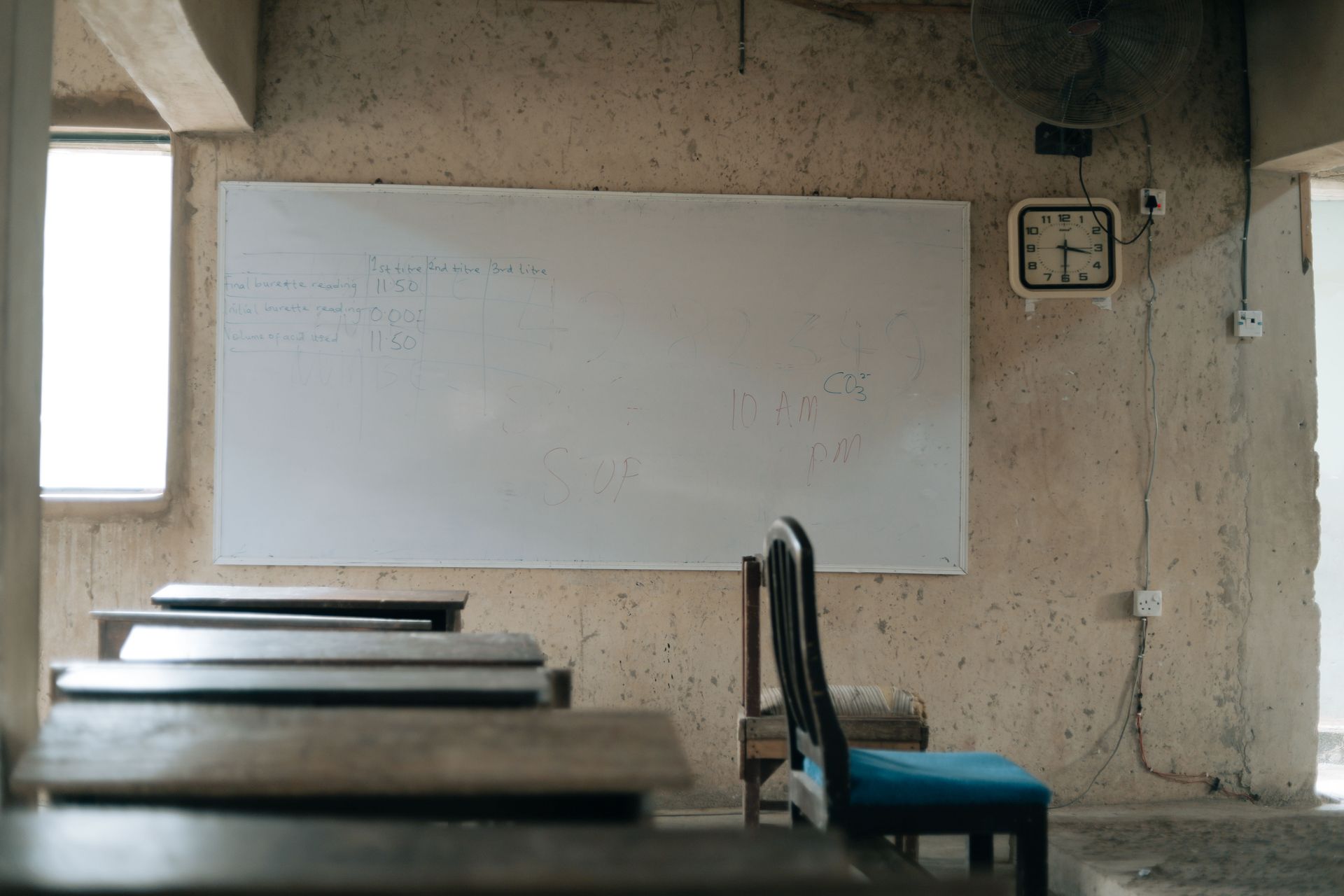

On 29 June 2026, suspected members of the Boko Haram/Islamic State West Africa Province (ISWAP) group, a terrorist organisation responsible for widespread killings and kidnappings, mainly in Northern Nigeria, attacked a government school in Lassa, Askira/Uba Local Government Area of Borno State.
This attack led to the kidnapping of 36 students sitting for the National Examination Council (NECO) exam, one of Nigeria’s secondary school leaving exams, alongside some teachers in the school.
During the attack, one teacher and a soldier were killed on the spot. Although the Nigerian security forces have rescued some persons, others remain captive in the hands of the terrorist group.
These attacks happened while students were sitting for one of the most important secondary school leaving exams in Nigeria. What should have been a stepping stone to a higher education degree was marred by violence, as students were whisked away into an unknown place in the name of terrorism.
This has raised questions about the vulnerability of students in conflict-prone environments. Despite years-long government commitment to addressing the problem, successive administrations have come and gone, yet consistent attacks on schools continue.
As Nigeria continues to face a worsening security crisis, the classroom, which was expected to be a place where children learn and interact peacefully, is becoming a prime target for terrorist attacks and kidnapping.
According to a 2023 report by Save the Child Initiative, an international non-governmental organization that champions children’s rights, more than 1,680 schoolchildren have been kidnapped in Nigeria since the 2014 Chibok abduction in Borno State.
Another report by Global Coalition to Protect Education from Attack (GCPEA) on school attacks across the globe found that between 2024 and 2025, over 700 students and education staff were kidnapped. This data ranked Nigeria among the countries with the highest numbers of students and staff killed or injured in school attacks.
Beyond the numbers, the reality remains that the classroom in Nigeria is becoming a serious target for the kidnapping business. Classrooms that bring joy to the faces of children and parents are becoming places of uncertainty and fear, as parents live in fear when their children are in school.
However, the Borno incident is not an isolated case. It is the latest in a broader pattern of school abductions that has persisted across Nigeria over the years.
Evolution of school attacks
The Borno student attacks are among the most recent series of abductions in the country that have turned schools into recurring targets of armed groups.
The pattern began in 2014, when over 276 schoolgirls were kidnapped from Government Girls Secondary School, Chibok, in Borno State by suspected Boko Haram terrorists. During the rescue mission, some of those girls have been released, others escaped, while many remain in captivity.
This incident marked the beginning of a wave of mass school abductions. Although this happened years back, the culture of such incidents is creeping deeper into the educational sector.
In 2018, four years after the Chibok incident, 100 students were kidnapped from a Government Girls Science and Technical College in Dapchi, Yobe State, marking another significant incident in the history of Nigeria. While most were later released, Leah Sharibu remains in captivity.
Between 2020 and 2021, attacks on schools were intense as thousands of students were abducted from different schools in Katsina, Niger, Zamfara, Kaduna, and Kebbi states.
Although many victims regained their freedom, some were killed in captivity, while others spent months in captivity before being released.
Meanwhile, many of the abducted female students have remained in captivity, where they have reportedly been forced into marriage and to bear children for members of the terrorist group.
While these attacks have largely occurred in Northern Nigeria over the past years, recent incidents indicate that this pattern is no longer confined to a particular region. The emergence of school kidnapping in the Southwest region is a strong indication that the threat is silently spreading across other regions.
Crisis creeping to the Southwest
Over the years, the South-West, one of Nigeria’s six geopolitical zones, which includes major economic hubs like Lagos has historically been considered peaceful and considered itself relatively isolated from such attacks.
However, that illusion was shattered on May 15, 2026, when suspected terrorists stormed three schools in Oyo State in the southwestern region, kidnapping 46 persons, including students and teachers, marking the first mass school kidnapping in the Southern part of the country.
While in captivity, one of the teachers was killed. Meanwhile, the remaining victims were released after spending 56 days in the kidnappers’ den.
The impact of this sad reality has invited fears among students and parents in different regions in the southwest.
As an intensifying security crisis rocks the country, other regions, including the North Central region (Benue, Kogi, Kwara, Nasarawa, Niger, Plateau, and the Federal Capital Territory, Abuja) and the South West (Ekiti, Lagos, Ogun, Ondo, Osun, Oyo State), are becoming new geographic targets for kidnappers.
These armed groups are not targeting schools without reason. Weak security and remote locations of many schools have made them an easy target for attacks.
When victims become bargaining chips
One notable pattern in school abduction in Nigeria is that rather than abducting a few persons, the terrorist operation usually involves dozens or even hundreds of school students, which is visible in the Chibok, Dapchi, Kankara, Jangebe, and the recent Borno attack.
Many schools that have experienced these attacks in large numbers are usually located in conflict-prone environments with lax security, which makes it easier for terrorists to abduct large numbers of students and teachers.
Unlike other forms of individual kidnapping that happen in the country, school kidnapping usually involves a large number of students used as bait to target the government.
In most cases, kidnappers request huge ransoms from the government or the release of detained members in exchange for the abductee.
Aside from financial gains, they use these attacks as a propaganda tool to gain publicity, projecting their power to instill fear in the hearts of vulnerable community members.
For instance, during the rescue operation of the now-released Oyo students, they threatened to kill the victims if their commanders in Nigerian custody were not released.
Schools are not just the target of attack; they are employed as a communication flow to the government.
However, these continuous attacks have had a long-lasting negative impact on Nigeria’s educational system.
Economic and psychological toll
The impact of these consistent attacks on schools has left deep scars on both the students and the Nigerian educational system. Beyond the trauma suffered by victims, this continued act has disrupted learning, increased the number of out-of-school children, and made many children fearful of returning to the classrooms.
According to a 2022 report by the Partnership to Engage, Reform and Learn (PERL), a programme funded by the Foreign, Commonwealth and Development Office of the UK, more than 70 percent of girls feel unsafe while on their way to school in Jigawa State.
Another report by the United Nations Children’s Fund (UNICEF) in 2024 shows that 10.2 million children of primary school age and another 8.1 million of junior secondary school age are out of school. The report further explained that attacks on schools in the country have highly contributed to this decline. Between 2022 and 2023, there were 29 documented attacks leading to the closure of 113 schools in Borno, Adamawa, and Yobe states due to insecurity.
The report stated that this disruption to learning contributes to gaps in children’s knowledge and skills and may lead to the loss of approximately 3.4 billion USD in these children’s lifetime earnings, which further perpetuate cycles of poverty and inequality.
Importantly, Nigeria is already burdened by a large out-of-school population compounded by insecurity, increasing the risk of long-term exclusion from education. If not addressed promptly, the educational system of the country could result in long-term drastic collapse as classrooms become a terror zone for students.
Aminu Alhussaini, a conflict reporter based in Sokoto, agrees that attacks on schools disrupt learning, increase school dropout rates, discourage qualified teachers from accepting postings in vulnerable areas, and create lasting psychological trauma for students and educators.
As attacks on schools continued, successive governments introduced several initiatives aimed at protecting schools and restoring public confidence. But how successful are their policies
Have government policies succeeded
Following the Chibok school girls’ abduction in 2014, the Safe Schools Initiative (SSI) was designed to address school attacks and ensure a safe space for school children across the country was launched at the World Economic Forum on Africa under the administration of Goodluck Jonathan.
Despite billions of Naira invested in this project, attacks on school students across the country have multiplied. According to UNICEF, over 1,680 schoolchildren have been abducted in Nigeria since the 2014 Chibok schoolgirl kidnapping.
Meanwhile, a 2024 report by UNICEF states that only 37 percent of schools surveyed had early warning systems capable of identifying threats such as school attacks, noting that schools still lack basic systems needed to prevent or respond to attacks.
During former President Muhammadu Buhari’s regime in 2019, he signed the Safe Schools Declaration, signalling a global political commitment to protect students, teachers, and schools from attacks during armed conflict.
Despite billions of Naira allocated to fund school initiatives in Nigeria to protect schools, students, and teachers, schools have continued to face repeated attacks, which are becoming a booming business for terrorists.
These, among other policies, have been introduced and approved by the government, but despite the budget to protect school students, Nigeria continues to experience constant attacks on schools.
Speaking with Mohammed Babangida, Senior Reporter, HumAngle Media, a media platform in Nigeria, he agrees that the safe school policies have truly failed, citing corruption and other bureaucratic issues with little to no security deployment or CCTV installation in schools prone to attack.
“The number of security agents in schools is also insignificant. I’ve seen some schools located in volatile communities with two or three policemen,” he said.
However, following the recent incident of mass student abduction in Oyo and Borno States, the House of Representatives on Wednesday called for a comprehensive investigation into the country’s multi-billion naira security initiatives launched since 2014.
Aminu Alhussaini also argued that school safety initiatives have not succeeded over the years due to inconsistent implementation nationwide, limited resources, and broader insecurity.
Has attacks continued despite government policies to address the issue, experts say stricter and more coordinated measures are needed to protect schools.
Way forward
Speaking on ways to protect schools, Mr Aminu suggests that the Federal and state governments should strengthen intelligence gathering and increase security around schools identified as vulnerable in the country.
Furthermore, he added that the government should improve school infrastructure with perimeter fencing, secure gates, alarm and communication systems, and establish rapid-response mechanisms.
In Sokoto and other states, sustained cooperation among government, security agencies, school authorities, and community leaders will be essential to keeping schools safe and ensuring that children can learn without fear.
On the part of Mr Mohammed, the Federal government must secure all areas where the terrorists use as hideouts. He further noted that social problems tied to terrorism should also be tackled as seriously as economic issues.
Lastly, he encouraged both states and the federal government to stop paying ransom to terrorists or swapping students with arrested prisoners.
“I know that this will be difficult because this is a democratic dispensation. We’re also emotional, as no one would have their wife, children, parents, or relatives abducted and refuse to pay ransom for the person to be released. But the huge ransom money given to terrorists not only emboldens them, but they also use the money to acquire more weapons.”
Conclusion
More than a decade after the Chibok tragedy, attacks on schools have continued to expose deep gaps in the Nigerian educational system. Unless school safety measures are effectively implemented and stronger protection is provided to vulnerable communities, Nigeria’s classrooms may continue to be places of fear rather than learning.
The post From Chibok to Borno school attack: How Nigeria’s classrooms remain targets for kidnappers appeared first on New York Amsterdam News.