Gold and uranium rich Niger shaken by fresh coup threat as soldiers attack presidency 3 years after military takeover
Niger is facing fresh political uncertainty after mutinous soldiers attacked strategic sites in the capital, Niamey, including the international airport and presidency, in one of the most serious challenges to the military government since it seized power in 2023.
 Black News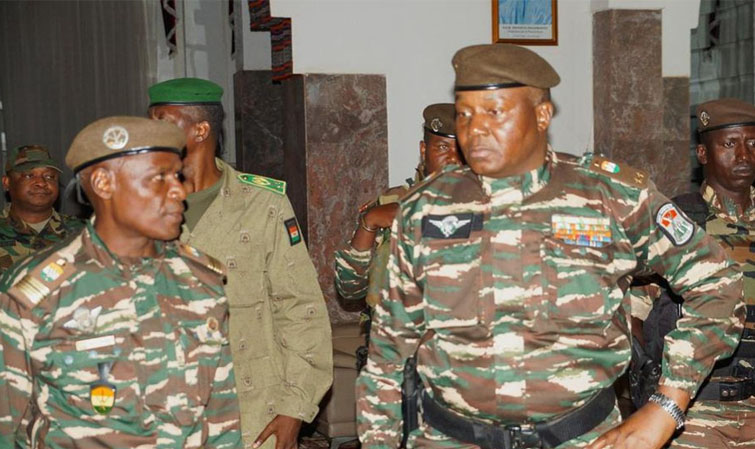


Niger is facing fresh political uncertainty after mutinous soldiers attacked strategic sites in the capital, Niamey, including the international airport and presidency, in one of the most serious challenges to the military government since it seized power in 2023.
- Mutinous soldiers attacked strategic sites in Niamey, including the airport and presidency, sparking fears of another coup in Niger.
- This incident poses a major test for Niger’s military rulers, particularly Gen. Abdourahamane Tchiani, amid ongoing security challenges from Islamist militants.
- Niger has a long history of coups and shifting alliances, and an internal military revolt further challenges its stability and leadership legitimacy.
- The unrest began with a rebellion at a military base, reflecting deep frustrations among some frontline troops over the ongoing insurgency.
Heavy gunfire and explosions were reported across several parts of Niamey overnight into August 29, particularly around Diori Hamani International Airport, the nearby Base 101 military installation and the presidential district.
The unrest quickly raised fears of another coup in Niger, Africa’s second-largest uranium producer and a gold-producing West African country, with multiple reports describing the uprising as an attempted takeover by disgruntled members of the armed forces.
Soldiers attempt to storm presidential palace
“There was an attempt by insurgents from the Nigerien armed forces to enter the presidential palace,” a security source told AFP, adding that they “were pushed back by the presidential guard”.
As clashes spread through the capital, soldiers blocked access to the presidential palace while state television went off air for more than an hour before broadcasts resumed.
The Financial Times reported that the uprising was an attempted coup led by young officers unhappy with the government of Gen. Abdourahamane Tchiani.
Reuters reported that the assault involved soldiers from Ouallam, Tera and Dosso in south-western Niger, areas where troops have suffered heavy losses fighting armed groups linked to al-Qaeda and Islamic State.
That has added a wider security dimension to the unrest, with frustration reportedly growing among some frontline soldiers over the government’s handling of the insurgency.
Government says it is regaining control
Niger’s authorities said the unrest began when mutinous soldiers held colleagues hostage at Base 101 before opening fire on sensitive locations across Niamey.
State television later reported that the soldiers had fired on “sensitive sites” before security forces “contained this disturbance.”
Defence Minister Gen. Salifou Mody described the uprising as a “break with discipline and military regulations” and said loyalist forces were gradually restoring control.
By late morning, the presidential palace appeared to have been secured by loyal troops, although security sources told Reuters that mutineers were still present around the airport and the wider situation remained unclear.
Major test for Niger’s military rulers
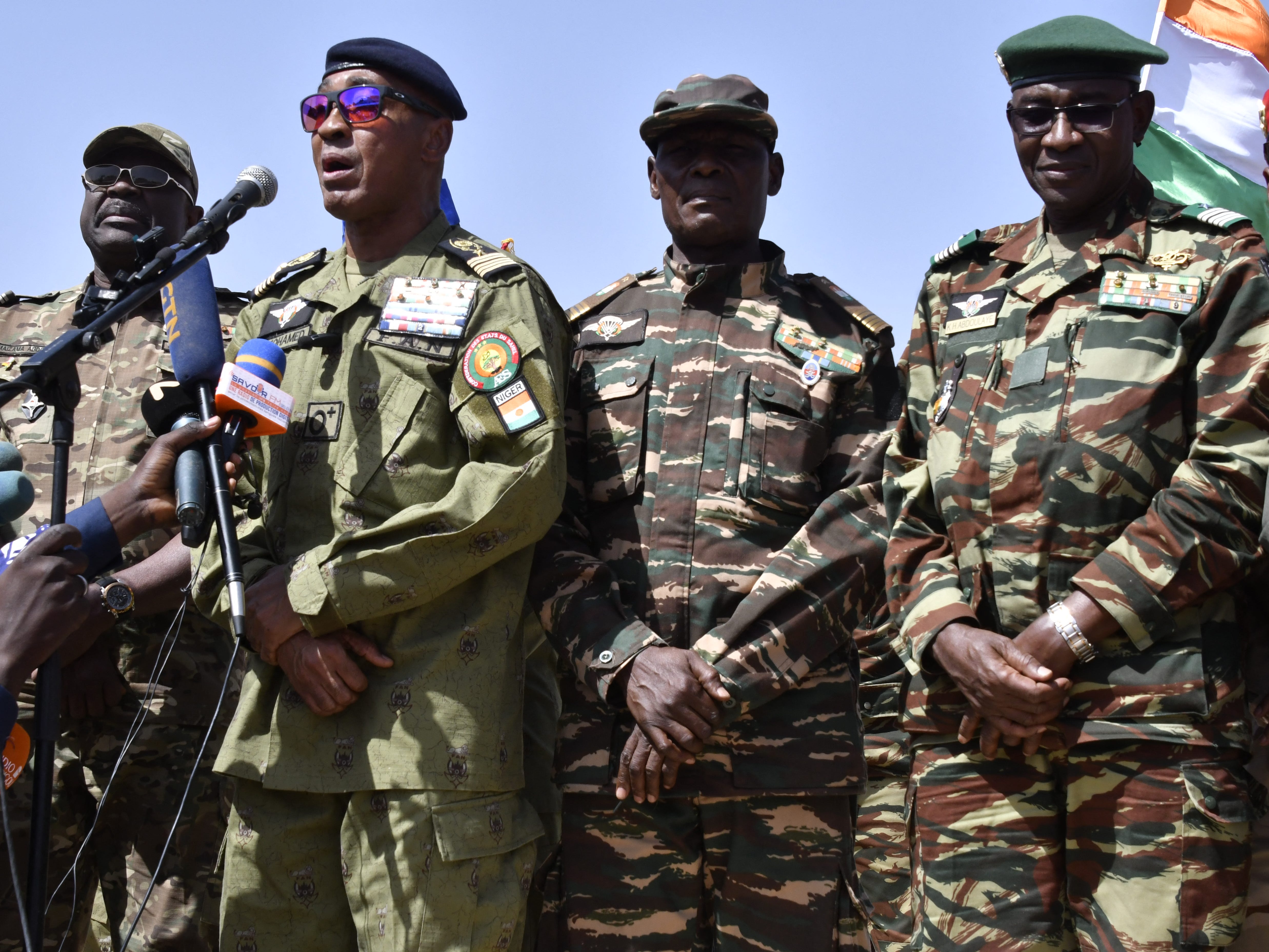
The unrest presents a serious challenge for Tchiani, who has ruled Niger since the military overthrew President Mohamed Bazoum in July 2023d was formally sworn in as president in March 2025 under a five-year transition charter
Security was central to the junta’s justification for taking power, but Niger has continued to suffer deadly attacks from Islamist militant groups across the Sahel.
The latest unrest is particularly significant because the threat came from within Niger’s own armed forces rather than from the jihadist groups that have driven much of the country’s insecurity.
It therefore raises fresh questions about cohesion inside a military establishment that came to power promising greater security and political stability.
Niger’s long history of coups
Niger has experienced repeated military interventions since gaining independence from France in 1960, with successful coups in 1974, 1996, 1999, 2010 and most recently in 2023.
Since taking power, Tchiani’s government has also reshaped Niger’s foreign relations, distancing itself from France and other Western security partners while strengthening ties with Russia.
Niger has also joined Mali and Burkina Faso in the Alliance of Sahel States after the three military-led countries withdrew from ECOWAS.
For now, the government says it remains in control, but an armed rebellion that reached the gates of the presidential palace raises fresh doubts over the stability of a regime that itself came to power through a coup while promising better security.