From Partnerships to Impact: AAUN Sets a New Five-Year Agenda
lligence and digital futures. ]\AAUN Unveils New Five-Year Strategy Centered on ‘Mission-Driven’ Collaboration A new…
 Black News

lligence and digital futures.
]\AAUN Unveils New Five-Year Strategy Centered on ‘Mission-Driven’ Collaboration
A new five-year strategy has been launched by the Australia-Africa Universities Network (AAUN), placing a significant emphasis on what it terms “mission-driven collaboration.” This strategic pivot moves beyond traditional academic exchange, reframing the partnership as a purposeful alliance designed to address pressing global challenges.
The ultimate community value of this initiative lies in its potential to foster a more resilient, equitable, and prosperous future for both regions, moving from shared aspiration to tangible action.
The strategy is structured around five major pathways, including the expansion of a joint research and innovation platform, the strengthening of academic diplomacy, and the development of a Future Scholars Programme. These are complemented by a firm commitment to demonstrating measurable impact and continuing to build sustainable, long-term partnerships. The framework identifies five priority areas for collaborative research, ranging from climate action and public health to artificial intelligence and sustainable food systems, all of which are of critical importance to communities on both continents.
A conference presenter speaking at an AAUN event in Perth Australia (Photo source Curtin Uni)
For the African diaspora in Australia, this strategy represents a powerful opportunity to reconnect with and contribute to the development of their home continent. By participating in the AAUN’s research and diplomacy initiatives, African-Australian academics and professionals can leverage their unique cultural insight and dual expertise to shape solutions that are both globally informed and locally relevant.
This engagement offers direct pathways to leadership roles, facilitating a meaningful bridge between their adopted home and their countries of origin, thereby enhancing their professional standing and sense of purpose.
For Africans residing within the continent, the benefits are equally concrete and transformative. The strategy provides direct access to seed funding, like the 2026 Partnership & Research Development Fund, which empowers African researchers to lead projects that tackle localized challenges in water security, renewable energy, and digital infrastructure. This collaborative model shifts the dynamic from one of aid to one of equitable partnership, ensuring that research agendas are driven by African priorities and that local institutions are strengthened through knowledge sharing and capacity building.

The AAUN’s focus on the next generation of researchers is designed to secure long-term, sustainable impact. With initiatives like the Early Career Researchers Group, the Emerging Leaders in Australia-Africa Diplomacy programme, and a prize for early-career research excellence, the strategy is deliberately cultivating a pipeline of future leaders. For African scholars, this means unparalleled opportunities for international networking, professional development, and mentorship, which are crucial for advancing their careers and influencing policy within their own national contexts.
The operational framework for this ambition is supported by targeted funding. The AAUN’s Partnership & Research Development Fund will provide up to eight seed grants in the 2026 round, with awards slated to be presented at the upcoming AAUN Australia Forum. These grants are not merely financial; they are catalysts for action, enabling joint teams to pilot innovative solutions and build the foundational evidence needed to secure larger, more sustained investments from governments and industry.

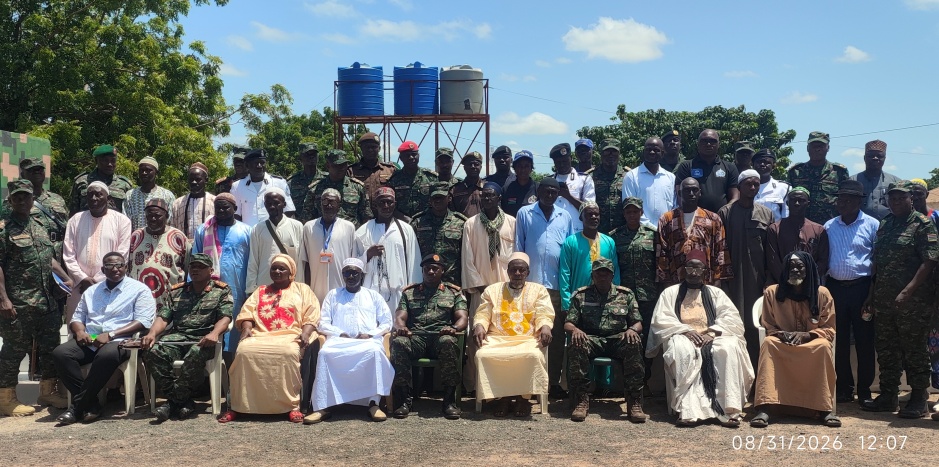
Representatives of AAUN posing for a photo during an event
AAUN Co-Chairs A/Prof David Mickler and Prof Aldo Stroebel have framed the strategy as a crucial blueprint for the network’s future. They emphasize its role as a framework for realizing a shared vision, achieving measurable outcomes, and deepening cooperation. The plan recognizes that the greatest challenges—and opportunities—facing the two regions require a collective, deeply collaborative response that actively involves academics, policymakers, and community stakeholders.
This forward-looking vision is set to be discussed in detail at the AAUN Australia Forum 2026, scheduled for 1 September 2026 at Edith Cowan University’s City Campus in Perth. The forum will convene a diverse group of stakeholders to deliberate on the future of the Australia-Africa relationship and the vital role of higher education. By centering the voices and needs of African communities both in Australia and on the continent, this strategic plan positions the AAUN as a vital engine for inclusive growth and shared prosperity, turning academic collaboration into a powerful force for positive change.
J.D Sharady | AMA contributor
END
AAUN is the flagship institutional network bringing together member universities from across the Australian and African continents through equitable, innovative and impactful partnerships. Established in 2012, AAUN facilitates quality collaborative research and policy advocacy to address common and comparative challenges facing science and societies, builds knowledge and research capacity in people and institutions, and pursues academic diplomacy and science communication through engagement with key stakeholders to support the deepening of Australia-Africa literacy and cooperative relations
The Perth meeting also provides a practical setting for the new strategy to move from policy into implementation. The network’s performance will be assessed through measures including research outputs, forum participation, early-career engagement, external partnerships, policy influence and the distribution of research funding.
For a network spanning two continents, the next five years will therefore be measured not only by the number of partnerships it supports, but by the research, people and institutional relationships those partnerships produce.
The release of the 2026–2030 plan signals the beginning of that next phase, with Perth providing the first major forum for members and partners to consider how the strategy can shape Australia’s academic and research engagement with Africa over the years ahead.
Post from Lueth Akue