Gov. Brian Kemp’s New Law Doesn’t Apply To 154 Georgia Counties. Only The Black Ones
Gov. Brian Kemp has signed House Bill 369 into law that will make most local elections in five metro Atlanta counties nonpartisan.
 Black News
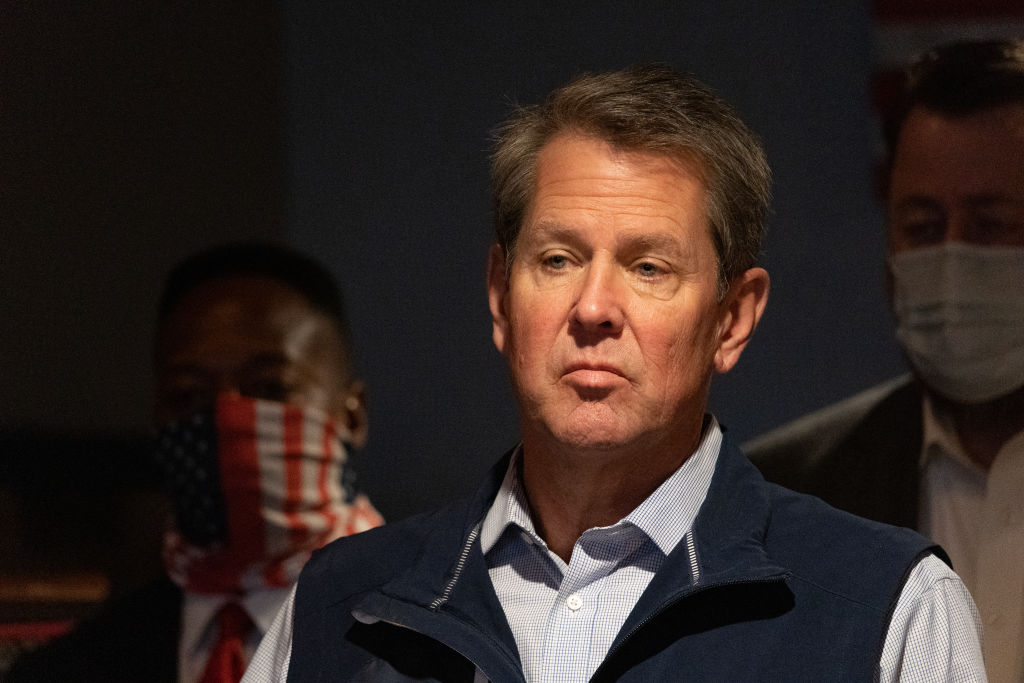
Gov. Brian Kemp has signed legislation known as House Bill 369 that will make most local elections in five metro Atlanta counties nonpartisan, meaning candidates will run without party affiliation or designation, according to reports from WSB-TV, theGrio, and CBS News. But what is House Bill 369 and why are people upset?
What is House Bill 369?
Under House Bill 369, elections for district attorneys, county commissioners, tax commissioners, and several other local offices in those counties will become nonpartisan beginning in 2028. The measure excludes races for sheriff and coroner.
Notably, the controversial law applies specifically to Fulton County, DeKalb County, Gwinnett County, Cobb County, and Clayton County, counties widely recognized as majority-Black or racially diverse areas within the Atlanta metropolitan region. Democratic leaders across the state have strongly criticized the legislation, arguing that it unfairly targets predominantly Black and Democratic-leaning communities.
“If the intent is truly fairness and election integrity, why are only five counties singled out instead of all 159 in Georgia?” shared DeKalb County CEO Lorraine Cochran-Johnson in an interview with CBS News on May 12.
Democrats say it’s an act of voter disenfranchisement.
Fulton, DeKalb, and Clayton counties are considered Democratic strongholds, while Gwinnett and Cobb counties have increasingly supported Democratic candidates in recent election cycles. Supporters of the bill argue that the change will encourage voters to focus more on a candidate’s qualifications and performance rather than political party affiliation. Critics, however, contend the measure could disenfranchise voters. Patsy Austin-Gatson described the legislation as “a deliberate act of voter disenfranchisement,” per theGrio.
Opponents have also labeled the measure “political redlining,” arguing it disproportionately targets Democratic-leaning and diverse communities, while supporters maintain it is intended to reduce partisan political influence in local races. On Tuesday night, Fani Willis and Sherry Boston released a joint statement condemning the legislation as “clearly unconstitutional.”
“House Bill 369 is clearly unconstitutional, and we are appalled at Governor Brian Kemp’s decision to sign it into law,” the statement read, according to WSB-TV. “This is a blatant attempt by Republicans to give their candidates an edge in Democratic counties by hiding their party affiliation from voters.”
The political leaders also noted that House Bill 369 could impact positions held by Black women in the affected counties and vowed to take legal action against the decision.
“Worse, they make clear their bad faith and unconstitutional motives by applying this legislation to only 5 of the 159 counties in Georgia: Clayton, Cobb, DeKalb, Fulton, and Gwinnett. Those five counties have elected African American Democratic women to serve as their District Attorney. We are committed to defending the rights of our constituents and upholding the Constitution, so we will be taking legal action to have this illegal bill overturned. Sadly, thanks to the irresponsible actions of the Republican majorities in the legislature and Governor Kemp, taxpayers will be the ones footing the bill to defend it in court.”
Before Tuesday’s signing, Democrats called on Gov. Brian Kemp to veto the bill, and some Republicans also joined in on the plea. Stephen Aaron, the chairman of the 9th Congressional District Republican Party, which includes Gwinnett County, said he was against the legislation.
“This is something that we’ve been fighting for the past 15+ years. It seems like every session, there is some new effort to make another local office nonpartisan,” Aaron told WABE in April. “This takes away accountability from the voters. It takes away voters’ ability to identify basic philosophy….when someone’s running for a certain office, and realistically it’s just bad policy.”
SEE MORE:
Georgia Law Targeting Black Women Electeds Awaits Governor’s Veto