HBCU Students Are Turning Their Anger Into Action This Election
BALTIMORE – As Camrynn Wimberly and other Jackson State University students marched from their campus to Mississippi’s state capitol weeks before Election Day, she held a sign that said “Mississippi needs your courage,” but also “Mississippi needs our rage.” For Wimberly, a lot is at stake for Black Mississippians. In the past year, four young […] The post HBCU Students Are Turning Their Anger Into Action This Election appeared first on Capital B News.
 Black News
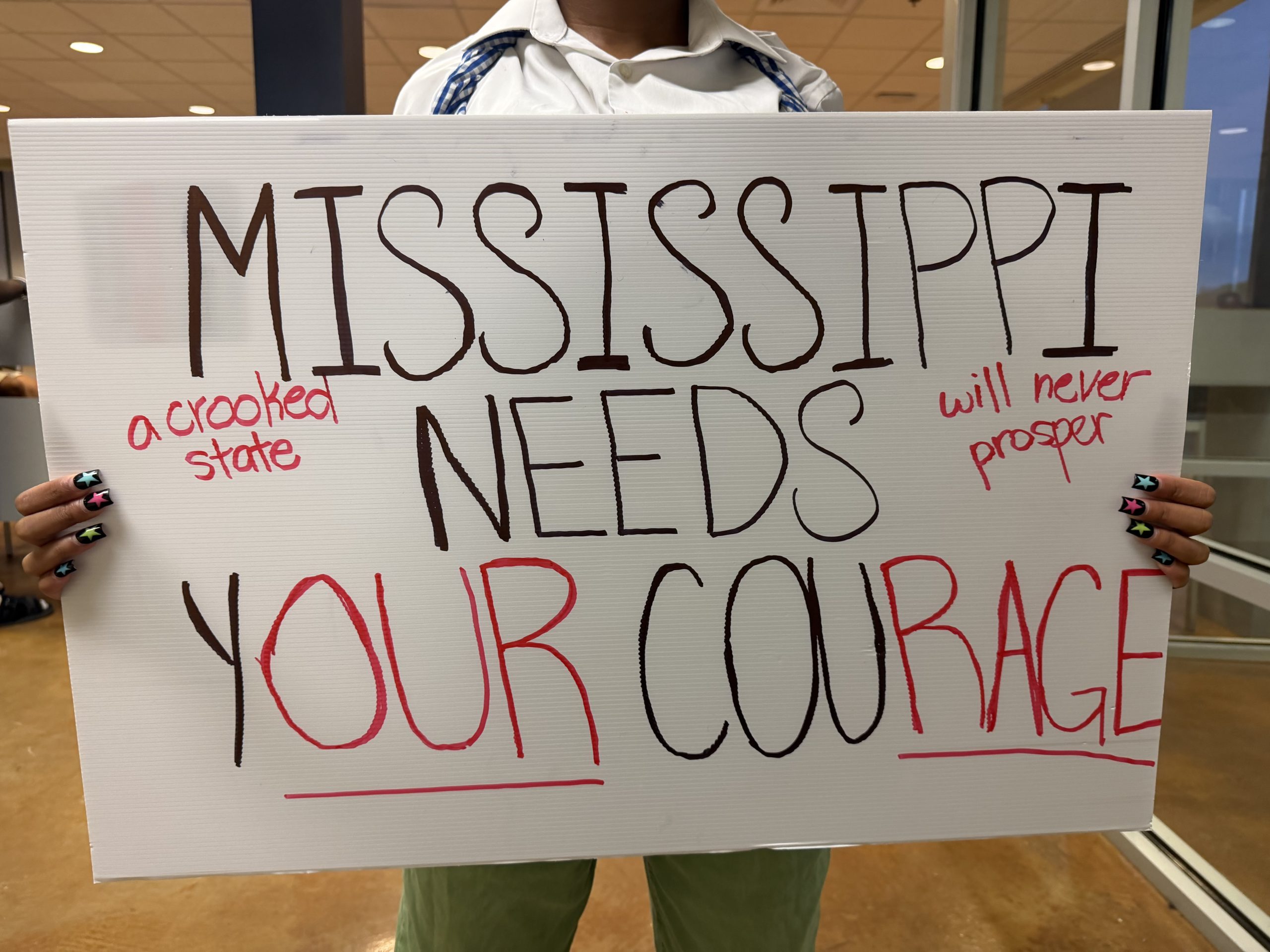

BALTIMORE – As Camrynn Wimberly and other Jackson State University students marched from their campus to Mississippi’s state capitol weeks before Election Day, she held a sign that said “Mississippi needs your courage,” but also “Mississippi needs our rage.”
For Wimberly, a lot is at stake for Black Mississippians. In the past year, four young Black people and children have either been killed or died under suspicious circumstances.
“Our demand and what we want to come out of this is that everyone has a right to a competent and thorough investigation,” she said. “We want an investigation into the Mississippi state’s medical examiner.”
Those demands can’t be fulfilled through social media chatter, she said. It comes from electing officials that align with your demands. It was her rage over the death of Nolan Wells and the aftermath that fueled her passion during this midterm election. It’s the only way to make a true difference, she said. That’s why the 22-year-old, her classmate Jakari Holland, and other JSU students organized the march. Their goal: inspire voters and elected officials to take action at the state and federal level.
From the Mid-Atlantic to the Deep South, Wimberly is among the thousands of HBCU students taking matters into their own hands with “Blackout” and “March to the Polls” protests. North Carolina A&T State, Norfolk State University, Bowie State University, Alcorn State University, and students from dozens of other HBCUs have been marching on behalf of young Black people. On Election Day, Morgan State University students in Baltimore will join that effort just hours before polls close.
They are exercising their rights by not only protesting the investigation into Wells’s death, but also voting restrictions across the South. Despite assumptions from older generations that Gen Z isn’t civically engaged, students tell Capital B that they’ve been pushing back. They are also following in the footsteps of HBCU students from previous generations who marched to polls and statehouses.
Before the march in October, Wimberly and others made signs together. During the protest, she heard more disheartening conversations about the lack of accountability at the local and federal levels, attaching the trend to the state.
“That’s why I don’t send my kids to be around white people!”
“Oh, well, that could never happen here!”
Originally from Hattiesburg, Mississippi, she took those comments from her community to heart when the details of Wells’ disappearance and death hit the news.
“I know politics is hard, I know it’s confusing, overwhelming and hard to understand,” she said about voting restrictions and redistricting. “It’s hard on purpose; it’s inaccessible on purpose.”
Dispelling the myth that Gen-Z is disengaged

Jayla Jones stood among other Florida A&M University students and other community members at the state Capitol in Tallahassee, Florida. The Wells investigation and similarities to the Trayvon Martin case were on their minds.
In 2013, FAMU students joined Tallahassee Dreams, a civil rights group that organized a 31-day sit-in at the same building following George Zimmerman’s acquittal in the death of the Black teen.
While the connection made Jones feel powerful as she delivered a speech demanding a change in the justice system, it also frustrated her that students were back in the same position so many years later.
“I was like, ‘This sounds very familiar,’ because it’s still happening,” said Jones, a fourth-year political science major at FAMU. “Twelve years later, the terror on Black men, women, and children has not stopped.”
Jones and other students from FAMU Students for a Democratic Society, a student coalition in Tallahassee, have been protesting for the safety of Black and brown people since last year. This semester alone, Jones has attended several demonstrations against the university’s agreement to aid U.S. Immigration and Customs Enforcement officers if needed.
In her eyes, the agreement, like the death of Wells and other young Black people, threatens the rights of young Black and brown people in this country. Jones pointed to how the crackdown on immigration within the Haitian community led to the death of Pierre Damas Bel from Ohio, who took his own life after being ordered to wear an ankle monitor.
“It’s shameful, especially on a campus where you know where we consider ourselves family and our administration is not protecting their Haitian students,” Jones said.
While protesting at Florida’s state Capitol, she said an older man passing by stopped to join. He told her that when he was young, this was how his generation got people to listen.
More than 500 miles away on Oct. 15, HBCU students mobilized to exercise their right to vote. In Greensboro, North Carolina, thousands from North Carolina A&T State University and Bennett College marched for 40 minutes after officials removed their early polling location from campus.
NCA&T students, led by Protect Ours, a Gen-Z-led student group not affiliated with the university, staged several peaceful protests before the Guilford County Board of Elections voted earlier this year not to put a polling site on the college campus. Now, the group has been raising funds and partnering with community organizations to organize shuttle rides to the nearest polling place more than a mile away, according to The A&T Register, the university’s student news publication.
While some older people claim Gen Z isn’t civically engaged, Tevon Blair said this isn’t true. The Dillard University graduate and co-founder of a nonprofit that supports student leaders at HBCUs said he witnessed firsthand how older generations view younger generations as incapable of leading. As a student, he and others proved the critics wrong.
“In 2020, we saw so many people trying to mobilize HBCU students during this moment, and there we were reminded of what it was like being a college student during 2016,” he said. “There were so many people telling us who to vote for rather than asking us ‘Who are you and what are the issues that we care about?’”
Four years later, the nonprofit launched the Vote HBCU program, which registered more than 800 students to vote in less than a month at 10 different HBCUs.
“We’re doing everything in our power to mobilize on these campuses, mobilize inside of our community, and be a voice for all so future generations don’t have to go through what we go through,” Holland, the Jackson State student, said on Instagram.
He mentioned the disinvestment in HBCUs and overpolicing of Black communities, pointing to the death of Kohen Wiley, a 1-year-old boy who was fatally shot by a Mississippi police officer in June.
Holland is just one of the many students selected to be a part of Blair’s program, to spotlight HBCU student leaders who are stepping up to lead the demonstration popping up across the country. In the video, he shared that his father voted in the midterm elections for the first time when Holland was just 1 years old – and it’s inspired him ever since.
“The youth have always been at the heart of the movement when it comes to civil rights and Black Americans in general, the perfect age,” Wimberly said. “It’s a whole lot different than expecting mid-career professionals to take to the streets.”
The post HBCU Students Are Turning Their Anger Into Action This Election appeared first on Capital B News.