Hip-Hop Harmony Brings Culture, Connection, And Confidence To Metro-Atlanta Schools This Fall
By Edwin Freeman Photos: Edwin Freeman There is a moment that happens in almost every Hip-Hop Harmony session. A student who has not said a word all year — who has learned to make themselves small in a classroom that was never built with them in mind — picks up a microphone. And they speak. Sometimes they rhyme. Sometimes they just talk. But in that moment, something in the room shifts. That shift is the whole point. Today, I am proud to announce that Hip-Hop Harmony, the Social-Emotional Learning program of The Freeman Foundation for the Arts, is expanding into Metro-Atlanta schools for the 2026–2027 school year, beginning this August. What started as an answer to a need we saw in New York City classrooms in 2024 has grown into one of the most requested SEL programs in the country. Now, it comes home to Georgia. Where It Began Hip-Hop Harmony launched in New York City Public Schools in 2024, built on a simple but radical idea: students don’t need to be talked at about emotional regulation and conflict resolution — they need to be met where they already live culturally, creatively, and emotionally. Hip-hop, as an art form, has always done that work. It has always been the sound of young people processing pain, joy, injustice, and hope in real time. We took that tradition and built a curriculum around it — one rooted in restorative practices, grounded in evidence, and led by mentors who look like the students they serve. The demand that followed surprised even us. Schools didn’t just want the program. They needed it. What Makes Hip-Hop Harmony Different Hip-Hop Harmony is not an assembly. It is not a one-time performance. It is a culturally responsive SEL experience that uses hip-hop, music, movement, and storytelling to help students build confidence, strengthen relationships, and thrive — in school and in life. Four pillars anchor the work: Restorative Practices — We integrate restorative circles that build trust, teach students to express emotion honestly, and give them real tools to resolve conflict without shame or punishment. Student Engagement — Through hip-hop, movement, and storytelling, students find their voice, often for the first time in a school setting. Academic & Social Growth — Students develop leadership skills, sharpen focus, and strengthen the relationships that research consistently ties to academic achievement. Positive School Culture — The result is safer, more connected schools, where every student belongs. The program is culturally relevant, evidence-based, and student-focused — not as a marketing slogan, but as a design philosophy. Every session is built to affirm the identities students already carry into the classroom, not ask them to set those identities aside. Why Georgia. Why Now. Georgia is home to one of the richest hip-hop cultures in the world. Atlanta didn’t just contribute to the genre — it redefined it. It only makes sense that the young people growing up in the shadow of that legacy should have access to a program that treats their culture as an asset rather than a distraction. Metro-Atlanta schools are facing the same pressures schools everywhere are facing: students disconnected from their communities, educators stretched thin, and a growing recognition that academic success cannot be separated from emotional wellbeing. Hip-Hop Harmony does not claim to solve every challenge a school faces. But it offers something schools consistently tell us they are missing — a way to reach students that students actually respond to. Hip-Hop Harmony is available for students in Grades Pre-K through 12, and can be brought to schools through in-school programming, after-school sessions, or assemblies. Every partnership is customizable to meet the specific needs of a school’s students and staff. An Invitation to Georgia’s School Leaders Stronger students build stronger schools. Stronger schools build a stronger Georgia. That is the belief The Freeman Foundation for the Arts was built on, and it is the belief that guides this expansion. To the principals, superintendents, and school leaders across Metro-Atlanta reading this: your students are waiting for something like this. The demand we’ve seen in New York tells us that once a school experiences Hip-Hop Harmony, it becomes hard to imagine the school year without it. We are inviting Georgia school leaders to schedule a free consultation and bring Hip-Hop Harmony to their school this fall. The 2026–2027 school year begins in August, and spots are filling as demand grows. Schedule a free consultation: thefreemanfoundationforthearts@gmail.com thefreemanfoundationforthearts.org (347) 485-1204 Let’s build a brighter Georgia — one school, one student, one restorative circle at a time. Edwin Freeman is the founder of The Freeman Foundation for the Arts and creator of the Hip-Hop Harmony SEL Program.
 Black News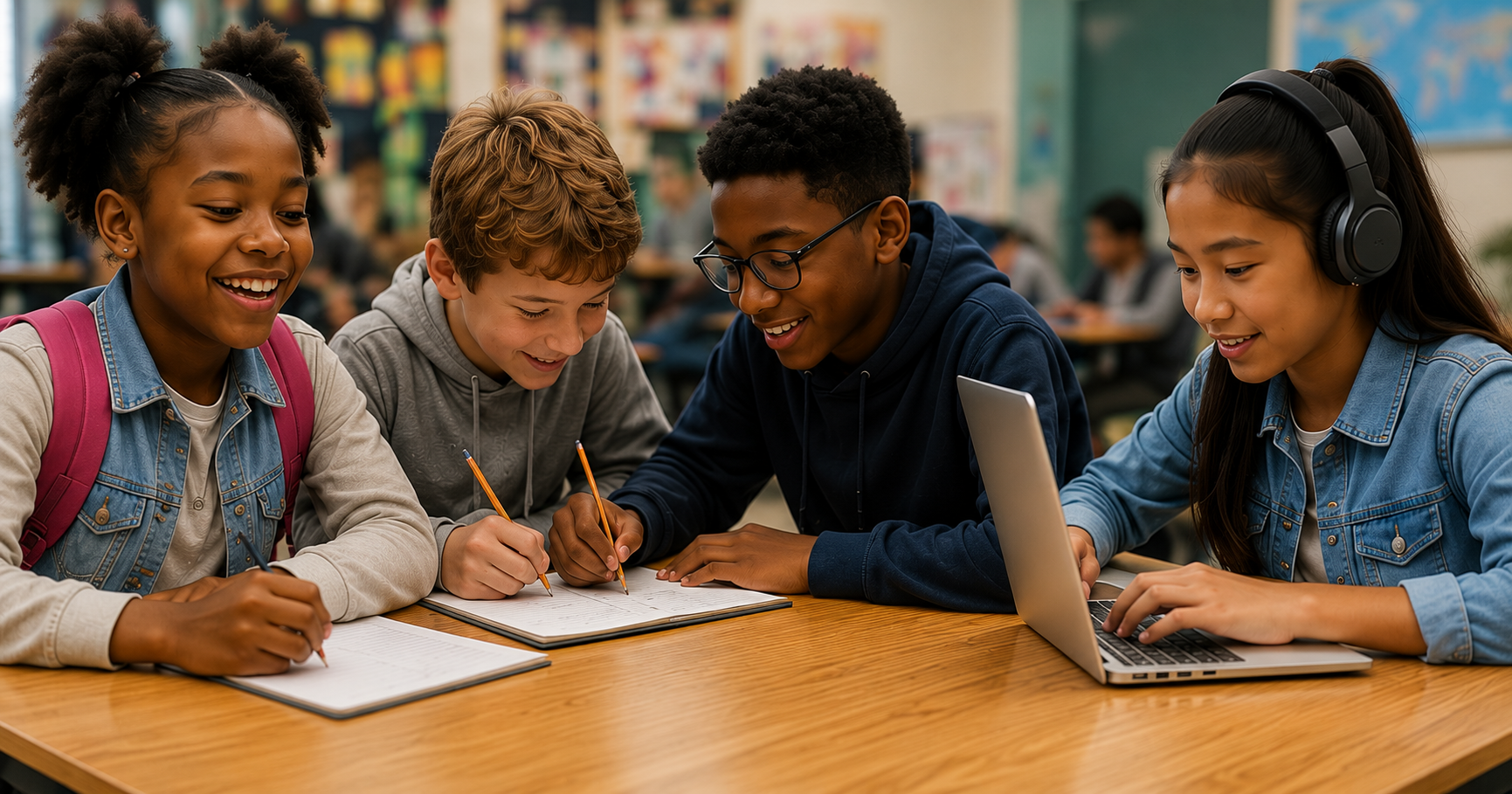
By Edwin Freeman
Photos: Edwin Freeman
There is a moment that happens in almost every Hip-Hop Harmony session. A student who has not said a word all year — who has learned to make themselves small in a classroom that was never built with them in mind — picks up a microphone. And they speak. Sometimes they rhyme. Sometimes they just talk. But in that moment, something in the room shifts. That shift is the whole point.

Today, I am proud to announce that Hip-Hop Harmony, the Social-Emotional Learning program of The Freeman Foundation for the Arts, is expanding into Metro-Atlanta schools for the 2026–2027 school year, beginning this August. What started as an answer to a need we saw in New York City classrooms in 2024 has grown into one of the most requested SEL programs in the country. Now, it comes home to Georgia.
Where It Began
Hip-Hop Harmony launched in New York City Public Schools in 2024, built on a simple but radical idea: students don’t need to be talked at about emotional regulation and conflict resolution — they need to be met where they already live culturally, creatively, and emotionally. Hip-hop, as an art form, has always done that work. It has always been the sound of young people processing pain, joy, injustice, and hope in real time.
We took that tradition and built a curriculum around it — one rooted in restorative practices, grounded in evidence, and led by mentors who look like the students they serve. The demand that followed surprised even us. Schools didn’t just want the program. They needed it.
What Makes Hip-Hop Harmony Different
Hip-Hop Harmony is not an assembly. It is not a one-time performance. It is a culturally responsive SEL experience that uses hip-hop, music, movement, and storytelling to help students build confidence, strengthen relationships, and thrive — in school and in life.
Four pillars anchor the work:
- Restorative Practices — We integrate restorative circles that build trust, teach students to express emotion honestly, and give them real tools to resolve conflict without shame or punishment.
- Student Engagement — Through hip-hop, movement, and storytelling, students find their voice, often for the first time in a school setting.
- Academic & Social Growth — Students develop leadership skills, sharpen focus, and strengthen the relationships that research consistently ties to academic achievement.
- Positive School Culture — The result is safer, more connected schools, where every student belongs.
The program is culturally relevant, evidence-based, and student-focused — not as a marketing slogan, but as a design philosophy. Every session is built to affirm the identities students already carry into the classroom, not ask them to set those identities aside.
Why Georgia. Why Now.

Georgia is home to one of the richest hip-hop cultures in the world. Atlanta didn’t just contribute to the genre — it redefined it. It only makes sense that the young people growing up in the shadow of that legacy should have access to a program that treats their culture as an asset rather than a distraction.
Metro-Atlanta schools are facing the same pressures schools everywhere are facing: students disconnected from their communities, educators stretched thin, and a growing recognition that academic success cannot be separated from emotional wellbeing. Hip-Hop Harmony does not claim to solve every challenge a school faces. But it offers something schools consistently tell us they are missing — a way to reach students that students actually respond to.
Hip-Hop Harmony is available for students in Grades Pre-K through 12, and can be brought to schools through in-school programming, after-school sessions, or assemblies. Every partnership is customizable to meet the specific needs of a school’s students and staff.
An Invitation to Georgia’s School Leaders
Stronger students build stronger schools. Stronger schools build a stronger Georgia. That is the belief The Freeman Foundation for the Arts was built on, and it is the belief that guides this expansion.
To the principals, superintendents, and school leaders across Metro-Atlanta reading this: your students are waiting for something like this. The demand we’ve seen in New York tells us that once a school experiences Hip-Hop Harmony, it becomes hard to imagine the school year without it.
We are inviting Georgia school leaders to schedule a free consultation and bring Hip-Hop Harmony to their school this fall. The 2026–2027 school year begins in August, and spots are filling as demand grows.
Schedule a free consultation:
 thefreemanfoundationforthearts@gmail.com
 thefreemanfoundationforthearts.org
 (347) 485-1204
Let’s build a brighter Georgia — one school, one student, one restorative circle at a time.

Edwin Freeman is the founder of The Freeman Foundation for the Arts and creator of the Hip-Hop Harmony SEL Program.