Iranian Official: “Zionist Regime And The United States Have Continuously Operated In A Cycle Of War…”
By Jeremy Scahill and Murtaza Hussain|Drop Site News Photos: Wikimedia Commons Ahead of a potential new round of negotiations in Islamabad, Iran believes there is a significant chance that President Donald Trump—urged on by Israel—will resume military attacks if a deal is not reached soon, a senior Iranian official told Drop Site. Tehran, the official said, is preparing for a prolonged war during which Iran would cut off all talks with the U.S. While the official said Iran prefers to make a comprehensive deal with the U.S. that would address nuclear enrichment, offer sanctions relief, and establish a long-term non-aggression framework, Tehran believes the window for an agreement is rapidly closing as a result of maximalist U.S. demands and Trump’s erratic behavior. “Our assessment is that Trump effectively lacks both a coherent plan and the capacity to secure even a temporary agreement,” the official said. “His decision-making appears to be grounded in Israeli political and security assessments, conveyed to him on a daily basis.” The senior official has direct access to Tehran’s internal deliberations. He requested anonymity because he is not authorized to publicly discuss strategy. Despite the intensifying war of words between Trump and Iran, Pakistan has been preparing for another round of talks in Islamabad expected this week. While the Iranian official told Drop Site that Tehran is skeptical of U.S. intentions, he also emphasized that Iran prefers a diplomatic path if an acceptable negotiating framework is mutually agreed upon. “There hasn’t been any real progress” on the positions of the respective sides, the Iranian official said. “Both sides are just signaling behind the scenes that they’re open to reaching an agreement.” In a Truth Social post on Sunday morning, Trump claimed that a new round of talks was scheduled, while reiterating a previous threat to commit war crimes against Iranian civilians if a deal was not made. “We’re offering a very fair and reasonable DEAL, and I hope they take it because, if they don’t, the United States is going to knock out every single Power Plant, and every single Bridge, in Iran. NO MORE MR. NICE GUY!” At the time of Trump’s post, Iran had not agreed to a second round of talks and has still not confirmed it will do so. The first meetings were held on April 11 and 12 in Islamabad, where top Iranian officials met a U.S. delegation led by Vice President JD Vance. “In the previous round, it was clearly stated to Vance that public threats should not be repeated,” the senior Iranian official said. “We’re not opposed [to another round of talks],” he added, but cautioned: “Given what Trump has publicly stated, the negotiations definitely need to be meaningful, and their framework should be defined in advance.” The senior Iranian official told Drop Site that contrary to Trump’s repeated claims that Iran was “begging” for a deal, it was Washington that sought talks with Tehran via intermediaries led by Pakistan. “President Trump himself persistently sought a cessation of hostilities,” he said. “The Islamabad negotiations provided President Trump with an appropriate opportunity to exit the war,” the official added. “Should [Trump] nevertheless choose to continue the conflict, Iran will, for a prolonged period, suspend diplomatic channels and will seek, within the context of the conflict, to impose significantly greater costs on United States interests.” Despite Trump’s repeated claims that a deal will soon be reached, he has continued his whiplash pattern of saying a “new regime” in Tehran is offering concessions and then threatening to bomb additional Iranian infrastructure. While engaging in diplomatic talks with mediators and reviewing new proposals, Iran has also been preparing for the war’s resumption. “We see that the Americans have been bringing in more troops and equipment to prepare to attack, but the Iranians have also not been resting during these two weeks of ceasefire,” said Mohammed Sani, a political analyst based in Tehran, in an interview with Drop Site. “They have been preparing, repairing the underground missile cities, bringing in new air defenses, missiles and drones. Iran is at a high standard of readiness right now. If there is another round of negotiations sometime later in the future after another round of American attacks against Iran fail, the Iranian conditions for peace will be much tougher.” The Iranian official said that most of the issues at the center of the Islamabad negotiations are identical to those being discussed in February when the U.S. and Israel launched the war. Iran, he said, has maintained the “same flexibilities” it put on the table in February and suggested that Trump’s war had not moved the needle in any significant way. He reiterated Iran’s view that Trump’s Special Envoy Steve Witkoff and Jared Kushner, the president’s son in law, had “failed to fully grasp” the significance of
 Black News

By Jeremy Scahill and Murtaza Hussain|Drop Site News
Photos: Wikimedia Commons
Ahead of a potential new round of negotiations in Islamabad, Iran believes there is a significant chance that President Donald Trump—urged on by Israel—will resume military attacks if a deal is not reached soon, a senior Iranian official told Drop Site. Tehran, the official said, is preparing for a prolonged war during which Iran would cut off all talks with the U.S.
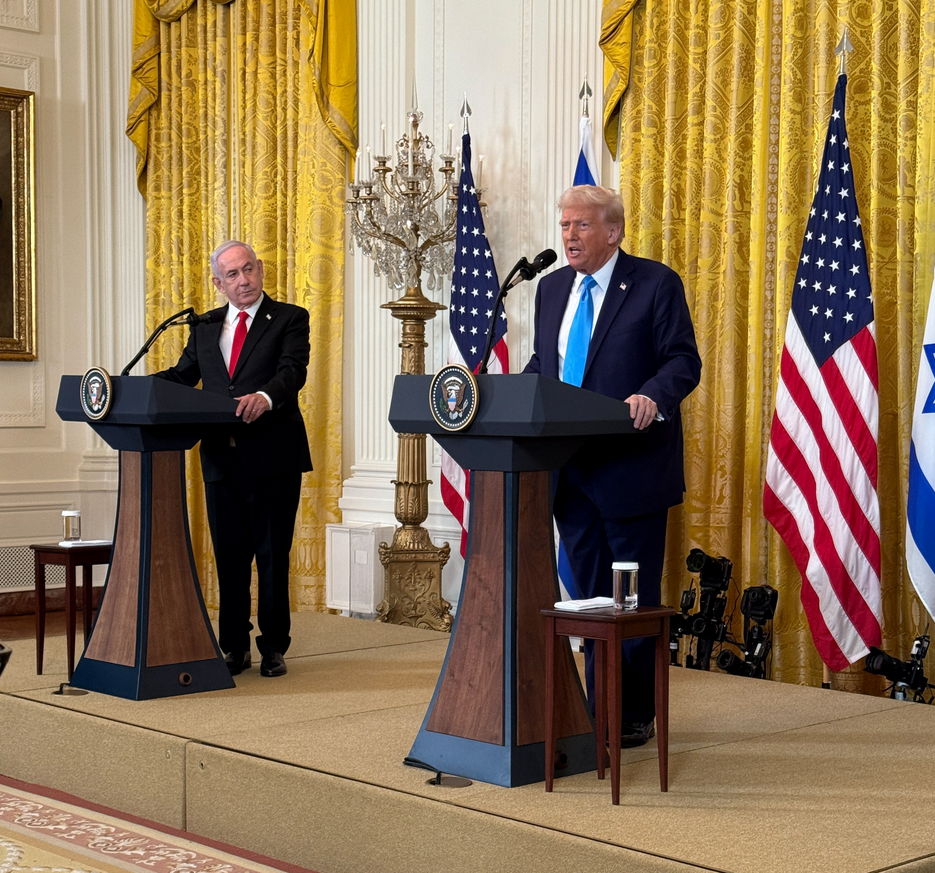
While the official said Iran prefers to make a comprehensive deal with the U.S. that would address nuclear enrichment, offer sanctions relief, and establish a long-term non-aggression framework, Tehran believes the window for an agreement is rapidly closing as a result of maximalist U.S. demands and Trump’s erratic behavior.
“Our assessment is that Trump effectively lacks both a coherent plan and the capacity to secure even a temporary agreement,” the official said. “His decision-making appears to be grounded in Israeli political and security assessments, conveyed to him on a daily basis.”
The senior official has direct access to Tehran’s internal deliberations. He requested anonymity because he is not authorized to publicly discuss strategy.
Despite the intensifying war of words between Trump and Iran, Pakistan has been preparing for another round of talks in Islamabad expected this week. While the Iranian official told Drop Site that Tehran is skeptical of U.S. intentions, he also emphasized that Iran prefers a diplomatic path if an acceptable negotiating framework is mutually agreed upon.
“There hasn’t been any real progress” on the positions of the respective sides, the Iranian official said. “Both sides are just signaling behind the scenes that they’re open to reaching an agreement.”
In a Truth Social post on Sunday morning, Trump claimed that a new round of talks was scheduled, while reiterating a previous threat to commit war crimes against Iranian civilians if a deal was not made. “We’re offering a very fair and reasonable DEAL, and I hope they take it because, if they don’t, the United States is going to knock out every single Power Plant, and every single Bridge, in Iran. NO MORE MR. NICE GUY!”
At the time of Trump’s post, Iran had not agreed to a second round of talks and has still not confirmed it will do so. The first meetings were held on April 11 and 12 in Islamabad, where top Iranian officials met a U.S. delegation led by Vice President JD Vance. “In the previous round, it was clearly stated to Vance that public threats should not be repeated,” the senior Iranian official said. “We’re not opposed [to another round of talks],” he added, but cautioned: “Given what Trump has publicly stated, the negotiations definitely need to be meaningful, and their framework should be defined in advance.”
The senior Iranian official told Drop Site that contrary to Trump’s repeated claims that Iran was “begging” for a deal, it was Washington that sought talks with Tehran via intermediaries led by Pakistan. “President Trump himself persistently sought a cessation of hostilities,” he said.
“The Islamabad negotiations provided President Trump with an appropriate opportunity to exit the war,” the official added. “Should [Trump] nevertheless choose to continue the conflict, Iran will, for a prolonged period, suspend diplomatic channels and will seek, within the context of the conflict, to impose significantly greater costs on United States interests.”
Despite Trump’s repeated claims that a deal will soon be reached, he has continued his whiplash pattern of saying a “new regime” in Tehran is offering concessions and then threatening to bomb additional Iranian infrastructure. While engaging in diplomatic talks with mediators and reviewing new proposals, Iran has also been preparing for the war’s resumption.
“We see that the Americans have been bringing in more troops and equipment to prepare to attack, but the Iranians have also not been resting during these two weeks of ceasefire,” said Mohammed Sani, a political analyst based in Tehran, in an interview with Drop Site. “They have been preparing, repairing the underground missile cities, bringing in new air defenses, missiles and drones. Iran is at a high standard of readiness right now. If there is another round of negotiations sometime later in the future after another round of American attacks against Iran fail, the Iranian conditions for peace will be much tougher.”
The Iranian official said that most of the issues at the center of the Islamabad negotiations are identical to those being discussed in February when the U.S. and Israel launched the war. Iran, he said, has maintained the “same flexibilities” it put on the table in February and suggested that Trump’s war had not moved the needle in any significant way.
He reiterated Iran’s view that Trump’s Special Envoy Steve Witkoff and Jared Kushner, the president’s son in law, had “failed to fully grasp” the significance of Tehran’s offers during negotiations in Geneva in February. The U.S. decision to launch the war, the official believes, was based on technical and political ignorance, an underestimation of Iran’s military capabilities and the fact that Israel had put tremendous pressure on Trump to launch a regime change war aimed at severely damaging the Iranian state. In the aftermath of the Geneva talks, Iran made clear to mediators it does not trust Witkoff and Kushner and refused to agree to the Islamabad negotiations unless the U.S. sent a top official. Trump subsequently dispatched Vance.
Even if another round of talks between Iran and the Trump administration takes place this week, bridging the gaps between the sides may prove insurmountable in a short time frame. Iran has insisted it wants a comprehensive agreement centered on firm commitments that the U.S. and Israel will not attack Iran again, a demand that seems nearly impossible to guarantee.
“It’s always tough between Iran and the U.S., but between Iran and the Trump administration is going to be much more difficult,” said Robert Malley, a former top U.S. Iran negotiator who was an official on the U.S. team that secured the 2015 Iran nuclear deal, in an interview with Drop Site. “There’s no process on the American side. It’s entirely in the hands of one person who is whimsical, unpredictable, impulsive, subject to extraordinary mood swings.”
Trump seems intent on achieving a “relatively quick deal,” which Malley says, at best, would involve a “pretty broad framework” requiring weeks or months to fully negotiate in a form acceptable to Tehran. “If things are going to get dragged out, in time Trump may lose patience,” Malley said. “If he doesn’t get his dramatic, all at one time, success, it may not be sufficient for him. In which case, I would expect renewed US strikes with increased intensity and even more blatant war crimes.”
The Iranian official said Tehran’s allies, as well as international diplomats involved with mediation efforts, have expressed increased skepticism that a comprehensive deal will be reached. “Some of Tehran’s strategic partners assess that President Trump is likely to continue the war,” he said.
Iran, the official added, is in parallel discussions with friendly nations, including nuclear powers, “aimed at establishing a balance of power with the United States and Israel in order to bring about a lasting end to the conflict.” He declined to name any nations or offer more details.
The mediation on the Pakistani side has been led largely by the country’s army chief, Field Marshal Asim Munir, who has engaged in shuttle diplomacy between Islamabad and Tehran during the two-week ceasefire. Following a high-profile summit last week that failed to produce an agreement, the Pakistani military establishment started sharing messages for public consumption aimed at managing expectations about the possibility of a deal being reached and emphasizing the limitations faced by any mediating party in such a negotiation.
Late Saturday night, Mohammad Bagher Ghalibaf—Iran’s Parliament Speaker and head of the country’s negotiating delegation in Pakistan—told Iranian state TV that during the talks in Islamabad, Iranian officials made clear their “red lines” to Vance and that the U.S. also laid out its bottom line.
“We have achieved some progress in the Islamabad negotiations, but there are still significant gaps and key points that have not yet been resolved,” Ghalibaf asserted, adding that there remain “disagreements on several issues, including nuclear matters and the Strait of Hormuz.”
“Negotiation, by nature, is for reaching understanding, but we have our principles,” Ghalibaf said. “We have no trust in the enemy. Even at this moment, while we are sitting here, the war may start—the armed forces are fully prepared in the field.”
Iran, Ghalibaf said, will not accept a temporary agreement that leaves the door open for a resumption of war, which happened after the “12-Day War” last June. “The Zionist regime and the United States have continuously operated in a cycle of war, ceasefire, and peace,” Ghalibaf said. “This cycle must be broken, and a durable peace must be established with guarantees that war will not happen again.”
A Question of Leverage

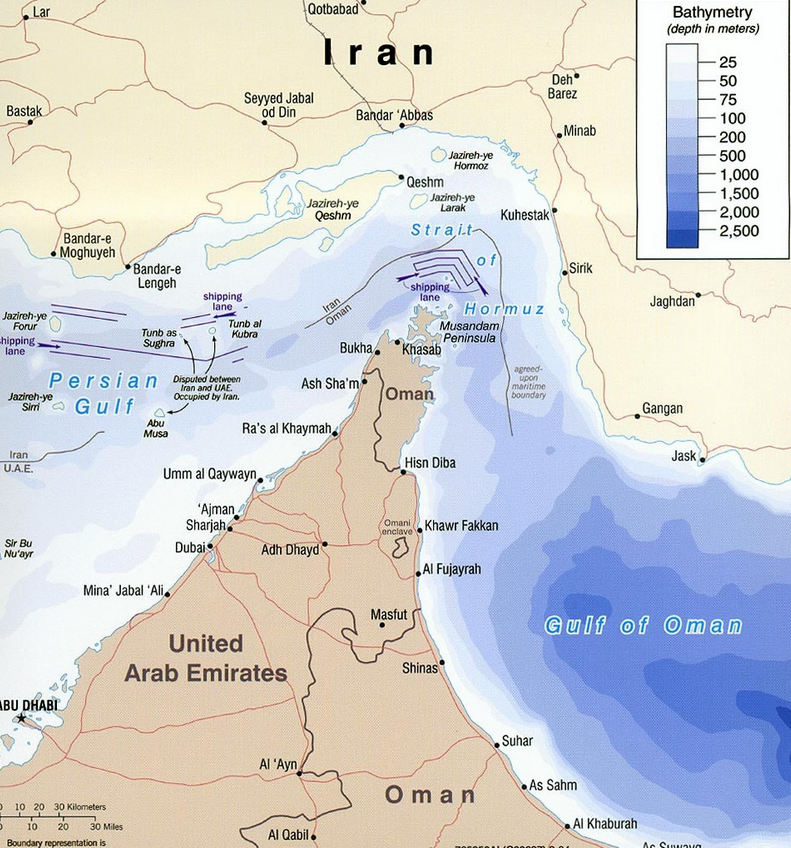
On Friday, a potential breakthrough seemed possible after the U.S. forced Israel to formally agree to a short-term ceasefire in Lebanon, a condition of the deal made on April 7 between the U.S. and Iran. Israel initially said it would not agree to a ceasefire. Trump then suggested a 10-day deal that Israel has portrayed as essentially meaningless and Hezbollah has denounced as a ploy. Nonetheless, the move appeared to clear the hurdle. “In line with the ceasefire in Lebanon, the passage for all commercial vessels through Strait of Hormuz is declared completely open for the remaining period of ceasefire,” Iran’s Foreign Minister Abbas Araghchi wrote in a post on X.
Trump initially responded with a brief post on Truth Social thanking Tehran and referring to the waterway as “The Strait of Iran.” Moments later, Trump posted another message, stating that while the Strait was “completely open and ready for business and full passage,” the U.S. would maintain its naval blockade on Iranian ports imposed on April 12.
Iran swiftly shot back, retracting Araghchi’s announcement. “The Islamic Republic of Iran, following previous agreements in negotiations, had in good faith, agreed to the managed passage of a limited number of oil tankers and commercial ships through the Strait of Hormuz,” said the Iranian military spokesman, accusing the U.S. of violating the agreement by maintaining its blockade. “Control of the Strait of Hormuz has returned to its previous state, and this strategic Strait is under the strict management and control of the armed forces.”
Sitting in the Oval Office Saturday, Trump nonetheless said that talks with Iran were ongoing. “We have very good conversations going on. It’s working out very well. They got a little bit cute as they have been doing for 47 years and nobody ever took them on. We took them on,” Trump said, claiming that Iran has no navy, air force, or leaders and that there had already been “regime change” in Iran. “They can’t blackmail us,” Trump declared. “It’s going along, actually, very well.”
The two-week ceasefire agreement is scheduled to end Tuesday. Last week, Trump made a series of sweeping claims about Iranian concessions, including that Tehran had agreed to hand over its highly enriched uranium, which he referred to as “nuclear dust,” to the U.S. “We’re going to get it together. We’re going to go in with Iran, at a nice leisurely pace, and go down and start excavating with big machinery,” Trump said. “We’ll bring it back to the United States.” He also claimed that Iran had agreed to an indefinite suspension of its nuclear enrichment activities. “No years, unlimited,” Trump declared.
In response, Iran’s Foreign Ministry spokesman Esmail Baghaei said at a briefing, “Iran’s enriched uranium is not going to be transferred anywhere,” while President Masoud Pezeshkian said, “Trump says Iran cannot make use of its nuclear rights but doesn’t say for what crime. Who is he to deprive a nation of its rights?”
During the recent talks in Islamabad, the U.S. reportedly asked Iran for a 20-year moratorium on nuclear enrichment. Some reports suggested Iran countered with an offer of a five-year suspension, though the Iranian official said Iran’s offer was even shorter in duration. “This proposal was first put forward by our side during the final round of negotiations prior to the outbreak of the war, solely to demonstrate goodwill and the necessary degree of flexibility,” the official said. “The timeframe we proposed was less than five years.” He also said that Iran rejected a transfer of its enriched uranium to the U.S. and said Iran instead had offered to dilute the highly enriched materials.
“Iran has proposed a transparent mechanism to address the stated concerns and pretexts of the United States regarding [Iran’s] nuclear program, centered on peaceful applications and low-level enrichment,” he said. “A voluntary suspension of enrichment was also put forward, given that sufficient uranium stockpiles—following dilution—would remain available for research, medical, and other peaceful nuclear purposes.”
Malley, the former U.S. negotiator, said it will be “extremely difficult” to construct a deal that Iran will trust the U.S. to implement. “A lot of the things that Iran is being asked to do are concrete, tangible, irreversible,” he said, citing U.S. demands that it dilute or hand over its enriched uranium. “And the commitments that, in theory, they would get from the U.S.—which is sanctions relief or the unfreezing of assets—those are spaced in time and highly reversible. We’ve seen it before.”
Iran’s negotiating position could potentially weaken if it agrees to a limited deal or engages in a protracted negotiation with the U.S., particularly if the Strait of Hormuz were fully re-opened as part of an initial settlement.
“From an Iranian perspective, I think it would be very important to extract the maximum tangible economic benefits it can as a condition for ending the war,” Malley added. “Because once it’s ended, it is pretty hard for Iran to say, ‘Now we’re going to resume closing the Strait of Hormuz because we’re not happy with what we got in return.’” Over time, the U.S. will recover from the economic damage it has suffered as a result of the war, Malley argued. “Iran? Not so sure,” he said. “They will confront an almost unmanageable economic crisis and a restive population without the means to address one or satisfy the other.”
Iran was deeply skeptical of accepting a temporary ceasefire agreement with the U.S. Twice in one year, the U.S. and Israel launched massive military attacks against Iran in the middle of supposed negotiations between Iran. Iranian officials and analysts have consistently said they believe that scenario is likely to be repeated. Prior to the April 7 deal, an Iranian official told Drop Site that Tehran believed the U.S. and Israel would use such a period to replenish their defenses, which had been severely depleted by Iran’s ballistic missile and drone attacks. As Drop Site previously reported, Israel was facing a significant shortage of interceptors before the two-week ceasefire was announced. Iran ultimately moved forward with the Islamabad talks, after concluding that it had a stronger negotiating position than at any point since the 2015 nuclear agreement was voided in 2018 by Trump during his first term as president.

Iran inflicted unprecedented damage on U.S. military infrastructure across the Persian Gulf, forcing the evacuation of more than a dozen military bases and other facilities and pounded Israel with ballistic missile and drone strikes, despite daily claims by the U.S. and Israel that its weapons capacity had been all but wiped out. “The Americans had a plan in mind that they would conquer Iran, or overthrow the Islamic Republic within three days of attacks. But ever since that plan failed they have been proceeding without any clear vision at all of what their objectives are,” said Sani, the Iranian analyst. “They are now trying to take something from Iranians in talks that they couldn’t take on the battlefield. Iranians are not fools and are not going to take one step back from our rights, nor are we seeking a deal at any price. No deal is much better than a bad deal from the Iranian perspective. Iran is not going to hand over its ballistic missile and drone programs, or the right to enrich uranium for peaceful purposes.”
While the U.S. has indeed moved more military assets into the region, leaders of Iran’s Islamic Revolutionary Guard Corps say they have also used this period to prepare for more fighting. “During the ceasefire, our speed in updating and replenishing missile and drone launch pads is even faster than before the war,” said Majid Mousavi, the IRGC’s Aerospace Force commander, on Sunday. “We know that the enemy is incapable of creating these conditions for themselves, and they are forced to bring ammunition from the other side of the world in a trickle.”
Ghalibaf, the Iranian parliament speaker and lead negotiator, said that Iran had already defeated the U.S. by preventing it from achieving its goals. He warned that Iran would not capitulate to ultimatums. “This nation managed to bring a superpower and the ruthless Zionist regime to a standstill. We held no negotiations until 48 hours before the ceasefire,” he said in his interview on Iranian TV. “Trump is a master of lying and psychological warfare.”
Become a Drop Site News Paid Subscriber