Is War Simply Part Of Human Nature?
By Robert C. Koehler Photos: Wikimedia Commons Is war simply part of human nature? It’s been absurdly “ordinary” throughout my lifetime, and continually expanding its power and psychological reach. And unless you’re in the middle of it – unless you’re digging for a dead child beneath a bombed building – war is just an abstract horror. It’s necessary. It’s what keeps us safe. Glory, glory hallelujah. “You ask: What is our policy? I will say: It is to wage war, by sea, land and air, with all our might and with all the strength that God can give us: to wage war against a monstrous tyranny, never surpassed in the dark lamentable catalogue of human crime. That is our policy. You ask, what is our aim? I can answer with one word: Victory – victory at all costs, victory in spite of all terror, victory however long and hard the road may be; for without victory there is no survival.” Hmmm . . . This is Britain’s new prime minister, Winston Churchill, speaking in 1940, just as World War II has opened its jaws. In that context, yes, his words make sense, but the paradox hiding in those words – the speech titled “Blood, Toil, Tears and Sweat” – is that with victory there may be no survival either. The Good War gave us, of course, the nuclear bomb. It gave us much of the military hell that’s happened in my lifetime. It also gave us, along with a multi-trillion-dollar annual global military budget, a sense of eternal necessity to be ready for the next evil monster who wants to get us. That’s it? We’re stuck with pending war, and actual war, from now on . . . until we blow up the planet? I don’t believe that at all, but I started digging back into history to get a fuller sense of what others thought. Who are we? As Steve Taylor, writing some years ago in Psychology Today, noted: “Our view of human nature determines our view of the human race’s future. If we believe that human beings are innately warlike, then there is no reason for us to believe that our future holds anything else but more of the chaos and conflict that has filled our past. But if we believe that conflict is not innate to us and that our aggression is due to external factors rather than being ‘hard-wired’ into us, then we’re entitled to have a different vision of the future.” There seems to be a consensus among historians that we didn’t start organizing for – and waging – war until about 10,000 years ago, during the Neolithic era, when agriculture began replacing hunter-gathering as humanity’s primary source of survival. A key component of agriculture was, and is, possession and development of land, which began sending waves of change through human consciousness: protect, protect, protect! Land turned into property. And thus, for thousands and thousands of years now, people have been collectively re-envisioning their relationship with each other. Obviously, this is a quicky look at human history. My point is simply to push the idea that war isn’t inevitable, but rather a response to significant change. I now jump ahead to 1895, when New York Journal owner William Randolph Hearst sent a photographer to Cuba to cover the insurrection going on there against Spanish colonial rule. The photographer cabled Hearst that there was no war to cover, to which Hearst responded: “You furnish the pictures. I’ll furnish the war.” And Yellow Journalism was born! And war has remained media’s friend ever since. It’s headline news. There’s fighting, slaughter, and eventual victory – for someone. And the victor controls the narrative. Well, actually, it’s the media that controls the larger narrative. That is to say, the media creates the context: War is real. It’s what we do. In essence, it’s the bookend of every historical period, the arbiter of social change and, therefore, human evolution. Any questions? OK, here’s where I start losing my sanity. War may not be part of humanity’s DNA, but it certainly seems to be accepted as though it is. We’ve spent multi-thousand years now turning war into the building block of civilization. You know: Create an empire. Defend, defend, defend. And ultimately transcend, as a new empire emerges. And then another. Whatever we do in between our wars – live in peace, more or less – may have value, but it’s not all that interesting. It’s just the lull between glorious battle cries. And thus war starts to seem like who we are. Obviously, it’s part of who we are, because we’ve made it so, but whatever serious value it has in the moment is minimal. Mostly it’s incredibly destructive. It’s an addiction. It’s the lavishly funded antithesis of human connection: with one another, with Planet Earth. As Rupert Ross writes in his excellent book about Aboriginal wisdom, Returning to the Teachings: “The principle of wholeness thus requires looking for, and responding to, complex interconnections, not single acts of separate individuals. Anything short of that is seen as a naïve response destined to ul
 Black News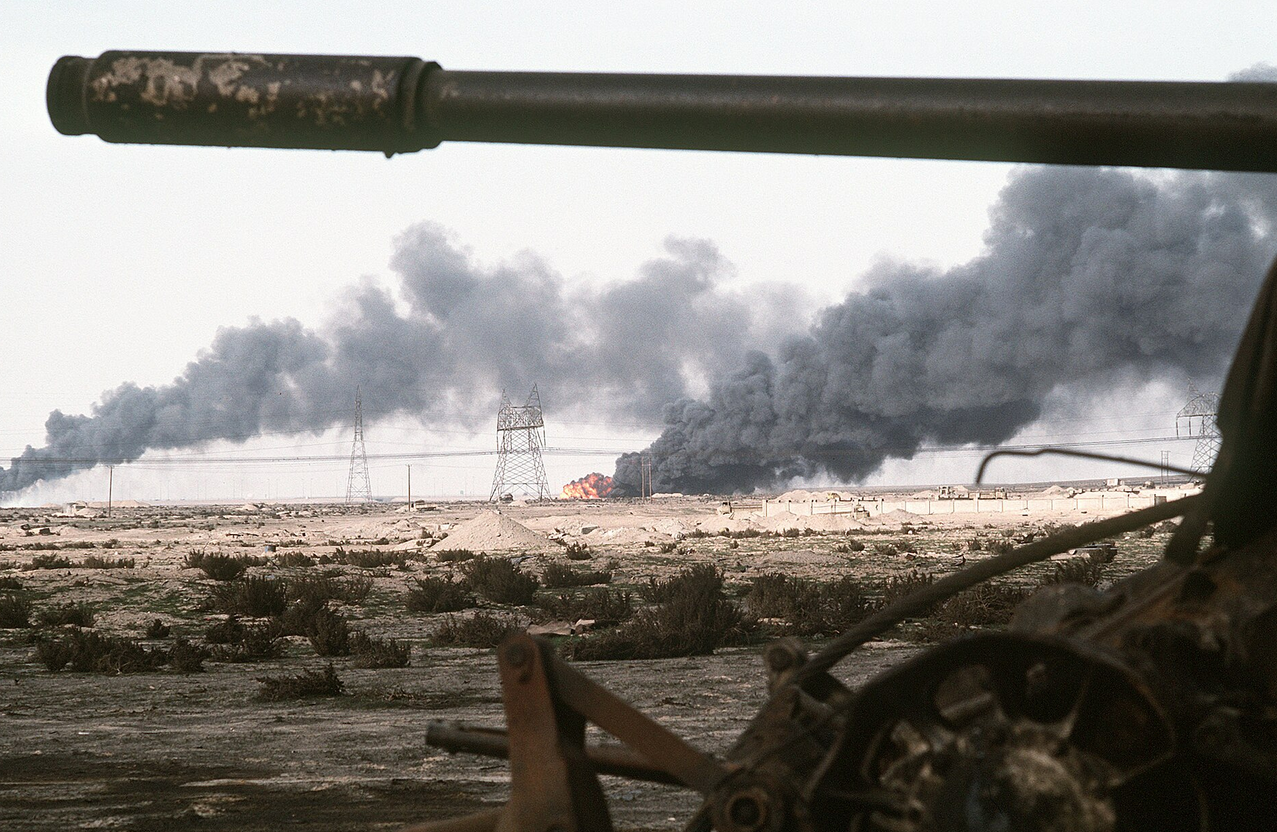
By Robert C. Koehler
Photos: Wikimedia Commons
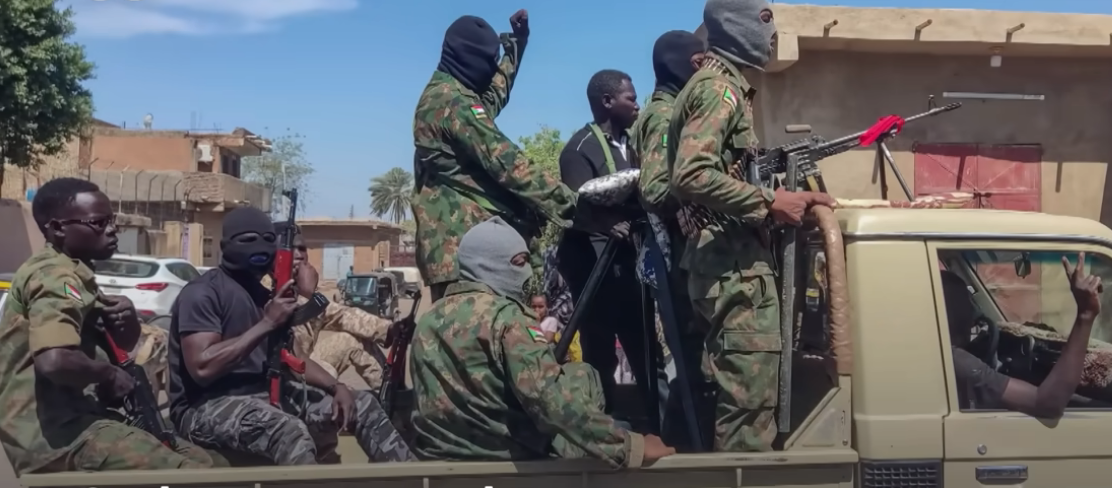
Is war simply part of human nature? It’s been absurdly “ordinary” throughout my lifetime, and continually expanding its power and psychological reach.

And unless you’re in the middle of it – unless you’re digging for a dead child beneath a bombed building – war is just an abstract horror. It’s necessary. It’s what keeps us safe. Glory, glory hallelujah.
“You ask: What is our policy? I will say: It is to wage war, by sea, land and air, with all our might and with all the strength that God can give us: to wage war against a monstrous tyranny, never surpassed in the dark lamentable catalogue of human crime. That is our policy. You ask, what is our aim? I can answer with one word: Victory – victory at all costs, victory in spite of all terror, victory however long and hard the road may be; for without victory there is no survival.”
Hmmm . . .
This is Britain’s new prime minister, Winston Churchill, speaking in 1940, just as World War II has opened its jaws. In that context, yes, his words make sense, but the paradox hiding in those words – the speech titled “Blood, Toil, Tears and Sweat” – is that with victory there may be no survival either. The Good War gave us, of course, the nuclear bomb. It gave us much of the military hell that’s happened in my lifetime. It also gave us, along with a multi-trillion-dollar annual global military budget, a sense of eternal necessity to be ready for the next evil monster who wants to get us.
That’s it? We’re stuck with pending war, and actual war, from now on . . . until we blow up the planet? I don’t believe that at all, but I started digging back into history to get a fuller sense of what others thought. Who are we?
As Steve Taylor, writing some years ago in Psychology Today, noted:
“Our view of human nature determines our view of the human race’s future. If we believe that human beings are innately warlike, then there is no reason for us to believe that our future holds anything else but more of the chaos and conflict that has filled our past. But if we believe that conflict is not innate to us and that our aggression is due to external factors rather than being ‘hard-wired’ into us, then we’re entitled to have a different vision of the future.”
There seems to be a consensus among historians that we didn’t start organizing for – and waging – war until about 10,000 years ago, during the Neolithic era, when agriculture began replacing hunter-gathering as humanity’s primary source of survival. A key component of agriculture was, and is, possession and development of land, which began sending waves of change through human consciousness: protect, protect, protect! Land turned into property. And thus, for thousands and thousands of years now, people have been collectively re-envisioning their relationship with each other.
Obviously, this is a quicky look at human history. My point is simply to push the idea that war isn’t inevitable, but rather a response to significant change. I now jump ahead to 1895, when New York Journal owner William Randolph Hearst sent a photographer to Cuba to cover the insurrection going on there against Spanish colonial rule. The photographer cabled Hearst that there was no war to cover, to which Hearst responded: “You furnish the pictures. I’ll furnish the war.”

And Yellow Journalism was born! And war has remained media’s friend ever since. It’s headline news. There’s fighting, slaughter, and eventual victory – for someone. And the victor controls the narrative.
Well, actually, it’s the media that controls the larger narrative. That is to say, the media creates the context: War is real. It’s what we do. In essence, it’s the bookend of every historical period, the arbiter of social change and, therefore, human evolution. Any questions?
OK, here’s where I start losing my sanity. War may not be part of humanity’s DNA, but it certainly seems to be accepted as though it is. We’ve spent multi-thousand years now turning war into the building block of civilization. You know: Create an empire. Defend, defend, defend. And ultimately transcend, as a new empire emerges. And then another. Whatever we do in between our wars – live in peace, more or less – may have value, but it’s not all that interesting. It’s just the lull between glorious battle cries.
And thus war starts to seem like who we are. Obviously, it’s part of who we are, because we’ve made it so, but whatever serious value it has in the moment is minimal. Mostly it’s incredibly destructive. It’s an addiction. It’s the lavishly funded antithesis of human connection: with one another, with Planet Earth.
As Rupert Ross writes in his excellent book about Aboriginal wisdom, Returning to the Teachings: “The principle of wholeness thus requires looking for, and responding to, complex interconnections, not single acts of separate individuals. Anything short of that is seen as a naïve response destined to ultimate failure.”
Oh God. Wholeness. Connection. This is the opposite of war. The meaning and complexity of these concepts requires enormous exploration, but for the moment I end with a story about heart-ripping courage and connection – about the nature of peace – that I initially wrote about nine years ago.
This happened in 2017, on a commuter train in Portland, Oregon. A man started screaming racial slurs at – started waging war with – two teenage girls on the train, one of whom was wearing a hajib. He shouted: “Go back to Saudi Arabia!”
Several passengers intervened, standing between the girls and the screamer, pushing him away. The screamer had a knife; he started slashing. Two people were killed, a third was injured. The killer fled the train. He was later arrested. But, oh my God, another act of public horror had occurred. People did what they could. A woman knelt by one of the dying men – Taliesin Namkai-Meche – holding him, comforting him. He said to her: “Tell them, I want everybody to know, I want everybody on the train to know, I love them.”
Those were his last words.
As I hear them again, I realize that this is who we are, even if we don’t know what they mean. They sear the soul with doubt, with cynicism. How can we reclaim them? Do we have it in us to be so deeply loving? The only larger question is this: How do we reclaim – and start creating – our future?

Robert Koehler (koehlercw@gmail.com), syndicated by PeaceVoice, is a Chicago award-winning journalist and editor. He is the author of Courage Grows Strong at the Wound, and his album of recorded poetry and artwork, Soul Fragments.