Lindsay Weisberg Is Betting on Instinct
With a slate of new film and television projects, Lindsay Weisberg is entering a pivotal year—but her path to the screen was anything but conventional. From neuroscience and competitive downhill skiing to award-winning theater and a deeply personal film about dementia, the actress has learned to trust the instinct that brought her here. There is […] The post Lindsay Weisberg Is Betting on Instinct appeared first on Perception Magazine.
 Black News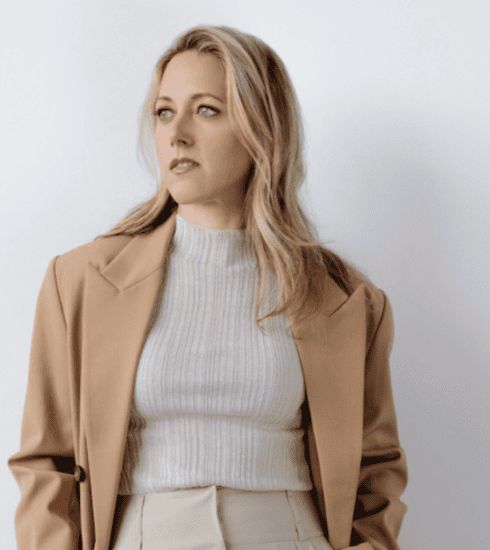
With a slate of new film and television projects, Lindsay Weisberg is entering a pivotal year—but her path to the screen was anything but conventional. From neuroscience and competitive downhill skiing to award-winning theater and a deeply personal film about dementia, the actress has learned to trust the instinct that brought her here.
There is a particular kind of confidence that comes from realizing you don’t have to follow the path that makes the most sense on paper.
For Lindsay Weisberg, that realization came more than once.
The California-born, New York City-raised actress began her academic career on a pre-med track. Years later, she would find herself holding a human brain while pursuing a master’s degree in neuroscience at Columbia University. By every conventional measure, the trajectory made sense.
And yet, somewhere between the applications and the possibility of a PhD, Weisberg stopped.
She asked herself a deceptively simple question: If I got accepted into my first-choice program today, would I actually be excited?
“Nope.”

So she went back to acting.
“One hundred percent.”
That decision feels especially significant now. Weisberg is entering a year defined by firsts, with a growing slate of film and television work that puts her in increasingly different worlds. She can be seen as Cat in Special Ops: Rent-a-Cop on Prime Video and appears opposite Kyle Gallner, Sosie Bacon and Chabely Ponce in Daniel Blake Schwartz’s Cotton Fever. She also stars opposite Lou Diamond Phillips, Irene Bedard and Nick Stahl in Keep Quiet, while her short film Lethia explores dementia through a deeply personal lens. She will also appear in Netflix’s upcoming limited series All the Sinners Bleed.
For an actor, that kind of range is an opportunity. For Weisberg, it also seems to be a reflection of the choices that brought her here.
The Characters Wouldn’t Be Besties
Ask Weisberg whether her increasingly varied roles feel like different versions of herself, and she doesn’t quite see it that way.
“These characters definitely would not be besties,” she says.
That distinction is telling. Rather than trying to locate herself inside every character, Weisberg seems more interested in the distance between them.
In Gangland, she plays Katie, a woman with a strong moral compass and an equally strong work ethic. Katie refuses to let her colleagues speak poorly about Teddie, played by Lou Diamond Phillips, because she believes he is a good cop who has earned the respect of his community.
Then there’s Cat.
“Cat in Special Ops: Rent-a-Cop… has absolutely no moral compass and no work ethic,” Weisberg says.
Cat steals from senior citizens. She’s also apparently not very good at stealing from them.
“She’s such a terrible thief that she ends up getting robbed herself.”

The contrast is part of what makes the work interesting for Weisberg. One character is guided by principle; another appears to have misplaced the concept entirely. Neither requires her to become the character off-camera. Instead, the work becomes an exercise in understanding people who might otherwise never sit next to each other at the same table.
Following the Heart
It would be easy to look at Weisberg’s academic background and assume acting was always the inevitable destination. It wasn’t.
She attended Dartmouth College before transferring to NYU Tisch School of the Arts to study acting. After graduation, she received a Joseph Jefferson Award for Best Supporting Actress in a Play in her first production. She later earned an MFA in Acting from USC.
But her interest in science never disappeared.
“I really like science, but I don’t love it,” she says.
That distinction ultimately mattered.
“I tend to follow my heart, so here we are.”
What she discovered along the way was that her original desire to pursue medicine—to build a career centered on service—didn’t necessarily require her to become a doctor.
“I thought I wanted to focus on science and medicine to have a career in service,” she explains. “I realized acting wasn’t about me, it’s also an act of service…to the story, to the people you are collaborating with, and to the audience.”
It is a philosophy that gives her unconventional résumé a certain coherence. Neuroscience and acting may occupy very different worlds, but both require curiosity about human behavior. Both demand close observation. Both, in their own ways, ask questions about what makes people behave, feel and connect the way they do.
Perhaps the difference is that one path asks Weisberg to study the brain while the other asks her to inhabit the person living inside it.
No Drill Sergeant
Her athletic background adds another dimension to the story.
Before acting became her profession, Weisberg was a competitive downhill skier. When asked which is scarier—racing down a mountain or auditioning—she doesn’t hesitate.
“So far I’ve never gotten a slight concussion from an audition,” she says. “So I’d have to go with racing.”
The joke lands, but the connection between athletics and acting is more serious.
“Rejection is fuel,” she says when asked what athletics taught her about surviving the entertainment industry.
It’s an appropriately unsentimental answer for an industry built on hearing no.
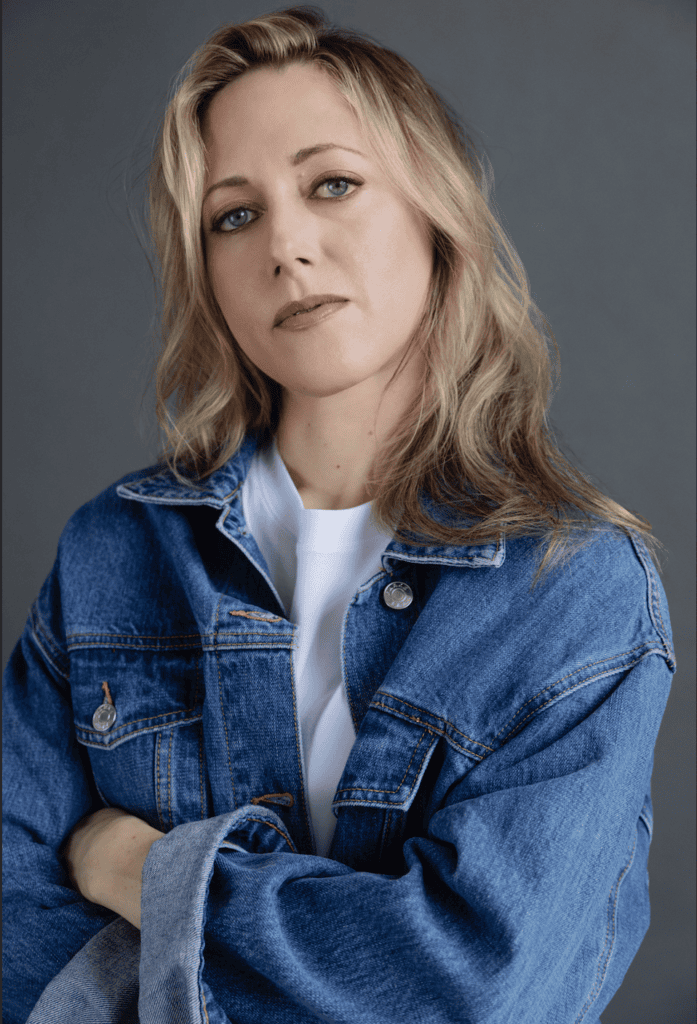
There is another lesson she carries from her training at NYU Tisch. One of her teachers, Mark Hammer, used to tell his students, “There’s no drill sergeant.”
The meaning, Weisberg explains, was simple: trust yourself.
“Nobody’s going to kill you. Follow your instincts and see what happens.”
That idea seems to have followed her well beyond the classroom.

Meeting Someone in Their World
That instinct also informs Lethia, a short film that carries a more personal weight.
The project touches on dementia, a disease affecting someone very close to Weisberg. Rather than approaching the subject solely through the clinical realities of the disease, the film explores the shifting emotional landscape that comes with loving someone whose relationship to the world is changing.
“Dementia may change the relationship, but it doesn’t take away the love,” she says.
For Weisberg, one of the most important lessons from making the film was the necessity of entering someone else’s reality—even when that reality may seem surreal from the outside.
“You have to be willing to meet someone in their world, no matter how surreal it may seem,” she says. “The world we live in is pretty crazy, so that’s very doable.”
There’s something particularly revealing about that idea coming from an actress. Acting, at its most fundamental level, requires precisely that willingness: to temporarily accept another person’s reality, understand its internal logic and resist the urge to impose your own.
For audiences who have cared for someone with dementia, Weisberg hopes Lethia can offer a reminder that connection doesn’t disappear simply because communication changes.
“There are many possibilities for connection,” she says.
A First From Day One
If Lethia represents one of the most personal projects in her growing body of work, All the Sinners Bleed represents another kind of milestone.
The upcoming Netflix limited series was Weisberg’s first experience being part of a television series from the first day of production. The scale was new, but what stayed with her was the atmosphere.
“From the very beginning, there was this incredible spirit on set,” she recalls. “No matter what your job was, everyone seemed genuinely grateful to be there.”
At one point, she found herself thinking, I truly wouldn’t want to be anywhere else.
It’s a striking thought for someone whose life has included so many possible elsewhere’s.
Medicine. Neuroscience. A potential PhD. Competitive skiing. Theater. Film. Television.
Again and again, Weisberg has arrived at a crossroads and had to decide whether to continue down the path that seemed logical or listen for something else.
This time, she seems to know exactly what she’s listening for.
Learning to Get Out of Her Own Way
Her theater background helped prepare her for the transition to screen, although Weisberg is quick to point out that the mediums are fundamentally different.
“Theater taught me how to be part of an ensemble, which is essential for film and TV,” she says.
But she credits her training with something even more fundamental: learning how to stop overthinking.
“Drama school taught me to get out of my own way.”
Studying with teachers including Harold Guskin, Lesly Kahn and Bob Krakower helped prepare her for the demands of film and television. Once on set, she found another kind of education simply by observing actors she admired.
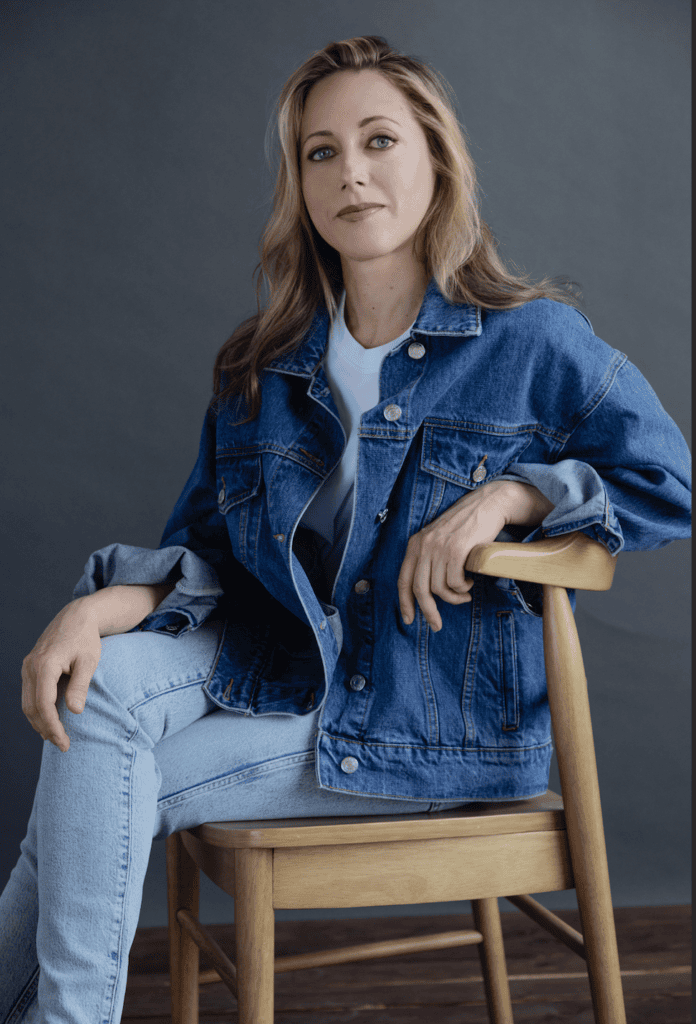
That combination—training, observation and instinct—may explain why her current slate feels less like a sudden arrival than the culmination of several seemingly disconnected chapters.
The scientist didn’t disappear when the actress emerged. Neither did the athlete. Neither did the theater performer.
They all came with her.
Firsts, Oy, Gratitude
Ask Weisberg to describe 2026 in three words, and her answer is almost a miniature version of the year itself.
“Firsts. Oy. Gratitude.”
The firsts are easy to understand: new sets, new characters, new projects, new territory.
The “Oy” perhaps acknowledges everything that comes with them—the uncertainty, pressure and sheer absurdity of navigating a career in entertainment.
And then there’s gratitude.
For someone who once stood in the middle of a neuroscience PhD application and realized she wasn’t excited about where that road led, gratitude may be the most telling word of all.
Weisberg isn’t presenting her journey as a perfectly mapped career plan. If anything, her story suggests the opposite. The path has been shaped by curiosity, hard work, rejection, instinct and the willingness to stop when something no longer feels right.
The next chapter may bring even bigger roles and bigger audiences. But if her past is any indication, Weisberg won’t simply follow the path laid out in front of her.
She’ll pay attention.
And then she’ll decide where to go next.
The post Lindsay Weisberg Is Betting on Instinct appeared first on Perception Magazine.