LUCELEC Explains Fuel Charges as Rate Debate Continues
Using the same amount of electricity does not necessarily mean paying the same bill. That is the message from St. Lucia Electricity Services Limited (LUCELEC), which says changing fuel costs can affect monthly payments even when customers’ consumption remains unchanged. Responding to public debate over electricity costs, company returns and access to solar power, LUCELEC […] The post LUCELEC Explains Fuel Charges as Rate Debate Continues appeared first on Saint Lucia Daily Post.
 Black News
Using the same amount of electricity does not necessarily mean paying the same bill. That is the message from St. Lucia Electricity Services Limited (LUCELEC), which says changing fuel costs can affect monthly payments even when customers’ consumption remains unchanged.
Responding to public debate over electricity costs, company returns and access to solar power, LUCELEC acknowledged the pressure on households and businesses while outlining how bills are calculated—and why new legislation will not immediately replace the existing tariff arrangements.
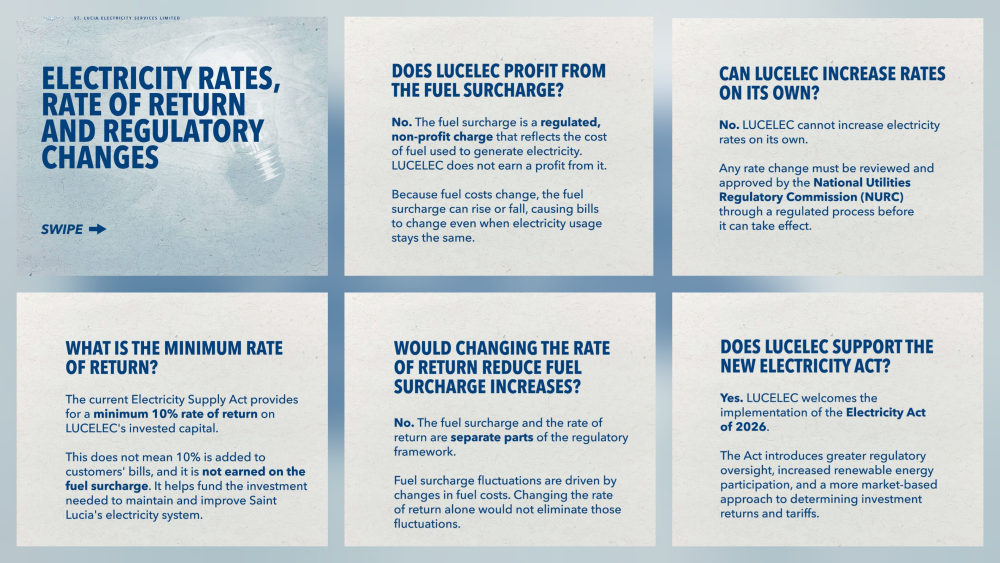
At the centre of its explanation is the fuel surcharge, which the company describes as a regulated, non-profit charge reflecting the cost of fuel used to generate electricity.
According to LUCELEC, the surcharge rises or falls as fuel costs change relative to the previous year’s average price. The company says it earns no profit from that charge.
LUCELEC also challenged references in public commentary to a guaranteed 14 per cent return, saying the existing Electricity Supply Act provides for a minimum return of 10 per cent on its invested capital.
That figure, the company explained, does not mean an additional 10 per cent is added to customers’ bills. It also says the return is not earned on the fuel surcharge.
The company argues that the return supports borrowing costs and shareholder investment needed to maintain, replace and improve the electricity network. Changing that provision alone, it said, would not eliminate bill fluctuations driven by fuel prices.
On the question of who controls electricity rates, LUCELEC said it cannot increase them independently. Proposed changes must undergo regulatory review and receive approval from the National Utilities Regulatory Commission (NURC).
The statement also points to a transition still under way in Saint Lucia’s electricity sector.
LUCELEC welcomed the Government’s announcement that the Electricity Act of 2026 took effect on October 1. According to the company, the legislation provides for greater regulatory oversight, wider renewable-energy participation and a market-based approach to determining a reasonable return on investment.
However, LUCELEC said its tariffs and rate of return will continue under the previous law until the necessary enabling regulations are enacted and the required processes completed. Its statement provided no date for that transition to be finalised.
For households and businesses seeking greater access to solar power, LUCELEC said it supports expanding solar photovoltaic installations and is open to higher capacity limits.
The company’s position is that expansion must be accompanied by regulations, technical standards and tariffs that protect the electricity system’s safety, reliability and affordability.
It also argued that the cost of maintaining the grid must be shared fairly, so customers without solar panels do not shoulder an inequitable portion of those expenses.
For consumers, the immediate takeaway is that the new Act’s commencement does not itself mean an immediate change to existing tariffs. Meanwhile, LUCELEC says movements in fuel costs can continue to affect bills—even when electricity use stays the same.
The post LUCELEC Explains Fuel Charges as Rate Debate Continues appeared first on Saint Lucia Daily Post.