Malaysia deepens Africa engagement with Namibia trade and energy talks
Malaysia is seeking to strengthen economic and diplomatic relations with Namibia as the country’s Minister of International Relations and Trade, Selma Ashipala-Musavyi, begins a two-day working visit to Malaysia from 20 to 21 April.
 Black News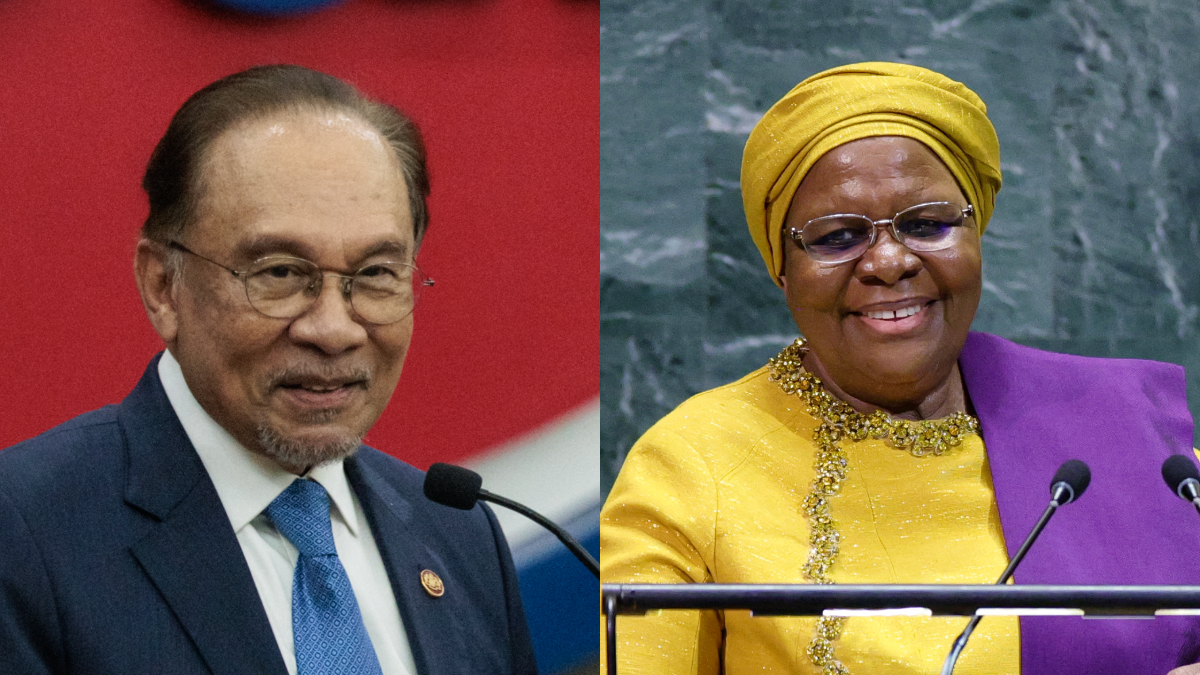
![L-R: Malaysia's Prime Minister Anwar Ibrahim and Namibian President Netumbo Nandi-Ndaitwah: Both countries explore deeper trade and energy cooperation during a two-day diplomatic visit. [Photo by YASUYOSHI CHIBA and LEONARDO MUNOZ/AFP via Getty Images]](https://ocdn.eu/pulscms/MDA_/b907de01b1893c661899db5978edfda7.jpg)
Malaysia is seeking to strengthen economic and diplomatic relations with Namibia as the country’s Minister of International Relations and Trade, Selma Ashipala-Musavyi, begins a two-day working visit to Malaysia from 20 to 21 April.
- Malaysia and Namibia are seeking to strengthen bilateral ties through high-level talks in Kuala Lumpur.
- Discussions focus on energy, trade, education, and healthcare collaboration.
- Bilateral trade reached $92.4 million in 2025, highlighting room for growth.
- The visit signals both nations’ intent to expand partnerships beyond traditional markets.
Ashipala-Musavyi is expected to meet Malaysia’s Foreign Minister, Mohamad Hasan, for discussions centred on expanding cooperation across sectors, including energy, trade, education, healthcare and capacity building. Both sides are also set to exchange views on global developments, with particular attention to ongoing tensions in the Middle East.
The visit reflects a broader push by Malaysia to diversify its economic partnerships beyond traditional markets, while Namibia is looking to strengthen trade and investment links with Asian economies.
Trade between the two countries remains relatively modest but shows signs of potential growth. In 2025, total bilateral trade reached $92.4 million, with Malaysia importing goods worth $85.1 million and exporting $7.2 million. The trade balance heavily favours Namibia, driven largely by Malaysian demand for raw materials.
Diplomatic relations between Malaysia and Namibia were established in 1990, and cooperation has since expanded through bilateral engagements and multilateral platforms. However, analysts note that economic ties have yet to match the political goodwill between the two nations.
While no major agreements have been formally announced ahead of the visit, officials say the talks are expected to lay the groundwork for deeper collaboration, particularly in the energy and trade sectors, which are seen as key to both countries’ long-term growth strategies.
Regulatory reforms and mining exploration
![Aerial photo from the flight to Sossusvlei of the Rossing Uranium Mine operation in Namibia, which is located in the Namib Desert near the town of Arandis, 70 kilometres from the coastal town of Swakopmund. [Photo by Wolfgang Kaehler/LightRocket via Getty Images]](https://ocdn.eu/pulscms/MDA_/03d0ed25ee2245837b1dae36a0aa142e.jpg)
In another development, recent data shows Namibia has received more than 800 new exploration licence applications, underscoring growing international competition to secure access to strategic resources such as lithium, uranium and rare metals.
Authorities are also overhauling regulatory systems, introducing digital platforms to speed up approvals and reduce administrative backlogs.
The country is seeking to expand beyond its traditional strengths in uranium and diamonds into a broader critical minerals ecosystem, positioning itself as a key supplier in global supply chains linked to the energy transition.
Analysts say this shift could reshape Namibia’s external partnerships, making Asian economies such as Malaysia increasingly important as sources of investment, technology and downstream processing capacity.
While no major agreements have been announced, the visit is expected to lay the groundwork for deeper cooperation, particularly in the energy and mining sectors, now central to Namibia’s economic strategy and global relevance.