NUP breaks silence on govt, Bobi talks
The National Unity Platform (NUP) has firmly denied claims that it is engaged in behind- the-scenes negotiations with the government, even as multiple sources familiar with the matter insist informal conversations have taken place in recent months over some of Uganda’s most contentious political issues. According to sources within both government and the opposition party […] The post NUP breaks silence on govt, Bobi talks appeared first on The Observer Media Ltd.
 Black News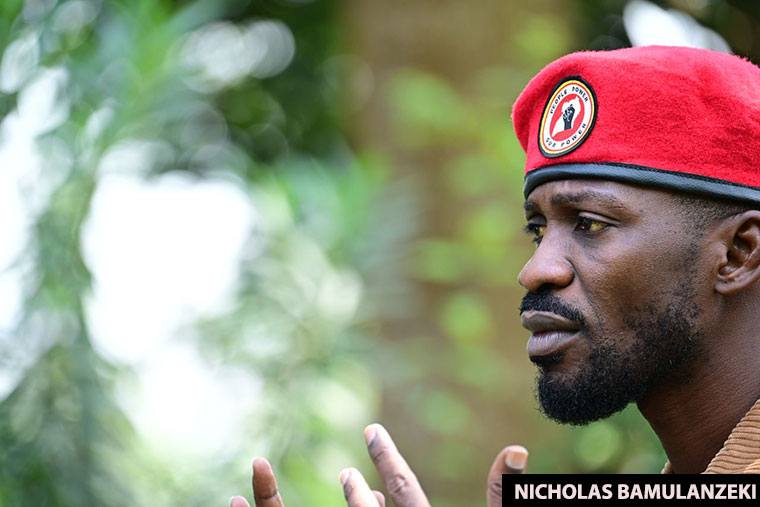

The National Unity Platform (NUP) has firmly denied claims that it is engaged in behind- the-scenes negotiations with the government, even as multiple sources familiar with the matter insist informal conversations have taken place in recent months over some of Uganda’s most contentious political issues.
According to sources within both government and the opposition party who spoke on condition of anonymity because they were not authorized to discuss the matter publicly, the alleged discussions have centred on three sensitive issues: the possible return of NUP president Robert Kyagulanyi Ssentamu, also known as Bobi Wine, the fate of political prisoners, and the party’s access to billions of shillings in public funding tied to its admission into the Inter-Party Organisation for Dialogue (IPOD).
The Observer could not independently verify the existence or outcome of the reported discussions. NUP secretary general David Lewis Rubongoya categorically denied that any negotiations with government were taking place.
“There is no talks going on between government and NUP on any matters concerning us; whoever gave you that information was wrong,” Rubongoya said.
The reported contacts, according to the sources, were informal rather than structured negotiations. They alleged that on the NUP side, the discussions involved secretary general Rubongoya and party treasurer Benjamin Katana, while the government team was led by Uganda’s Ambassador to the United Nations, Adonia Ayebare, who was recently designated minister of Foreign Affairs.
Neither Ayebare nor government officials named in the report publicly confirmed the existence of such talks. At the centre of the reported discussions, the sources said, was the question of Kyagulanyi’s return to Uganda.
Kyagulanyi left the country shortly after the January presidential election, saying he had received intelligence suggesting his life was in danger. After resurfacing in the United States, he said he would engage the international community to advance what he described as Uganda’s democratic struggle before eventually returning home.
According to the sources, concerns over his security have remained a major obstacle, particularly following recent reports of abductions and alleged torture of opposition supporters.
The second issue allegedly raised during the conversations concerned people detained on politically related charges. The sources claimed NUP pressed for the release of political prisoners, some of whom have remained in detention since the 2021 general election.
They further alleged that the government indicated a willingness to consider releasing those arrested in connection with the 2026 electoral period but drew a distinction with suspects arrested after the 2021 elections.
“But they said, they will not release those who were arrested in relation to 2021 because they are criminals,” one source familiar with the alleged discussions said.
The claim could not be independently verified. The issue has resurfaced publicly in recent weeks following a statement by NUP explaining why some detained supporters had accepted plea bargain arrangements after prolonged periods in custody.
“Following numerous bail denials and Museveni’s recent remarks directing judicial officers not to release our people on bail, some of our comrades have opted to plead guilty or enter into plea bargains for offences everyone knows they did not commit,” the party said in a statement signed by Rubongoya.
“By taking this step, these comrades are not in any way admitting that they committed any offences, but they consider it to be the quickest path available for them to get out of the long periods of detention without trial.
“Our position on this matter remains that while we never encourage anyone to incriminate themselves, we never judge those who, being weighed down by the numerous challenges that come with illegal detention, choose to plead guilty and come out of jail. More so, if they do so within clear known legal processes such as plea bargaining. What is more important is how those comrades behave when they’re released.”
The statement was issued shortly before former Butambala MP Muhammad Muwanga Kivumbi and 22 others were granted bail. Kivumbi was later rearrested. Asked about his whereabouts, Rubongoya said the party had no information.
“Still we don’t know where he is being held,” he said.
Rubongoya also rejected suggestions that negotiations over political prisoners were underway.
“Still, there are no talks about that same issue; you are seeing our people are now being forced into plea bargains on crimes they didn’t commit, then how could we be in talks about the same issue,” he said.
The third issue identified by the sources concerns public funding available to political parties represented in Parliament through IPOD. Since amendments to the Political Parties and Organisations Act took effect last year, NUP has been unable to access funding that party officials estimate is worth close to Shs 8 billion.
The party previously challenged the legislation in court but was unsuccessful. This week, NRM secretary general Richard Todwong publicly confirmed that the ruling party had agreed to NUP joining IPOD, potentially opening the way for access to the funding.
Correspondence exchanged between IPOD executive director Dr Lawrence Sserwambala Kabagabe and Rubongoya also indicates that discussions over the party’s admission are already underway.
In his letter, Sserwambala said the Council of Secretaries General had agreed in principle to admit NUP but noted that the party first needed to submit a formal written request.
“During its deliberations, the Council noted that, whereas the party has publicly expressed interest in joining IPOD, the secretariat has not received any explicit and formal written expression of interest… Notwithstanding the foregoing, and in recognition of the importance of broadening inclusive inter-party dialogue in Uganda, the Council resolved to forward and recommend, in principle, the admission of the National Unity Platform into IPOD, subject to the submission of a formal written expression of interest to the Secretariat,” the letter states.
The letter further says the party president is expected to personally sign the Memorandum of Understanding during the admission ceremony.
“In accordance with the IPOD Memorandum of Understanding, the Council expects that the president of the party, in the witness of the secretary general, and not any delegated representative, shall personally execute the admission instruments and commit the party to the principles, objectives, and obligations of IPOD during the signing ceremony.”
Rubongoya responded by formally expressing NUP’s interest in joining the organisation while proposing that acting party president Dr Lina Zedriga Waru sign the documents in Kyagulanyi’s absence.
“I write to formally express the National Unity Platform’s interest in joining the Inter-Party Organisation for Dialogue and signing the Memorandum of Understanding thereof,” Rubongoya wrote.
“Regarding the execution of the admission instruments, please note that the substantive president of the party is out of the country. In his absence and in accordance with our party Constitution, the acting president, Dr. Lina Zedriga Waru, is duly mandated to carry out all functions of the office of party president, including executing the said instruments. She is readily available to do the same.”
Despite the ongoing correspondence over IPOD, Rubongoya dismissed suggestions that anything surrounding the process was taking place secretly.
“Everything is in the public domain; there is nothing being done in secret. Whichever information you want concerning NUP and IPOD is already in the public, we have been open about these matters,” he said.
Meanwhile, two sources close to the party claimed NUP has faced growing financial strain since public funding was withheld, making it difficult to meet routine obligations, including paying staff at the party secretariat.
The sources also alleged that financial contributions from Ugandans living abroad have declined significantly over recent months.
“The diaspora used to contribute significantly to party activities, but many of them stopped donating. Some because of the fear of criminalisation from the state while others lost hope that the party can bring change,” one source said.
Rubongoya declined to comment on those claims. Whether the alleged informal contacts amount to genuine political engagement or simply parallel conversations remains unclear.
What is publicly documented, however, is that communication over NUP’s admission into IPOD has intensified, the debate over political prisoners continues to dominate Uganda’s political landscape, and questions surrounding Kyagulanyi’s eventual return remain unresolved.
The post NUP breaks silence on govt, Bobi talks appeared first on The Observer Media Ltd.