Proposed delimitation body to strip ZEC of key powers
The proposed creation of a Zimbabwe Electoral Delimitation Commission under Constitutional Amendment Bill No. 3 could strip the Zimbabwe Electoral Commission (ZEC) of one of its most critical functions and potentially open the door to deeper electoral manipulation.
 Black News
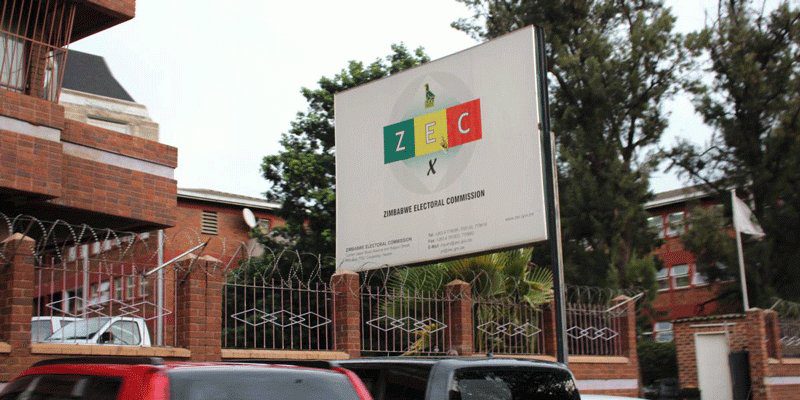
The Bill proposes removing the responsibility for delimitation, the drawing of constituency boundaries, from ZEC and transferring it to a newly created Zimbabwe Electoral Delimitation Commission whose members would be appointed by the President.
A lawyer, Doug Coltart, argued the move would weaken electoral independence and create opportunities for gerrymandering, where constituency boundaries are manipulated to favour a ruling party.
He warned the proposed constitutional changes would allow Zanu PF to retain political power “legally” even in scenarios where the majority of voters reject the ruling party at the ballot box.
“Where delimitation or the drawing of electoral boundaries is designed to favour one party over the other, it’s generally called gerrymandering,” Coltart explained.
He also said there are two main ways to gerrymander.
“These are what we call packing and cracking or diluting,” Coltart said.
Using a hypothetical country of 20 citizens, Coltart demonstrated how electoral boundaries can be manipulated to produce outcomes that do not reflect the will of the majority.
“Let’s imagine a country of 20 people. In this country, there are 14 opposition supporters and six ruling party supporters. Now, you might ask, how is it possible that the six rule over the 14? Well, the answer to that is delimitation,” he said.
Coltart explained that through “packing,” opposition supporters are concentrated into a small number of oversized constituencies, resulting in many votes producing only a few parliamentary seats.
“First, packing. We pack as many opposition supporters as we can into massive constituencies so that a large number of opposition supporters just elect one member of parliament,” he said.
The second strategy, known as “cracking” or “dilution,” involves dispersing remaining opposition voters across ruling party strongholds where their votes become ineffective.
“We then take the remaining opposition supporters and put them in constituencies where that vote is diluted because it’s a ruling party stronghold,” Coltart said.
Under his illustration, although 70 percent of voters support the opposition, the ruling party still secures a parliamentary majority because of how the electoral boundaries are designed.
“It means that when this little parliament of five MPs goes to vote for the president, if we are going to have a parliamentary system of electing the president, then these three MPs will vote for their president,” he said.
“The president will come from a party that only has 30 percent of support from the people.”
Coltart stressed such outcomes can occur without any ballot stuffing or direct election-day manipulation.
“This is not even election day rigging. This all happens beforehand. You could say that legally the ruling party would retain power with only 30 percent of the result in this scenario,” he said.
The concerns come as the proposed delimitation commission seen in Bill No.3 would be even less independent because its members would be appointed solely by the President.
“The president essentially has absolute control over who he appoints to that body so that he can control that process of drawing the electoral boundaries,” Coltart said, warning the proposed changes could provide electoral advantages for the ruling party before campaigns even begin.
“The election can be rigged in advance before even a single vote is cast,” Coltart said.
To demonstrate how constituency boundaries can already influence representation in Zimbabwe, Coltart referenced disparities observed during the 2023 elections.
“Let’s take two constituencies, Bikita East, a rural constituency in Masvingo also a Zanu PF stronghold and Harare East in an urban area also an opposition stronghold,” he said.
During the 2023 delimitation exercise, Bikita East had just over 22 000 registered voters while Harare East had more than 33 000 registered voters.
“There was almost an 11 000 difference between the voter registration of those two constituencies,” Coltart said.
He argued such disparities effectively reduce the value of votes in urban opposition strongholds because more voters are represented by a single Member of Parliament.
“If you pack many opposition supporters into these large constituencies and they’re only voting for one MP, then Zanu PF will have more MPs for less votes if they have many of these smaller constituencies than the large urban constituencies,” he said.
These sentiments add to ongoing criticism surrounding ZEC’s 2023 delimitation report that was challenged by opposition parties who argued the constituency boundaries disproportionately favoured the ruling party.
However, Coltart claimed some factions within Zanu PF were themselves dissatisfied with the 2023 delimitation exercise because they believed it had not benefited the ruling party well.
“If you think that gerrymandering was bad under ZEC in 2023, we’ve got another thing coming if we allow CAB3 to go through,” he said.
“The pushback against that delimitation report in 2023 actually came from the Mnangagwa faction within Zanu PF that was unhappy with it.”
Coltart alluded to reports where the ruling party argued the new boundaries “stacked the odds in favour of the opposition” and preferred retaining the 2018 boundaries instead.
“That is why now they are seeking to strip ZEC of these powers over delimitation and give that to a body that is even less independent than ZEC.”
A political analyst, Mxolisi Ncube added the proposed changes to delimitation represent more than an administrative restructuring but were a direct threat to electoral fairness and representative democracy in Zimbabwe.
“Delimitation is one of the most sensitive components of any electoral system because the size and configuration of constituencies can significantly influence election outcomes.” he said.