Rethinking how Societies Organize their Financial Models
Consider a developing country with five million adults outside the formal financial system, each earning an equivalent of one hundred dollars a month. That amounts to six billion dollars a year all moving through an economy without appearing on a national balance sheet in the same way it would be in the US or EU. […] The post Rethinking how Societies Organize their Financial Models appeared first on Time Africa.
 Black News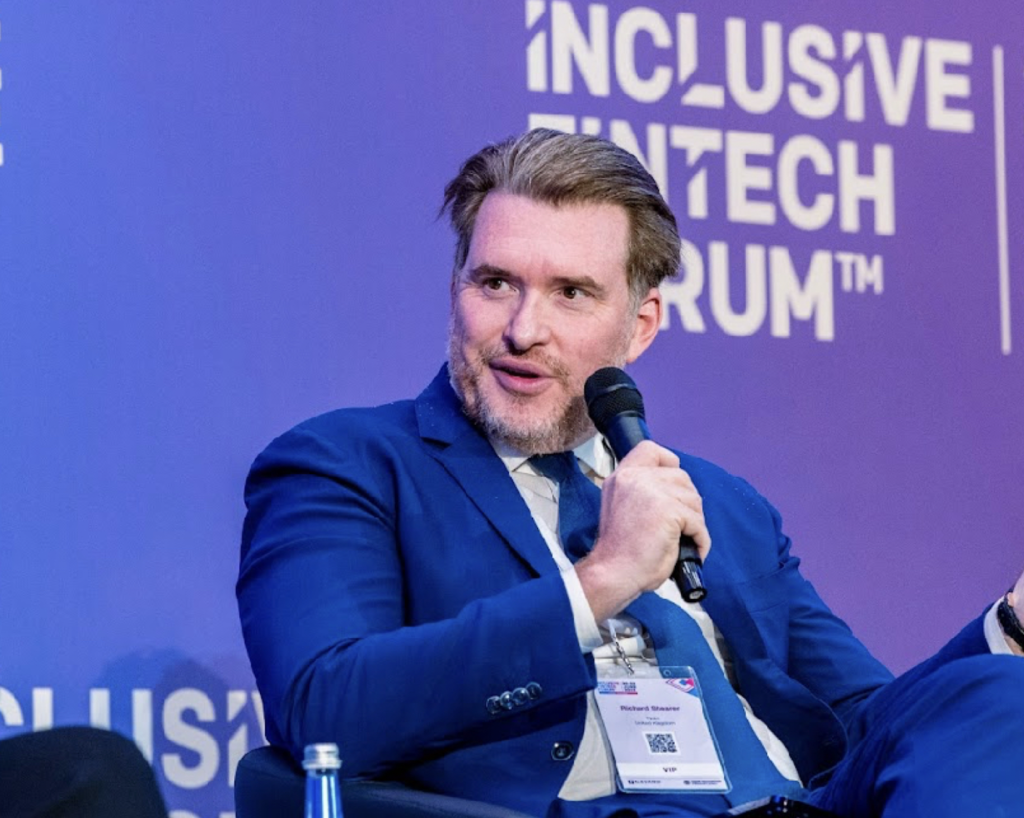
Consider a developing country with five million adults outside the formal financial system, each earning an equivalent of one hundred dollars a month. That amounts to six billion dollars a year all moving through an economy without appearing on a national balance sheet in the same way it would be in the US or EU. Which in turn means it is being under utilized, under taxed and having less impact on lives than it should be.
That money is not deliberately hidden. It is earned, saved, lent and repaid, circulating through businesses, families and communities. Yet much of it remains invisible to the formal financial system. the outcome of this is that so many countries look capital-poor, but in reality, there is substantial capita
Dickie Shearer often returns to this calculation. For him, it captures a larger problem with how the global financial system sees emerging economies and their general misunderstanding of the Global South.
“What is interpreted as a lack of wealth is often a lack of systemic visibility,” he says, estimating that more than three billion people remain outside formal financial systems, concentrated largely across Africa, Asia, the Pacific and Latin America.
He believes the enormous economic engine of these populations is routinely underestimated because the financial institutions in place were designed elsewhere, for different types of economies or indeed societies.
The result is a persistent limitation of opportunities and economic mobility for these populations. If an economic system cannot see someone, it cannot assess them. If it cannot assess them, it cannot price their risk and if it cannot price their risk, it generally becomes much less useful to people, businesses and the country at large.
This realisation was one Shearer reached after many years working across the Global South – that the constraint in many emerging markets was not a shortage of ambition or economic activity, but in inadequate financial infrastructures. For Shearer, this problem is becoming more consequential as the economic order itself is changing.
For decades, participation in global finance meant connecting to infrastructure concentrated elsewhere – correspondent banks, international card networks and settlement centres in London or New York. The arrangement gave emerging markets access to global capital, but participation and ownership are not the same thing.
The world Shearer sees emerging is more multipolar. Governments and regulators want greater control over their financial data, technological infrastructure and the systems through which domestic economic activity connects with the rest of the world. Which in turn raises a more fundamental question: what would financial infrastructure look like if it had been designed for those economies in the first place?
Tintra OS, Shearer’s Qatar-based company is answering this question. It rebuilds that infrastructure from scratch, reflecting the cultural, economic and regulatory context through a new framing device. He pushes back on language about bank vs fintech, he argues too many for too long have been focused on building apps on top of legacy infrastructure which is to his language a great social additive but ultimately a workaround Tintra is building the foundation layer – a collapsing of fintech, banking, artificial intelligence and cloud – built inside each country that will use it, then connected together.
This distinction matters. Many financial technology (fintech) startups already exist that solve for financial inclusion, but almost all still depend on underlying banking and settlement infrastructure they do not control.
Redefining Trust
Rebuilding this foundational layer starts with what a bank believes about the person in front of it. A bank does not lend to people; it lends to records. The problem is that the definition of a useful record was largely established in mature banking markets – usually a salary paid into an account, a credit score, a mortgage history or years of tax filings.
Across much of the Global South, these records look different. According to Shearer, a person’s standing comes from lineage, perhaps from years of dealing with the same suppliers, from positions held within a community, from obligations nobody has written down. There are documents too like a trade licence or a telecoms account, which would not be typically recognised by a financial institution sitting thousands of miles away.
This makes financial inclusion more of an anthropological problem rather than a purely financial one. Before a system can decide whether someone is trustworthy, it has to understand how that society establishes trust. Tintra is perhaps unique in employing anthropologists, sociologists and philosophers alongside its engineers to better understand the markets it is targeting.
Tintra’s artificial intelligence at core system is designed to allow a customer access to financial services and begin producing a financial record through use of the account itself: payments made, debts repaid, counterparties dealt with. Each rung unlocks more of the bank, with an account serving as the beginning of what Shearer calls an “economic biography.” Over time, a customer with little conventional documentation can establish a history that a lender understands.
The commercial consequence is the one that matters. A borrower who can be read can be priced, and a borrower who can be priced can be lent to. And those things compounded start to create mature economies from emerging ones. The human effect is more immediate. A usable record can help someone borrow, build a business and plan over a longer period.
Development to Deployment
Scaling such bespoke financial infrastructure is expensive and what works in one jurisdiction may not translate easily to the next. Shearer argues that artificial intelligence makes context affordable at scale”. A system can now respect a country’s laws, language and customs without giving up the economics of standardization.
Tintra has developed a unique analytical layer they call TIDE, intended to interpret local contexts of culture so that risk can be understood on the ground and not parsed through a western lens, while Tintra Cloud is built to keep the data and the computing inside the country that produces it. Underneath both sits a core banking system built from scratch with the economics of these countries in mind. Tintra claims that this is designed to be replicable in new territories in days not years.
After several years largely spent building out of sight the technology and the relationships the company is now ready to move to activation.
Proving Ground
Tintra is in the process of rolling out across the Global South. Shearer’s thinking sees development and profit as elements that should work together not apart as is often the case now. As a result Tintra’s model delivering these system through public-private partnerships. Under its model, the host state retains majority ownership of the local infrastructure entity, while Tintra funds, builds and operates it. The model reflects the way governments increasingly think about financial data: as national infrastructure with economic and political value.
Rwanda is intended to be Tintra’s first launch and opportunity to deploy its system where it is currently working with regulators. The intention is to launch as many as twelve territories in the next 18 months.
Rwanda seems to be a logical choice for the company as it has spent years pursuing and delivering on its own ambitions in technology and financial services. There, Tintra will meet the ordinary demands of a regulated institution: deposits, complaints, fraud, a central bank asking questions but with the innovations that will allow it to onboard customers for as little as $1. The process will also establish how much of the model travels and how much must be built around the conditions of each country.
For Shearer, a firm which scales across the Global South “while building no local capacity, training no local engineers and leaving no local institutional residue has built nothing durable. It has been extractive.”
On the ground it will look deliberately unglamorous. An account opened. A payment settled. A business understood well enough to be trusted with credit. Do that a few hundred million times and the map of how the world operates changes radically.
After a period of development and realtionshop biodling tintra is now fully in deplpyment mode, stareting in Rwanda at the turn of this year and rolling out from there supported by a current raise of up to one billion dollars. Shearer’s thesis might be compelling, he writes extensively on how understanding culture can drive the world to a better place, but whether that thesis can be industrialized to bring hundreds of millions of people from the informal economy into the captured one remains to be seen.
But with a multi year headstart, the technology built and a seeming array of global government partners it will be very interesting to see whether Shearer’s vision and Tintra’s work is truly able to do what others seem to have missed.
TIME Africa staff were not involved in the creation of this content.
The post Rethinking how Societies Organize their Financial Models appeared first on Time Africa.