Rwanda makes a bigger bet on Bugesera terminal than simply replacing Kigali International Airport
An airport moves passengers and cargo, but an airport city is supposed to generate the reasons for passengers and cargo to exist in the first place.
 Black News


Reflection from Uchumi 360
The country is attempting to build an economic city around aviation, linking an international airport to logistics, manufacturing, tourism, real estate, agriculture, healthcare and education.
The decision to give the Airport City project its own dedicated chief executive, separate from the entity running the airport itself, signals exactly that shift: Rwanda is moving from constructing an airport to managing an economic development platform.
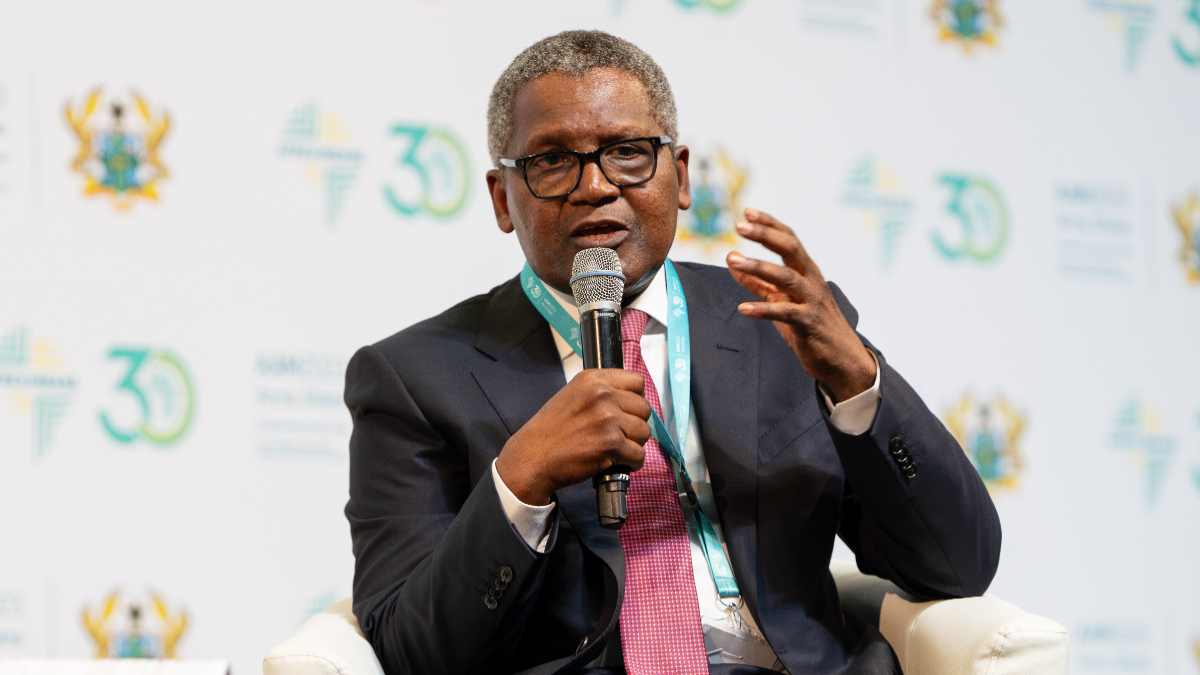
President Paul Kagame appointed Jules Muheto Ndenga to be the Chief Executive of Bugesera Airport City, while Brigadier General Innocent Munyengango takes over as the CEO of Aviation Travel and Logistics (ATL), the state aviation holding company.
Ndenga previously led ATL itself and oversaw construction of the new airport; he holds a master’s in construction management from the University of Birmingham.
The appointments, announced in late July, came as construction moved past large-scale earthworks into terminal buildings, cargo hubs and commercial development, the phase where the airport-versus-city distinction actually starts to matter operationally.
That separation reflects a real distinction.
An airport moves passengers and cargo, but an airport city is supposed to generate the reasons for passengers and cargo to exist in the first place.
The airport is being built ahead of its own traffic
The Bugesera project is large by any regional standard.
It is a US$2 billion investment, backed in part by Qatar, with a 130,000-square-metre terminal designed for 8 million passengers annually, rising to over 14 million in subsequent decades, alongside a dedicated cargo terminal handling 150,000 tons a year. Completion is targeted for 2026.
That scale raises an obvious question Rwanda’s own population can’t answer on its own: where do 8 million passengers and 150,000 tonnes of annual cargo actually come from, for a country of roughly 14 million people.
Rwanda’s answer isn’t to wait and see.
It’s to build the demand deliberately, which is the entire logic behind Airport City as a parallel project rather than an afterthought.
An aerotropolis, not just a terminal
The most consequential part of this may sit entirely outside the passenger terminal.
Rwanda’s master plan for Airport City includes real estate, hospitality, industrial activity, logistics, retail, healthcare and entertainment built around the airport itself.
An aerotropolis model where the airport functions as the economic engine for everything constructed around it rather than a standalone transport facility.
Ten kilometres away sits the concrete version of that ambition: the Bugesera Special Economic Zone, a public-private partnership between the Rwandan government and ARISE Integrated Industrial Platforms, based in the UAE.
It covers 335.67 hectares and structured around a US$100 million committed investment (60 percent ARISE, 40 percent Kigali government).
The zone isn’t a plan on paper anymore
Its first phase, 91.63 hectares, already hosts 18 factories, 12 operational, and the zone as a whole has passed 60 percent occupancy with 27 factories established against a target of up to 100.
ARISE is targeting US$1.2 billion in industrial value from the site, focused on agro-processing, packaging, pharmaceuticals, glass manufacturing and timber transformation.
That’s the mechanism Rwanda is betting on directly: a manufacturer locates near the airport because air freight is ten kilometres away.
A cold storage or pharmaceutical exporter uses the same proximity for speed-sensitive goods.
A conference hotel serves the international visitors flying in for exactly that.
The airport becomes the shared piece of infrastructure connecting businesses that wouldn’t otherwise cluster together.
Solving for geography, not fighting it
For a landlocked economy, air connectivity carries unusually high strategic value precisely because the alternatives don’t exist. Rwanda has no seaport and can’t shorten its distance from international shipping lanes.
What it can do is reduce the economic penalty that distance imposes, specifically for the category of goods where speed matters more than raw transport cost: flowers, fresh produce, pharmaceuticals, electronics, specialised components, high-value manufactured goods, professional services.
Airport City is, in that sense, a direct response to a geographic constraint Rwanda can’t otherwise change.
It can’t move itself closer to a coastline.
It can change how expensive distance actually is once air freight and a co-located industrial zone are built to absorb it.
The regional contest this has to win
Rwanda’s own population can’t generate the passenger volumes this airport is designed for, which means the entire economic case rests on capturing regional traffic that would otherwise route through a competing hub.
That’s a genuinely crowded field. Kenya has Nairobi, an established aviation and commercial hub with decades of accumulated network effects.
Ethiopia has Addis Ababa and Ethiopian Airlines, one of the continent’s most extensive carrier networks.
Tanzania has Dar es Salaam, Kilimanjaro and Zanzibar, an Indian Ocean position, and an expanding port and rail network of its own.
Uganda is developing Entebbe as its principal gateway.
Rwanda is betting Kigali can capture a meaningful share of that same regional traffic through a combination of aviation capacity, hospitality, conferences, logistics and high-value services layered together, rather than through aviation capacity alone.
That combination matters because airlines don’t establish major operations based on how modern a terminal looks.
They follow traffic.
Cargo follows production.
Business follows markets that already exist.
Rwanda needs Airport City to generate the underlying economic activity that then justifies the airport’s own scale, not the other way around.
The real risk isn’t construction
The runway will get finished.
The terminal will open.
The cargo facilities will operate on schedule or close to it, construction is the comparatively predictable part of a project like this. None of that guarantees an airport city actually forms around it.
The harder, less predictable question is whether enough sustained economic activity locates around the airport once it’s open.
That depends on Rwanda’s broader investment climate continuing to attract manufacturers, logistics operators, airlines, hotel groups, conference organisers and other businesses capable of generating demand year after year, not just at launch.
An empty industrial park next to a modern airport is an expensive real estate project.
A functioning industrial and logistics district plugged into international air routes is a genuinely different asset, and the Special Export Zone’s current 60 percent occupancy and 27-of-100 factory count suggest Rwanda is tracking toward the second outcome rather than the first, though “tracking toward” and “achieved” remain different things at this stage.
A services bet as much as an industrial one
Rwanda has spent years positioning itself as a services economy: tourism, conferences, finance, technology, professional and medical services.
Bugesera lets those sectors combine physically rather than developing separately.
A major conference facility draws international visitors.
Hotels capture their spending.
Airlines capture the traffic.
Restaurants, retailers and business services capture the downstream consumption and corporate activity.
Specialised medical facilities can develop services aimed at regional patients rather than domestic ones alone.
That’s the difference between a single infrastructure asset and an actual economic cluster, and it’s the part of the plan that depends least on the airport’s own passenger numbers and most on whether the surrounding services ecosystem gets built with the same seriousness as the terminal itself.
Preparing the workforce, not just the site
This dimension is easy to overlook next to the headline infrastructure numbers.
Rwanda’s education authorities have already linked Bugesera’s development to a need for local training institutions to prepare workers for the labour market the project will create, and government officials have specifically flagged the need for TVET institutions to anticipate airport-related skills demand ahead of time rather than reactively.
Aviation infrastructure at this scale creates jobs in aircraft maintenance, cargo handling, logistics, hospitality, IT, security, engineering, airport operations and ground handling, categories requiring specialised training that doesn’t develop overnight.
How much of that workforce Rwanda can source domestically, rather than importing skilled labour at a premium, will materially affect how much of the project’s economic value actually stays inside the country.
Why this matters beyond Rwanda
The significance of Bugesera extends past Rwanda’s own borders.
Across East Africa, governments have tended to build transport infrastructure first and let the production and commercial activity around it develop on its own timeline, or not at all.
Rwanda is attempting to reverse that sequence deliberately: pairing the airport with an industrial zone, logistics infrastructure, hospitality and services from the outset, rather than building the runway and waiting to see what grows around it.
That’s a genuinely different way of approaching infrastructure, and it’s worth watching precisely because Rwanda has neither Kenya’s larger domestic economy, Ethiopia’s established carrier network, nor Tanzania’s seaport and coastal position.
Its strategy is built on something else entirely: efficiency, connectivity and deliberate concentration of economic activity around a single point, a bet that a smaller country can out-execute larger neighbors on integration rather than out-compete them on scale.
Landing Gear
Rwanda’s greatest gamble at Bugesera was never really whether it could build one of Africa’s larger airports.
It’s whether it can generate enough sustained economic activity around that airport to justify its scale once the novelty of the opening wears off.
The decision to appoint a dedicated Airport City CEO, distinct from the executive running aviation operations, suggests the government understands that distinction clearly.
The airport is infrastructure.
The city is the actual economic proposition, and the runway will connect Rwanda to the world. Whether the businesses built around it turn that connection into a durable economic advantage is the test that starts once the terminal opens, not before.