South Africa, Nigeria and others dragged into sweeping US trade investigation over suspected “unfair trade”
South Africa and Nigeria have been caught up in a sweeping United States trade investigation involving 60 economies, as Washington intensifies efforts to confront what it says are unfair global trade practices.
 Black News

South Africa and Nigeria have been caught up in a sweeping United States trade investigation involving 60 economies, as Washington intensifies efforts to confront what it says are unfair global trade practices.
- The US has launched a Section 301 investigation into trade practices of 60 economies, including South Africa, citing concerns about unfair competition and forced labour.
- The probe aims to determine whether these countries are allowing goods produced by forced labor into their markets or benefiting from other unfair trade practices.
- Trade relations between the US and South Africa have become increasingly strained, especially after the US imposed tough tariffs and boycotted major diplomatic events.
- The move follows a Supreme Court decision limiting tariff use, pushing the US to rely more on legal mechanisms like Section 301 to address perceived global trade injustices.
The Office of the United States Trade Representative (USTR) has launched a Section 301 investigation into South Africa and 59 other countries, including Algeria, Angola, Libya, Nigeria and the European Union, to determine whether they are engaging in “unfair trade”.
The investigation forms part of a broader push by the US government to “level the playing field” between domestic production and foreign imports that are often cheaper.
Trade representative Jamieson Greer said the probe will focus primarily on forced labour but could extend to other practices considered unfair to US commerce.
Notably, the investigation is not only examining whether countries produce goods using forced labour, but also whether they allow such goods to enter their domestic markets.
The investigations are an initial step to determine whether listed governments, particularly South Africa and Nigeria, two of Africa’s largest economies, have taken sufficient measures to prevent the importation of goods produced through forced labour.
“For too long, American workers and firms have been forced to compete against foreign producers who may have an artificial cost advantage gained from the scourge of forced labour,” he said.
Speaking to CNBC, Greer clarified that the investigation could go beyond labour issues.
“If we find that countries have been engaging in unfair trading practices, like subsidies, excess capacity, allowing goods made with forced labour into their countries, we can quantify that harm to US commerce and then try to resolve that issue with that country,” he said.
Section 301 powers explained
Section 301 of the United States Trade Act of 1974 allows Washington to investigate foreign government practices that it believes burden or restrict US commerce.
Once an investigation begins, the USTR must seek consultations with the governments under review.
The USTR said hearings on the investigations will take place on April 28, 2026.
“If they can’t resolve it, then we can impose a tariff or fee. We’re trying to move very quickly. We’re trying to move in a matter of months,” Greer said.
Growing trade tensions
The investigation adds another layer of pressure to US trade relations with several African economies, including South Africa, Nigeria, Algeria, Angola and Libya.
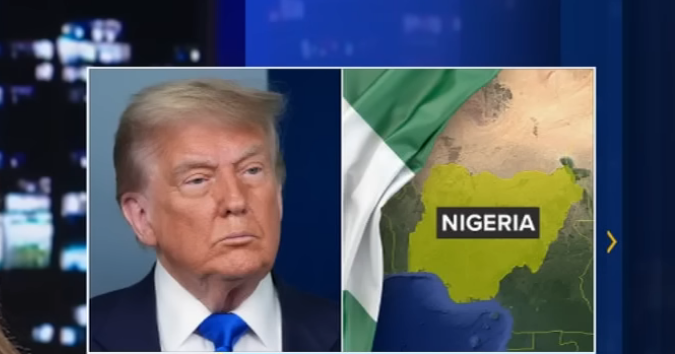
Relations between Washington and Pretoria have been strained since President Donald Trump returned to the White House in January 2025.
South Africa faced some of the toughest tariffs during the administration’s “reciprocal tariff” measures and the United States also boycotted the G20 summit hosted by South Africa in November 2025.
Unlike South Africa, whose tensions with Washington have largely been diplomatic, Nigeria’s involvement in the investigation is expected to centre on trade and market access policies.
The United States has previously raised concerns about import restrictions and protective measures in Africa’s third-largest economy.
Supreme Court ruling reshapes US trade strategy
The investigation also follows a recent United States Supreme Court ruling that struck down key tariffs introduced during Trump’s earlier trade policy push.
The decision removed several tariffs on foreign imports, prompting Washington to rely more heavily on legal mechanisms such as Section 301 investigations to address disputes with trading partners.