South Africa’s richest self-made woman launches AI fund despite fears over technology
Magda Wierzycka, widely regarded as South Africa’s richest self-made woman, says she would press a giant “delete button” on artificial intelligence if one existed.
 Black News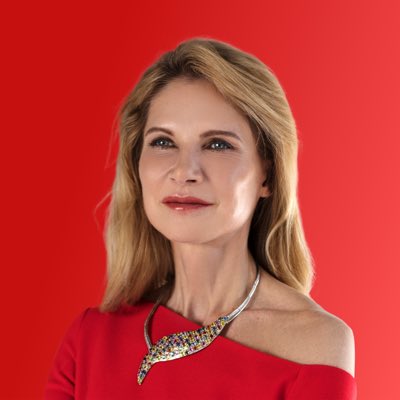

Magda Wierzycka, widely regarded as South Africa’s richest self-made woman, says she would press a giant “delete button” on artificial intelligence if one existed.
- Magda Wierzycka says she would press a “delete button” on AI if one existed.
- The Sygnia founder is nevertheless launching a venture capital fund focused on AI startups.
- She says South Africa has the talent to compete globally but lacks sufficient startup capital.
- The move highlights growing efforts to keep African AI innovation and intellectual property on the continent.
Yet the founder and chief executive of Sygnia is preparing to launch a venture capital fund focused on South African AI startups, making a major bet on a technology she has repeatedly warned could have damaging consequences for society.
The apparent contradiction shows a growing reality confronting businesses and governments worldwide: AI may be controversial, but few believe its advance can be stopped.
Speaking on Moneyweb’s RSG Geldsake radio programme, Wierzycka maintained her concerns about artificial intelligence while arguing that South Africa cannot afford to sit on the sidelines as the technology reshapes economies around the world.
Instead, she believes the country must ensure that local entrepreneurs participate in building AI businesses rather than becoming consumers of products developed elsewhere.
From AI critic to AI investor
Wierzycka’s concerns about AI intensified after attending the World Economic Forum in Davos earlier this year, where discussions around artificial intelligence dominated conversations among political leaders, investors and technology executives.
“I was in Davos and the next big thing apart from Donald Trump was AI, and it was an eye-opener,” she said in an earlier interview.
“I only had one thought in my mind, and that was a big, giant delete button. Delete the whole lot; this is not heading in a good direction for humanity.”
She has argued that excessive dependence on AI could weaken critical thinking, problem-solving skills and human empathy, particularly among younger generations.
“You do not learn, and you forget how to process problems and engage with them. You just type it in and get an answer,” she said.
“You no longer deal with real people and their emotions, but rather a machine that tells you what you want.”
Despite those concerns, Wierzycka has concluded that AI’s advance is unlikely to be reversed.
That view is now shaping her investment strategy.
Keeping South African talent at home
The planned fund is aimed at supporting South African entrepreneurs building AI-powered businesses.
According to Wierzycka, the country possesses the intellectual talent needed to compete internationally but lacks the capital structures required to support many early-stage founders.
“We have the same intellectual capital in South Africa that is available in the UK or US, but what we are missing is the structured capital behind it,” she said.
Her concern is that promising entrepreneurs are increasingly leaving South Africa for larger technology hubs such as London, San Francisco and Singapore, taking intellectual property, innovation and future economic value with them.
By backing local AI startups, Wierzycka hopes to help create an environment where founders can build globally competitive businesses without relocating abroad.
The initiative also reflects growing concern across Africa that the continent could become a consumer of AI technologies rather than a creator of them, despite producing world-class engineering and entrepreneurial talent.
The size of the fund and its investment targets have not yet been disclosed.
A wider debate over AI
Wierzycka’s remarks have drawn criticism from academics and technology advocates who argue that artificial intelligence is already delivering significant benefits.
Steven Boykey Sidley, a professor of practice at the University of Johannesburg, publicly challenged suggestions that AI has produced little value, pointing to advances in science, medicine and education.
The disagreement reflects a broader global debate.
Supporters of AI argue that the technology could unlock major gains in productivity, accelerate scientific discovery and help address complex economic challenges.
Critics warn that it could increase misinformation, deepen inequality, weaken human decision-making and concentrate power among a handful of technology companies.
The debate has intensified as countries and corporations pour billions of dollars into AI infrastructure and research in what many analysts describe as the most significant technological shift since the rise of the internet.
Building on a record of disruption
Wierzycka is one of South Africa’s most influential business leaders.
Born in Poland, she arrived in South Africa as a refugee before building Sygnia into one of the country’s largest asset managers.
Under her leadership, the company grew from managing about R2 billion in assets to overseeing hundreds of billions of rand, cementing its position as a major force in South Africa’s financial services sector.
She also emerged as one of the country’s most prominent corporate governance advocates during the state-capture era, earning recognition for her outspoken criticism of corruption and corporate misconduct.
Earlier this year, Wierzycka returned to South Africa after several years in the United Kingdom and announced plans to help build a stronger venture capital ecosystem focused on local innovation and entrepreneurship.
The AI fund is the clearest expression of that ambition so far.
For Wierzycka, the question is no longer whether artificial intelligence should exist, it is whether South Africa can afford to miss the opportunity it presents.