The Vipers Coaching Role: A Position of Glory and Uncertainty
Over the last decade, it has become common knowledge that the Vipers SC coaching job is arguably the hardest to keep in Ugandan football. Yet paradoxically, during the same period, Vipers have won more Uganda Premier League titles than any other club. The question therefore remains: why is it so difficult to survive at Kitende, […] The post The Vipers Coaching Role: A Position of Glory and Uncertainty appeared first on Kawowo Sports.
 Black News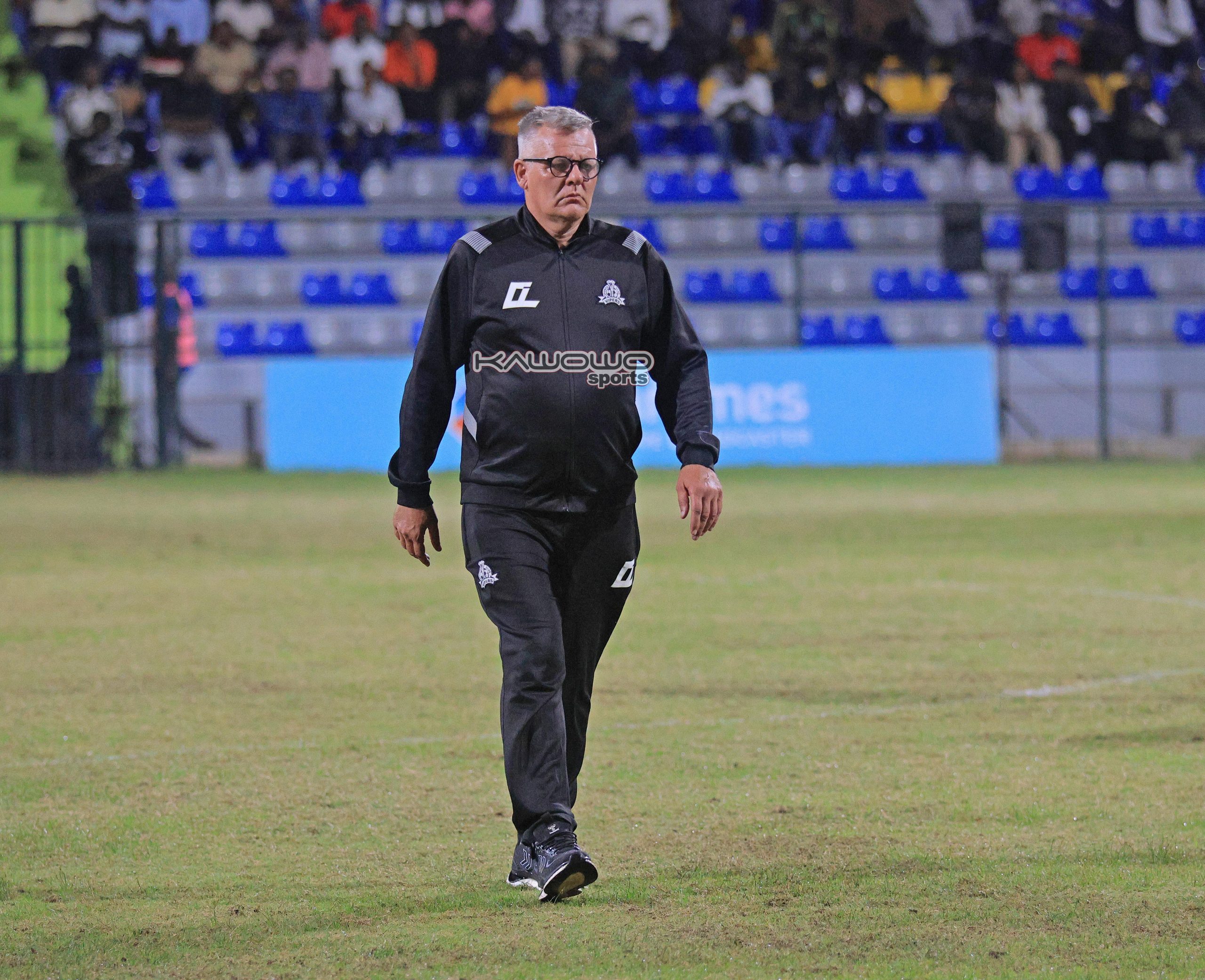

Over the last decade, it has become common knowledge that the Vipers SC coaching job is arguably the hardest to keep in Ugandan football. Yet paradoxically, during the same period, Vipers have won more Uganda Premier League titles than any other club. The question therefore remains: why is it so difficult to survive at Kitende, even after delivering silverware?
On 7 June 2026, Ivan Minnaert joined the growing list of coaches dismissed despite winning the league title. Is the burden a result of excessive ambition, a strict or toxic working environment, a search for a lasting identity, or technical limitations within the club’s structure? My view draws from all these angles.
Ambitious Mulindwa!
From school football, netball and other sporting disciplines, Dr. Lawrence Mulindwa’s institution, SMASK, has built a reputation for sustained excellence. In his public speeches, ambition and winning are recurring themes. Naturally, once one level is conquered, the focus shifts to dominating the next.
That same mentality is evident at Vipers. Having largely conquered the domestic scene over the past decade, winning the Uganda Premier League now feels like the minimum requirement. The bigger target appears to be continental success.
While Vipers finally broke their CAF Champions League group-stage barrier in 2022, the challenge now is achieving that feat consistently rather than as a one-off. It is no coincidence that Roberto Oliveira “Robertinho”, the coach who guided them there, was quickly snapped up by Tanzanian giants Simba SC, underlining the value of that achievement.
Against this backdrop, Dr. Mulindwa will likely continue searching for a coach capable of making a lasting continental statement. Until he finds one who can consistently deliver at that level, the hire-and-fire cycle may persist.
It is also worth noting that preference appears to lean heavily towards foreign coaches, especially after Dr. Mulindwa recently questioned the professionalism of many local coaches.
Toxic environment or simply a strict One?
It is difficult to label an environment as toxic without having worked within it. However, public narratives and accounts from individuals close to the club often suggest that non-technical personnel can influence technical decisions among many other questionable behavior.
While such dynamics exist in football worldwide, coaches naturally prefer full authority over football matters so they can be judged solely on decisions they control. Few managers would leave satisfied if dismissed for technical shortcomings while some key technical decisions were influenced elsewhere.
Yet despite claims of toxicity, no Vipers coach has voluntarily walked away; they have generally been dismissed. This raises the possibility that the environment may be less toxic than it is exceptionally demanding and strict.
Reports suggest that standards are enforced throughout the entire sporting structure, from the school teams to the senior side. Coaches are expected to embody discipline, professionalism and strong character. The dismissal of Livingston Mbabazi in early 2024, reportedly linked to internal disciplinary concerns according to multiple sources, may offer an example of the strict expectations placed on those in charge.
An identity yet to be found?
By Ugandan standards, Vipers possess one of the strongest football structures, closely linked to SMASK and responsible for producing numerous youth national team players. Such a setup would ordinarily be expected to create a clearly defined football identity.
Globally, clubs such as FC Barcelona and AFC Ajax have successfully aligned their youth and senior teams around a consistent playing philosophy. Despite their domestic success, Vipers have struggled to establish a similarly enduring identity.
The closest they arguably came was under Robertinho in 2022, when the team displayed a fluid, vertical and dynamic style that culminated in CAF Champions League group-stage qualification. Unfortunately, his departure interrupted that process.
Another coach associated with an attractive footballing philosophy was Abdallah Mubiru during his spell in 2016. However, results ultimately outweighed style, leaving the club with little choice but to part ways with him.
It therefore remains a valid question whether Dr. Mulindwa’s constant search for new coaches is partly driven by a desire to discover a long-term football identity for the club.
Technical quality and recruitment
Interestingly, on the same day Minnaert departed, Vipers reportedly agreed to sign defender Nicholas Mwere from BUL FC. This reflects a recurring trend where coaches arrive at the club with limited influence over recruitment and squad building.
While Vipers consistently boast one of the strongest squads in the league, quality alone does not guarantee compatibility with every coach’s philosophy. Different managers seek different player profiles and tactical characteristics to implement their ideas effectively.
The inability to fully shape the squad has affected several coaches who eventually lost their jobs and is likely to challenge future appointments as well. The expectation for immediate success remains, even when coaches have limited involvement in the restructuring process that determines the tools at their disposal.
Ultimately, the difficulty of the Vipers coaching job appears to stem from a combination of factors rather than a single issue. Dr. Mulindwa’s relentless ambition for continental success, the club’s demanding internal standards, the absence of a clearly established football identity, and the limited influence coaches have over recruitment all contribute to making the role one of the most challenging in Ugandan football.
Domestic success alone is no longer enough; at Vipers, the benchmark has moved far beyond simply winning the league.
The post The Vipers Coaching Role: A Position of Glory and Uncertainty appeared first on Kawowo Sports.