Tapping Africa’s traditional medicine treasure trove
Main image: Prof. Alice Veronica Lamwaka, a distinguished pharmacist and pharmacogenomics expert at Gulu University, Uganda, at work in the lab. Some 90% of people in the developing world still place great value on the holistic healing qualities of traditional medicines. Africa’s rich depository of health-enhancing plants and herbs constitutes untapped health and wealth potential. […] The post Tapping Africa’s traditional medicine treasure trove appeared first on New African Magazine.
 Black News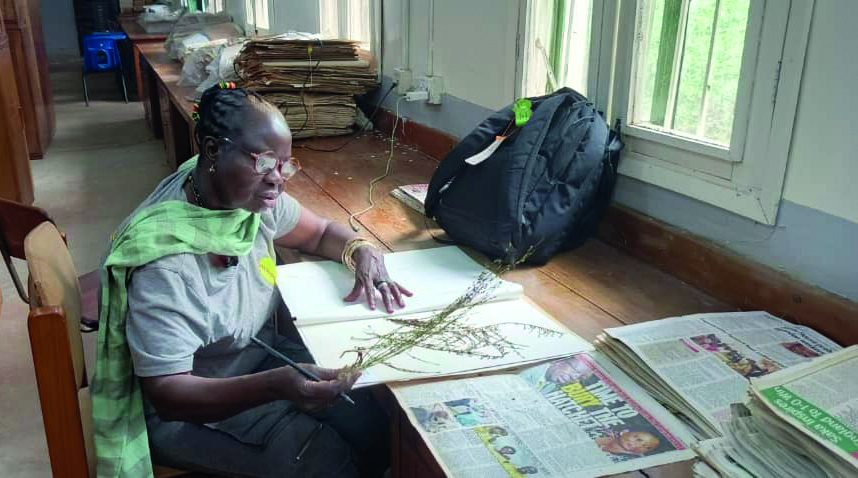
Main image: Prof. Alice Veronica Lamwaka, a distinguished pharmacist and pharmacogenomics expert at Gulu University, Uganda, at work in the lab.
Some 90% of people in the developing world still place great value on the holistic healing qualities of traditional medicines. Africa’s rich depository of health-enhancing plants and herbs constitutes untapped health and wealth potential. Tom Oniro Elenyu in Uganda talks to the country’s leading traditional medicine experts for this report.
While it is widely believed that HIV/AIDS originated from monkeys domiciled in the thickly forested jungles of Central Africa’s Democratic Republic of Congo, some species of monkey have developed natural immunity to its Simian counterpart, Simian immunodeficiency virus (SIV) and show no signs of illness.
While the subject is very complex, Prof. Alice Veronica Lamwaka, based at Gulu University in northern Uganda, explains this by saying “nature is indeed our first pharmacy”.
She elaborates: “Many antiretroviral medications (ARVs) that we use today, like AZT, were originally derived from plant or microbial compounds. Primates survive in the wild by feeding on a diverse diet of fruit, bark and leaves with anti-inflammatory, antiviral and antioxidant properties.”
A distinguished clinical pharmacist, pharmacogenomics expert and researcher, she hastens to explain, however, that while it is not possible to replace the ARVs used for humans living with HIV, “the evidence strongly suggests we should study what animals eat to understand disease resistance. Ethnobotany and biomedical research must work together. The forest may still hold molecules that can extend and improve life.”
During her Covid-19 research in the pandemic, Prof. Lamwaka invented Covilycel, a herbal concoction made from indigenous plants, which gained local attention as an alternative supportive therapy.
She is also nationally recognised for her pioneering research making use of indigenous African plants to manage sickle cell disease.
“I believe the future of African health lies in bridging worlds. Let us not choose between tradition and modernity, but let evidence guide us. Let us invest in research so that the knowledge of our grandmothers is not lost, but is tested, improved and made available to the next generation. Health equity in Africa will come when we value what is ours and refine it with science,” she explains.
For example, the plant Sutherlandia microphylla is being studied in South Africa for use in HIV patients. It is said the plant may increase energy, appetite and body mass in HIV-positive people. Similarly, the Chinese herb Artemisia annua is effective against resistant malaria and could create a breakthrough in preventing almost one million deaths annually.
Traditional medicine still popular
But, according to Prof. Patrick Ogwang, the inventor of Covidex, a herbal remedy for the highly contagious Covid-19, the origins of HIV remain a mystery, just as with the coronavirus. “But what we know and have proven is that most plants that animals feed on are antiviral – for example, Acacia nilotica has compounds that inhibit HIV-1 reverse transcriptase enzymes and protease enzymes that ARVs also inhibit,” he asserts.
Besides inventing Covidex, Prof.Ogwang is the brains behind Jena Herbal Products’ range of medications, including Jenacid (for ulcers) and Jenacof and Jenaflu (for cough and flu in both children and adults), duly certified by the statutory National Drug Authority and now available in all pharmacies in Uganda.
A renowned Ugandan pharmacologist, researcher and innovator, Prof. Ogwang has extensive experience in tropical medicine, pharmaceutical research and scientific innovation. He heads the Department of Pharmacology at Soroti University in Eastern Uganda. Outside the lecture rooms and laboratories, he is the Principal Investigator at the Pharm-Bio Technology and Traditional Medicine Centre, aside from being Executive Chairman of Jena Herbals Uganda Ltd.
According to the World Health Organisation (WHO), approximately 90% of people in most developing countries report using some form of traditional medicine in healthcare. In this regard, the WHO has called for more research evidence and clearer guidelines to ensure safe, effective use and increased accessibility for all. In 2022, WHO launched the Global Traditional Medicine Centre with support from the government of India to meet this global need.
Talking specifically about the continent and its use of indigenous remedies, Prof. Motlalepula Matsabisa of South Africa, a pharmacologist with research interests in the pharmacology of traditional medicines and medicinal plants, who is co-chair of the WHO Steering Committee on Traditional Medicine, said at last year’s Global Summit on Traditional Medicine: “In Africa, we are aware that over 80% of people know that they need to use traditional medicine.”
For two decades now, African Traditional Medicine Day, held every 31 August, has celebrated the key role of traditional medicine in the health and welfare of generations of people on the continent. Uganda’s President Yoweri Museveni himself once said: “I know herbal medicines. Some of them are incomparable. I was treated with local medicine up to eight years old, but I’m now 77.
“There is a plant called Ekimara. Since time immemorial, the Banyankole [his tribespeople in western Uganda] used it to treat tapeworms, among others. The African people kept this knowledge a secret in their families.”
In Burkina Faso, the government has brought together more than 1,000 traditional herbalists as part of efforts to modernise the country’s medicine sector. The Ibrahim Traoré government believes herbalists hold generations of knowledge about medicinal plants, and that this deserves proper scientific research and testing.
Untapped economic resource
Although she admits that herbal medicine is “slower acting” compared to “fast-acting” modern medicine, Prof. Lamwaka says that with responsibility, herbal health is wealth. “Africa’s biodiversity is an untapped economic and health resource. If we document, standardise and validate our medicinal plants, ‘herbal health’ can become wealth in three ways – creating better health outcomes for our people, reduced health expenditure, and new livelihoods through ethical cultivation and value addition,” she explains, adding, “but wealth must not come at the cost of safety. We need quality control, clinical trials and policy support so that herbal medicine is not just traditional, but trusted.”
Herbal medicines, according to Prof. Lamwaka, often work more gradually by supporting the body’s systems, reducing inflammation and preventing recurrence. “The middle ground is integrative medicine. Use modern medicine for emergencies, surgery and acute infections.
“Use well-researched herbal medicines for chronic disease management, prevention, immune support and for conditions where modern options are limited or costly, such as sickle cell disease. Speed is not the only measure of healing. Safety, affordability,
accessibility and sustainability also matter.”
For Prof. Ogwang, the idea that herbal health is wealth is a straight yes, “because when you use herbal medicines, you don’t get side effects that cause another disease that will also take money to treat. For example, steroid drugs like dexamethasone and prednisolone, used for arthritis, can cause ulcers, diabetes, high blood pressure, osteoporosis, etc.”
But herbal medicine hesitancy still remains a barrier. According to Prof. Ogwang: “It is not because herbal medicines are bad or not effective. In Africa, we are highly favoured by nature – so my principle is as follows. My first choice is to use herbal medicine if I am sick, the second choice is herbal medicine plus some chemical medicine, and the last choice is using chemical medicine only.”
Prof. Lamwaka advises approaching both with wisdom and discernment. She advises testing what is used, ensuring safety and efficacy through research, and engaging healthcare providers openly. “Dismissing our indigenous knowledge as ‘satanic’ risks losing valuable cures, while embracing it blindly risks harm. The middle ground is respect, evidence and collaboration.”
Currently, the role of traditional medicine is entering a new era, as age-old wisdom can be combined with cutting-edge science to offer a more personalised and holistic form of healthcare. Ensuring the scientific validation of traditional medicine and its plants is not an alternative. It is essential, as herbal medicine can then be used to nurture tomorrow’s hopes by healing pain today.
The post Tapping Africa’s traditional medicine treasure trove appeared first on New African Magazine.