Opinion: Who gets to stell our stories ?
There is a question I keep returning to whenever African communities are discussed in public:…
 Black News
There is a question I keep returning to whenever African communities are discussed in public: who gets to decide which part of our lives becomes the story? It sounds like a question about the media. It is also a question about power. Someone chooses the angle, the photograph, the first sentence and the person who is asked to explain what happened. By the time the story reaches its audience, those decisions have already shaped what readers are invited to understand.
A great deal of public attention arrives when something has gone wrong. A conflict, a crime, a disagreement with an institution or a moment of public controversy can suddenly make an entire community visible. The people living ordinary lives in that same community remain largely unseen. They are caring for relatives, building businesses, arguing about football, taking children to school, trying to be good neighbours and making decisions that have nothing to do with the latest headline. Those lives do not need to be heroic to deserve attention.
I have worked in community and professional spaces where people understand far more about their circumstances than a public discussion gives them credit for. A mother who has spent years helping relatives navigate unfamiliar services may be able to explain a problem with greater accuracy than someone reading a policy summary. A business owner may understand barriers that do not appear in a government programme description. Their knowledge is practical, sometimes incomplete, sometimes disputed, but it deserves to be examined rather than treated as decoration.
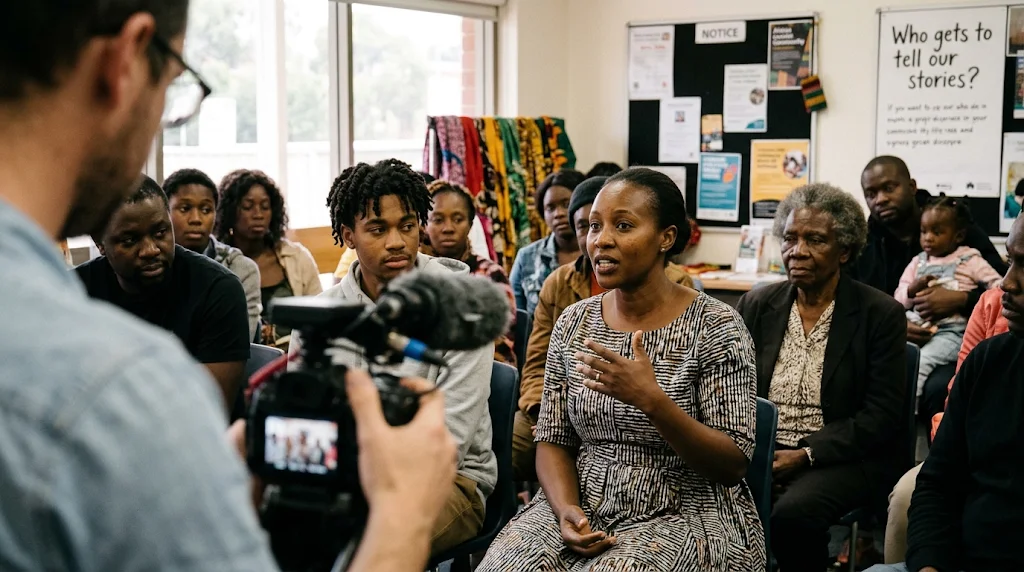
Telling our stories, in our own words with our own focus
This is where storytelling can become uncomfortable. Organisations may want a human account to illustrate a report they have already written. A journalist may arrive with a question that is important but narrower than the life of the person being interviewed. Community leaders, too, may prefer stories that support a reassuring picture of unity. Each has a reason for making that choice. The person telling the story can end up carrying the consequences of decisions made by others.
I do not believe every story must be told by someone who shares the subject’s background. Good journalism depends on curiosity, verification, informed disagreement and the ability to report beyond one’s own experience. But the question of who gets to speak for themselves matters. People should have opportunities to contribute their own analysis, challenge a framing that misses something important and choose when their private life remains private. Representation loses much of its value when visibility arrives without that freedom.
Another difficulty is that we sometimes ask one person’s account to stand for a whole population. An African Australian professional describes a difficult experience and readers assume it represents every professional. Someone else describes belonging and the same readers imagine the difficulty must have disappeared. Communities contain different generations, languages, incomes, opinions and histories. A useful story can be particular without claiming to be universal. In fact, that is often what gives it strength.
For African Voices Forward, I am interested in creating more room for people who do not already consider themselves writers. The friend who notices a pattern at work. The graduate who has questions about professional recognition. The organiser who knows why a community programme started. The creative who can explain the decisions behind a film or performance. Some will need help finding an angle or checking the facts. They should still recognise their own thinking when the piece is finished.
Editorial responsibility remains necessary. A story can be deeply felt and factually wrong. A personal account may include details that expose another person without permission. An allegation can cause harm, even when the writer believes it. Editors must ask difficult questions, and contributors should be willing to answer them. That relationship works best when editing strengthens the argument without silently replacing the person’s meaning.
There is room here for disagreement about which stories deserve priority. People will not always choose the same questions or agree on the answers. That is healthy. A publication should be able to hold a serious argument without expecting contributors to reach a predetermined conclusion.
The stories I want to read are the ones that make a reader notice something they previously overlooked. They may explain a system, question an assumption or simply let a person describe an experience with care. The test is whether the writer has been given enough room to think, and whether the reader has been given enough reason to listen. We have spent a long time being discussed. I would like to see what happens when more of us become part of the discussion on our own terms.
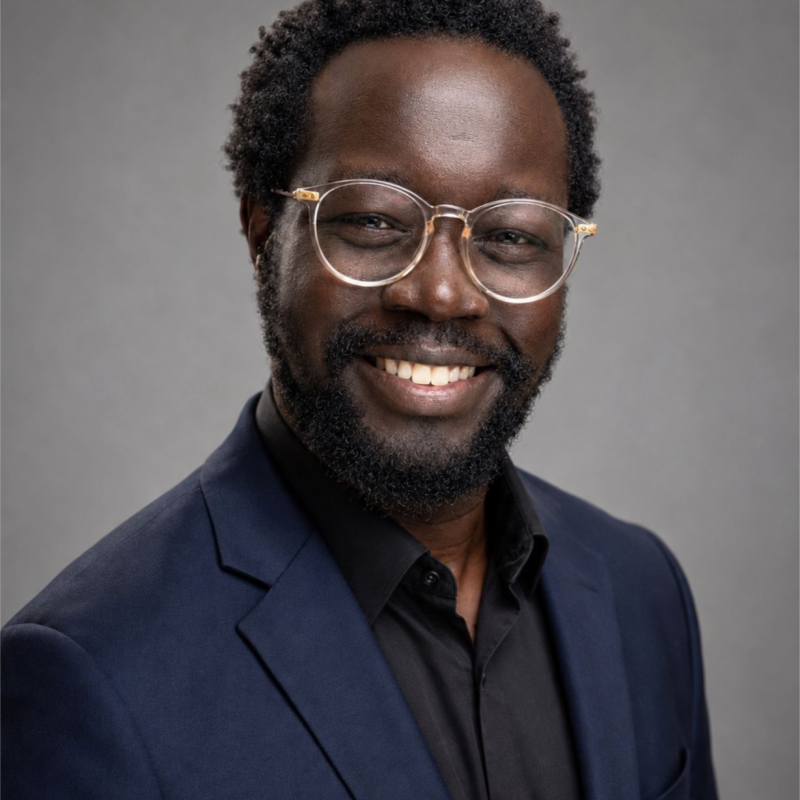
Kuol Malou AMA Contributor
Kuol is the Founder & Fractional Strategy and Operations Executive @Third Space Narrative | AfroNile Foundation