The Pitt Season 2 Did One Major Thing Right: Exposing How Women Patients Are Treated In ERs
Edith Lynch is 46 with no cardiac history when she comes in by ambulance in the penultimate episode of The Pitt’s second season. The male EMS workers have placed her anterior leads — tiny patches meant to measure the heart’s electrical output — too low. It’s a novice mistake, the kind that happens when someone is more worried about unhooking a bra strap than doing their job correctly. By the time Dr. Robby (Noah Wyle) notices, Edith has gone limp and her heart is in ventricular tachycardia. A condition that should’ve been manageable has become a full-blown crisis, complete with a defibrillator, chest compressions, and a full team scrambling to reverse a medical avalanche that had no business happening. Robby turns to his female staff afterward and asks them directly whether they’d choose death with modesty or life with brief nudity. You can guess which they’d choose, but the show doesn’t spend time mulling over the answer. It doesn’t have it. Just one episode later, Judith Lastrade arrives at 36 weeks pregnant with a two-day headache, blurred vision, swollen ankles, and a dangerously high blood pressure reading. But Judith has done her “research.” She falsely believes ultrasounds harm babies and argues that women have been giving birth without medical intervention for thousands of years. Even when her doctors gently point out the historical infant mortality rates and the fact that preeclampsia affects roughly one in ten pregnancies (still with no identified cause), she’s skeptical. But her seizures come on quick and her baby’s heartrate drops even faster, forcing the team to paralyze her in order to intubate before they can get too far into the weeds of the latest “wild birth” trend. Eventually, Dr. Abbott (Shawn Hatosy) will cut her baby out while her brain is still on fire and deliver an infant who arrives blue. It’s one of the most harrowing scenes the show has produced this season, and the most uncomfortable thing about watching it is that Judith’s distrust of the medical system wasn’t totally irrational, but it could’ve proved fatal all the same. Of course, Judith and Edith aren’t real, their stories were invented to fill The Pitt’s sprint towards its Season 2 finish line, but they are familiar to any woman who’s ever found themselves inside an emergency room. We know the statistics better than anyone. Women wait an average of 30 minutes longer than men for pain medication in ERs, even when reporting identical pain levels. In cardiac cases specifically, we are 8.6 percent less likely to receive defibrillation on scene, and, if we’re under 55 years-old, twice as likely to die in hospital. When it comes to maternity care, the numbers are even more grim. The US has the highest maternal mortality rate of any wealthy country, almost twice that of places like France, the UK, and Canada. Around 29 percent of women report experiencing discrimination during maternity care specifically, with rates climbing to 40 percent among women of color. Edith was almost another statistic. And Judith? She was so determined not to become one that she risked her child’s life (and her own). The Pitt has earned praise across its two seasons for its commitment to authenticity. Every time Wyle accepts an award on the show’s behalf — and he’s done that quite a bit — he’s emphasized the responsibility the cast and crew feels when it comes to their portrayal of the real life heroes populating emergency departments across the country. But that procedural accuracy is more than just a shortcut to an Emmy win, it’s a political act. When Edith’s leads are placed wrong, the show decides to frame it as something other than an isolated human error or an unlucky fluke. Instead, it’s treated as the predictable outcome of a culture in which a man’s discomfort takes precedence over a woman’s life. It even makes space for Dr. Robby to say that out loud, lecturing those responsible in front of a room full of people as the chaos of holiday patients maimed by fireworks and miniature flags buzzes on in the background. The show understands that naming the mechanism along with the outcome is the only way to make an audience feel something that an on-paper statistic just can’t. [The Pitt] has become a model for all the unspoken and invisible inequities currently suffocating our healthcare system… It’s a PSA, with better cinematography, and it’s needed now more than ever. jessica toomer It helps obviously that The Pitt is fantastic television, shot with the kind of immersive real-time aesthetic that makes 15 hours in a Pittsburgh ER feel like something you survive rather than just stare at. But its watchability and its value as a public health resource aren’t mutually exclusive. In fact, it’s because the show is so good at its job, so specific with its storytelling, that it’s become a model for all the unspoken and invisible inequities currently suffocating our healthcare system. The show knows you have to understand
 Black News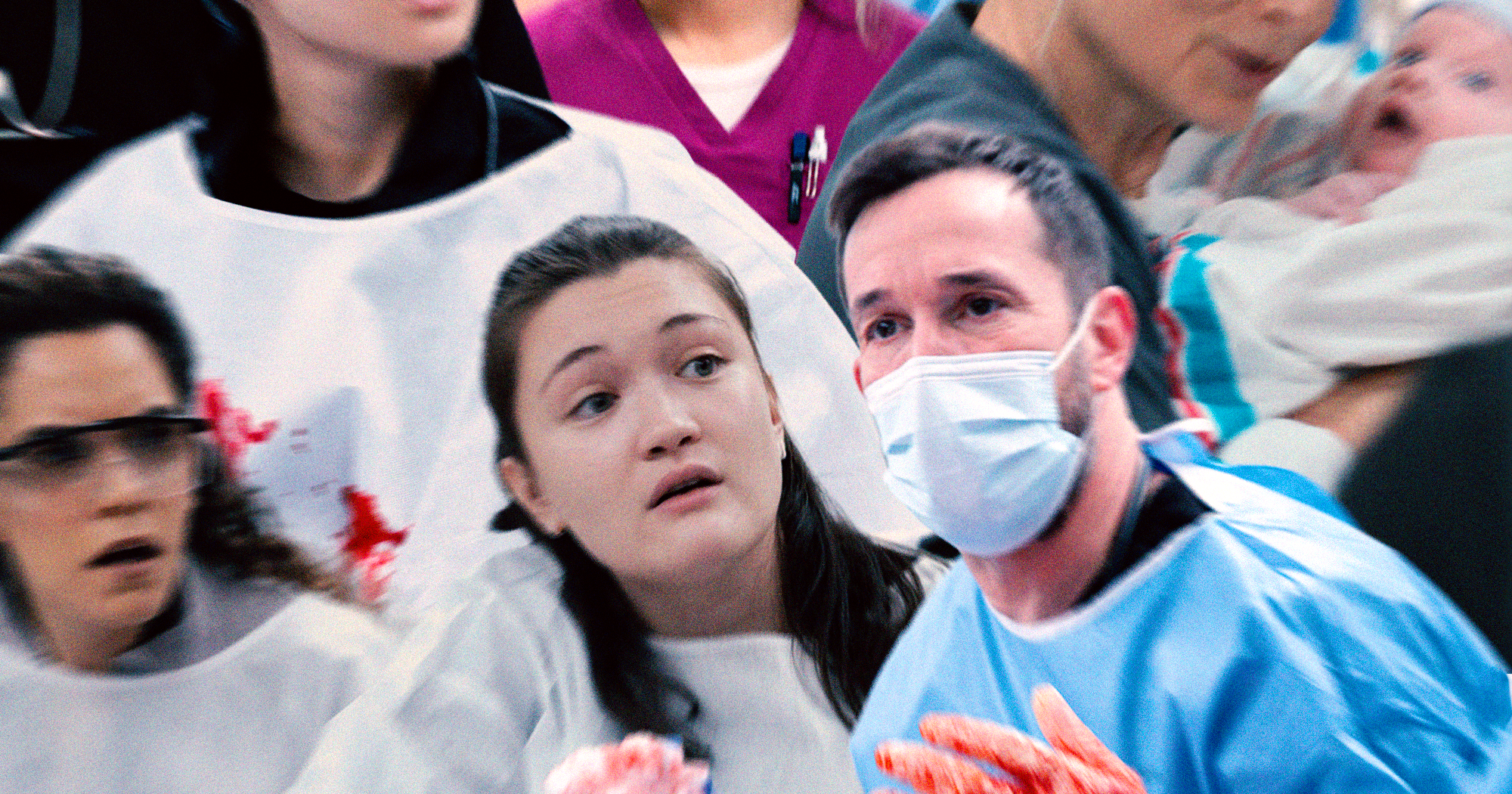


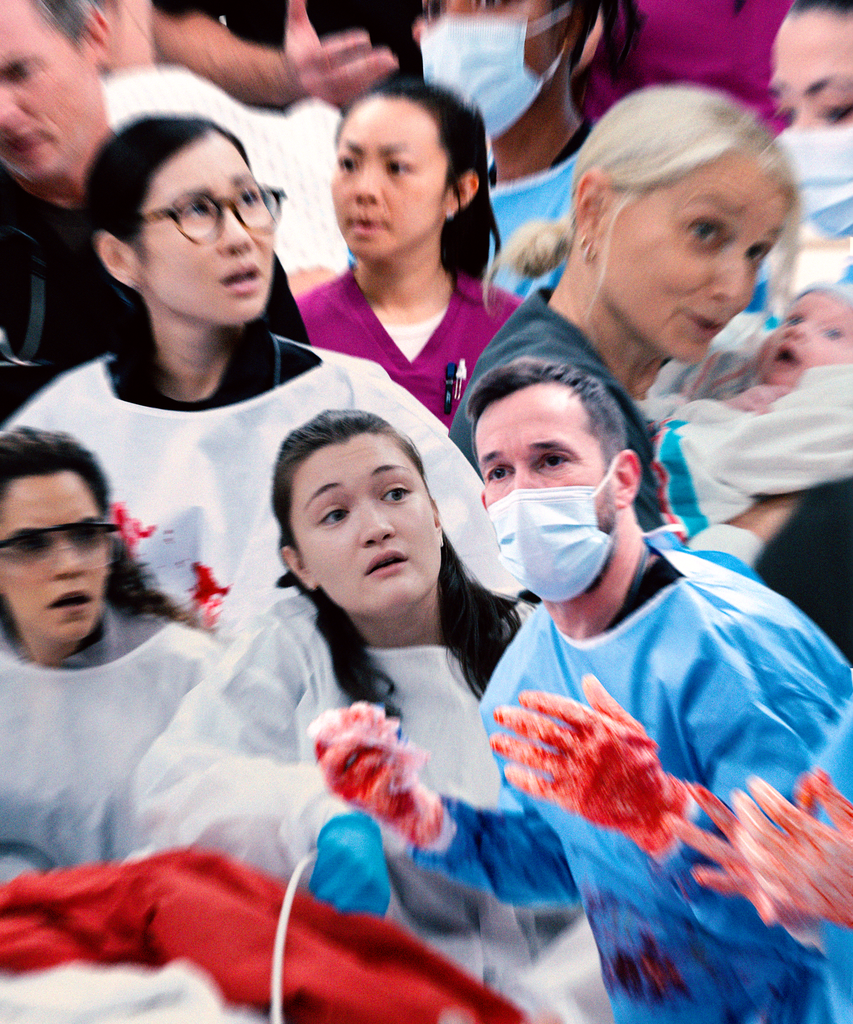
Edith Lynch is 46 with no cardiac history when she comes in by ambulance in the penultimate episode of The Pitt’s second season. The male EMS workers have placed her anterior leads — tiny patches meant to measure the heart’s electrical output — too low. It’s a novice mistake, the kind that happens when someone is more worried about unhooking a bra strap than doing their job correctly. By the time Dr. Robby (Noah Wyle) notices, Edith has gone limp and her heart is in ventricular tachycardia. A condition that should’ve been manageable has become a full-blown crisis, complete with a defibrillator, chest compressions, and a full team scrambling to reverse a medical avalanche that had no business happening. Robby turns to his female staff afterward and asks them directly whether they’d choose death with modesty or life with brief nudity. You can guess which they’d choose, but the show doesn’t spend time mulling over the answer. It doesn’t have it.
Just one episode later, Judith Lastrade arrives at 36 weeks pregnant with a two-day headache, blurred vision, swollen ankles, and a dangerously high blood pressure reading. But Judith has done her “research.” She falsely believes ultrasounds harm babies and argues that women have been giving birth without medical intervention for thousands of years. Even when her doctors gently point out the historical infant mortality rates and the fact that preeclampsia affects roughly one in ten pregnancies (still with no identified cause), she’s skeptical. But her seizures come on quick and her baby’s heartrate drops even faster, forcing the team to paralyze her in order to intubate before they can get too far into the weeds of the latest “wild birth” trend.
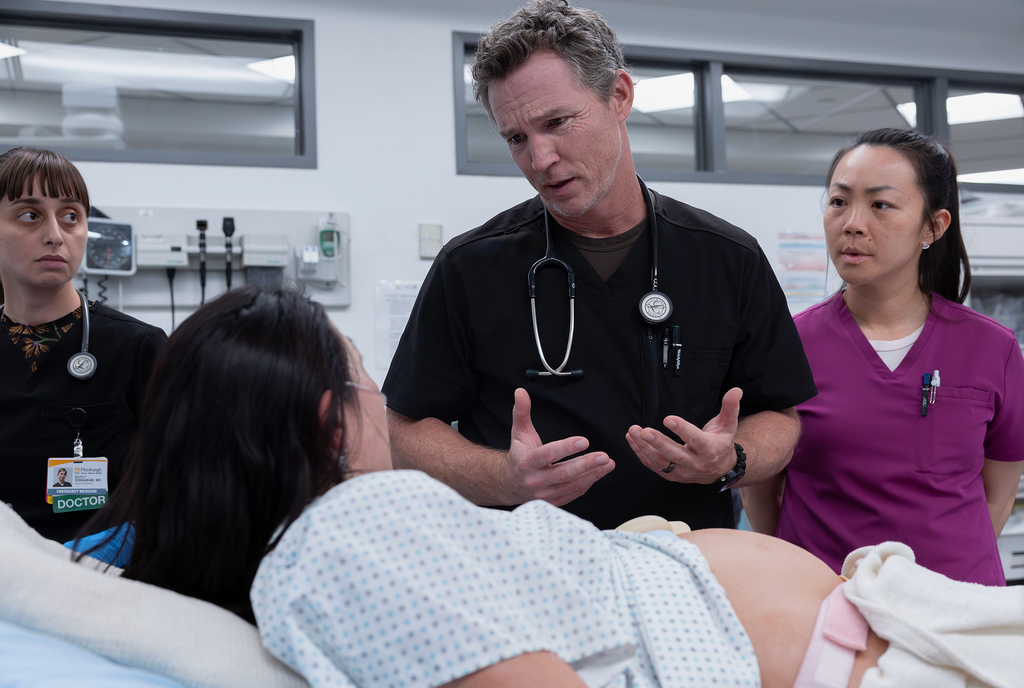
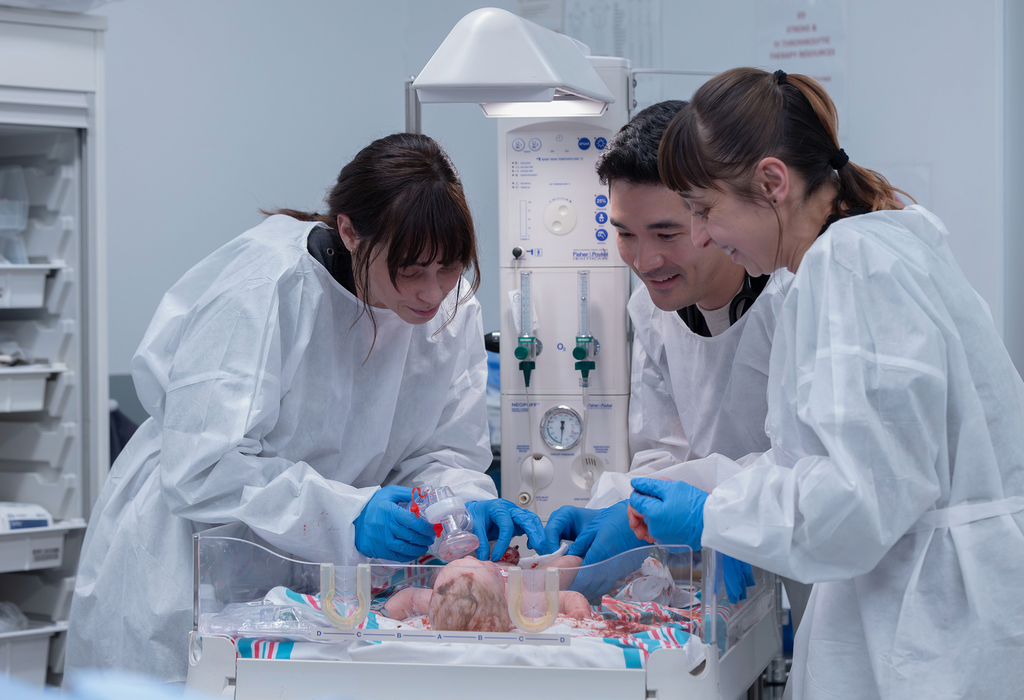
Eventually, Dr. Abbott (Shawn Hatosy) will cut her baby out while her brain is still on fire and deliver an infant who arrives blue. It’s one of the most harrowing scenes the show has produced this season, and the most uncomfortable thing about watching it is that Judith’s distrust of the medical system wasn’t totally irrational, but it could’ve proved fatal all the same.
Of course, Judith and Edith aren’t real, their stories were invented to fill The Pitt’s sprint towards its Season 2 finish line, but they are familiar to any woman who’s ever found themselves inside an emergency room. We know the statistics better than anyone. Women wait an average of 30 minutes longer than men for pain medication in ERs, even when reporting identical pain levels. In cardiac cases specifically, we are 8.6 percent less likely to receive defibrillation on scene, and, if we’re under 55 years-old, twice as likely to die in hospital.
When it comes to maternity care, the numbers are even more grim. The US has the highest maternal mortality rate of any wealthy country, almost twice that of places like France, the UK, and Canada. Around 29 percent of women report experiencing discrimination during maternity care specifically, with rates climbing to 40 percent among women of color. Edith was almost another statistic. And Judith? She was so determined not to become one that she risked her child’s life (and her own).
The Pitt has earned praise across its two seasons for its commitment to authenticity. Every time Wyle accepts an award on the show’s behalf — and he’s done that quite a bit — he’s emphasized the responsibility the cast and crew feels when it comes to their portrayal of the real life heroes populating emergency departments across the country. But that procedural accuracy is more than just a shortcut to an Emmy win, it’s a political act.
When Edith’s leads are placed wrong, the show decides to frame it as something other than an isolated human error or an unlucky fluke. Instead, it’s treated as the predictable outcome of a culture in which a man’s discomfort takes precedence over a woman’s life. It even makes space for Dr. Robby to say that out loud, lecturing those responsible in front of a room full of people as the chaos of holiday patients maimed by fireworks and miniature flags buzzes on in the background. The show understands that naming the mechanism along with the outcome is the only way to make an audience feel something that an on-paper statistic just can’t.
[The Pitt] has become a model for all the unspoken and invisible inequities currently suffocating our healthcare system… It’s a PSA, with better cinematography, and it’s needed now more than ever.
jessica toomer
It helps obviously that The Pitt is fantastic television, shot with the kind of immersive real-time aesthetic that makes 15 hours in a Pittsburgh ER feel like something you survive rather than just stare at. But its watchability and its value as a public health resource aren’t mutually exclusive. In fact, it’s because the show is so good at its job, so specific with its storytelling, that it’s become a model for all the unspoken and invisible inequities currently suffocating our healthcare system. The show knows you have to understand how cardiac leads are supposed to be placed before you can understand what it costs when someone’s too squeamish to simply move some breast tissue and place them correctly. It’s a PSA, with better cinematography, and it’s needed now more than ever.
That’s because in 2026, federal funding for women’s health programs is under attack. The post-Dobbs medical landscape has made physicians more legally risk-averse without making them more clinically attentive, which is a distinction that tends to get lost in the louder arguments about abortion access. But it’s one that affects the quality of care women receive every single day — and in contexts that have nothing to do with reproductive medicine. The institutions that are supposed to be closing the gender health gap are, at best, moving slowly. And at worst? Not moving at all. And filling that vacuum? A prestige drama on a streaming service, calling attention to the job that a generation of policy makers and public health campaigns has failed to do.
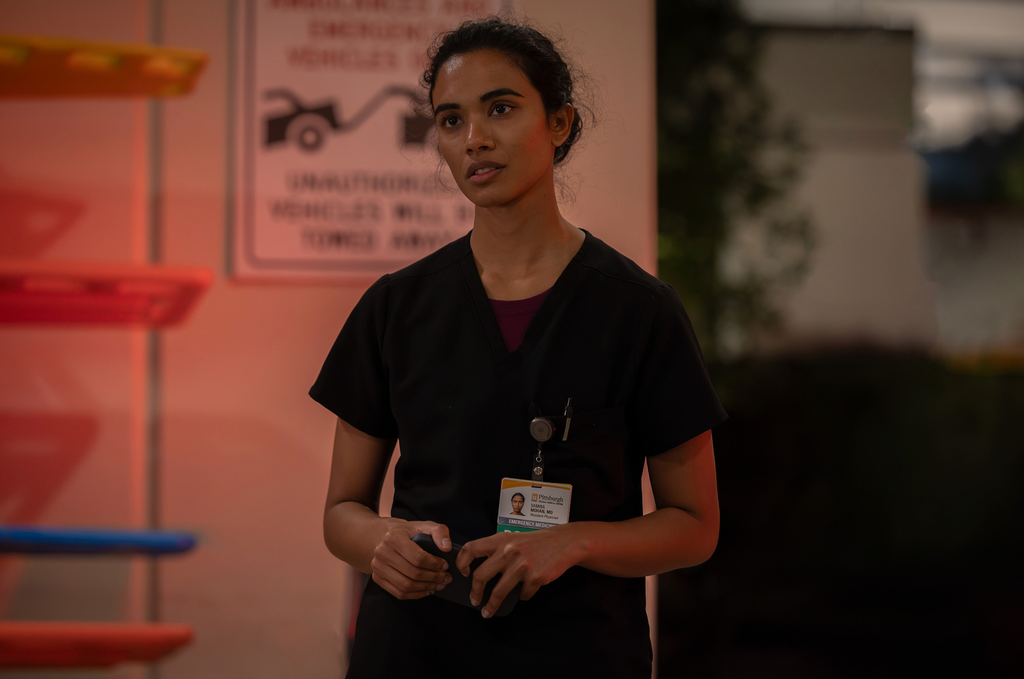
Which brings us to Amaya. She’s 32, has PCOS, and arrives earlier in the season with severe abdominal pain. She tells Dr. McKay (Fiona Dourif) that getting her diagnosis took years because she kept running into doctors who weren’t particularly interested in the pain she was describing. McKay listens though, and keeps digging, even after a transvaginal ultrasound comes back clean, making the call to hold Amaya for observation on instinct even as Whitaker (Gerran Howell) suggests discharging the woman with over-the-counter pain meds and orders to visit her primary care doctor. That instinct ends up catching an ovarian torsion, which is a life-threatening medical emergency where the ovary twists and releases, cutting off its own blood supply. McKay’s hesitance to simply write Amaya off means they might be able to treat it without losing the ovary entirely.
We share these horror stories… hoping to warn our friends, mothers, and sisters, to maybe even save them from going through the same thing. These stories aren’t new, the show just gave them better lighting and a primetime slot.
jessica toomer
Amaya is lucky. Her pain was taken seriously, but 56 percent of women report that their own has been dismissed by a provider. One-third have delayed or avoided care entirely because they’ve done the math on what happens when treatment hinges on whether a doctor “takes their word for it”. And for Black women, the odds are even worse (fittingly, the one area The Pitt itself needs to work on is its treatment of its women of color characters). They’re waiting 46% longer for the same care their white counterparts get, despite using the ED as their primary form of healthcare more often than white women.
Plenty of health professionals have shared that watching The Pitt is often triggering because of how precise its depiction of emergency medicine is. But in sSeason 2two, the show is just as tough of a watch for women, too. Patients like Edith and Judith and Amaya are composites of experiences so many of us have had. A misplaced lead, dismissed abdominal pain, earned distrust when it comes to the level of maternity care available – we share these horror stories on Reddit forums and Twitter threads and in private group chats, hoping to warn our friends, mothers, and sisters, to maybe even save them from going through the same thing. These stories aren’t new, the show just gave them better lighting and a primetime slot.
That doesn’t mean The Pitt can fix the gap it’s documenting. A TV show can’t force funding for more research into conditions that primarily affect women. It can’t fill those post-Roe v.Wade gaps or make a male EMS worker comfortable enough with a woman’s body to do his job. But it can make you feel the weight of those failures. It can make you shocked and insulted and furious…rightly so. And maybe those feelings can spur change, or at least, awareness, on an individual level and on a societal one. The Pitt may not have the power to fix the gender healthcare gap, but it can keep plastering it on screen, week after week, refusing to let us forget that we’re failing women every day, exactly when they need our help the most.
Like what you see? How about some more R29 goodness, right here?
Why Do 'The Pitt' Cast Shakeups Only Involve WOC?