THE READING ROOM: Timothy D. Tyson and Mary D. Williams’ ‘Mahalia Jackson, Moving on Up a Little Higher: The Story of an American Civil Rights Pioneer’
Before Martin Luther King, Jr., rose to deliver his now-iconic speech at the end of the March on Washington for Jobs and Freedom on August 28, 1963, Mahalia Jackson riveted the quarter million attendees congregated on the Washington Mall with her stirring performances of “I’ve Been
 Black News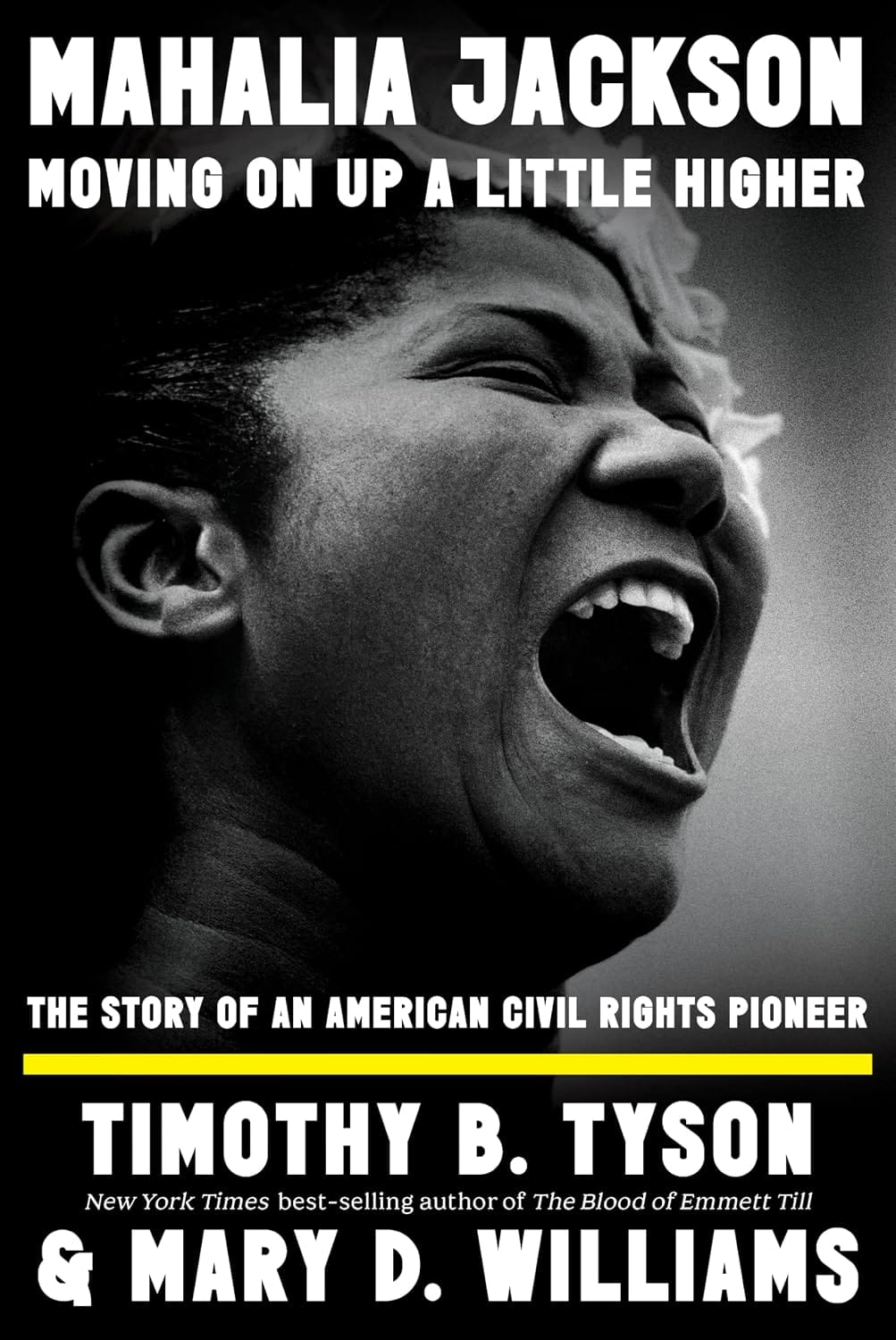

Before Martin Luther King, Jr., rose to deliver his now-iconic speech at the end of the March on Washington for Jobs and Freedom on August 28, 1963, Mahalia Jackson riveted the quarter million attendees congregated on the Washington Mall with her stirring performances of “I’ve Been Buked and I’ve Been Scorned” and “How I Got Over.” By the time of this appearance, Jackson had already sold millions of albums, performed the National Anthem at John F. Kennedy’s Inaugural Ball in 1961, performed at the Newport Jazz Festival, and had sung in churches at revivals, and even at political rallies. However, Jackson’s deep involvement in the Civil Rights movement is less known. In their exceptional new critical biography, Mahalia Jackson, Moving on Up a Little Higher: The Story of an American Civil Rights Pioneer (Liveright, August 18) historians Timothy D. Tyson & Mary D. Williams (who is also a gospel singer) provide a thoughtful and detailed glimpse into Jackson’s work as a civil rights’ pioneer.
Born in poverty in 1911 in New Orleans, Jackson eventually moved with her Aunt Hannah in 1931 to Chicago, joining thousands of others migrating north in search of better pay and a better life. Growing up, she worked at home, ironing and doing laundry and other housekeeping chores as well as babysitting for her two cousins. Even in the midst of her backbreaking work, Jackson knew she wanted so sing. She started singing with the church choir when she was four, and she listened to records by blues and jazz singers Bessie Smith and Ma Rainey on her older cousin’s phonograph. Living in New Orleans, she escaped from the burdens of her work through the wide range of music she heard, especially the ragtime and the second line funeral bands, which lifted people out of their sorrows. According to Jackson, “‘People [marching in the second line celebrations] were always happy then, even though somebody had died . . . . That type of music is really my soul.’”