The wild, gruelling beauty of fell running
Winner Gets Cake — With no marked route and often brutal conditions, the “quintessentially British sport” is the subject of a new joint film by TCO and Rab. Hannah Bentley explores its vertical climbs, downhill dashes and punk roots.
 Black News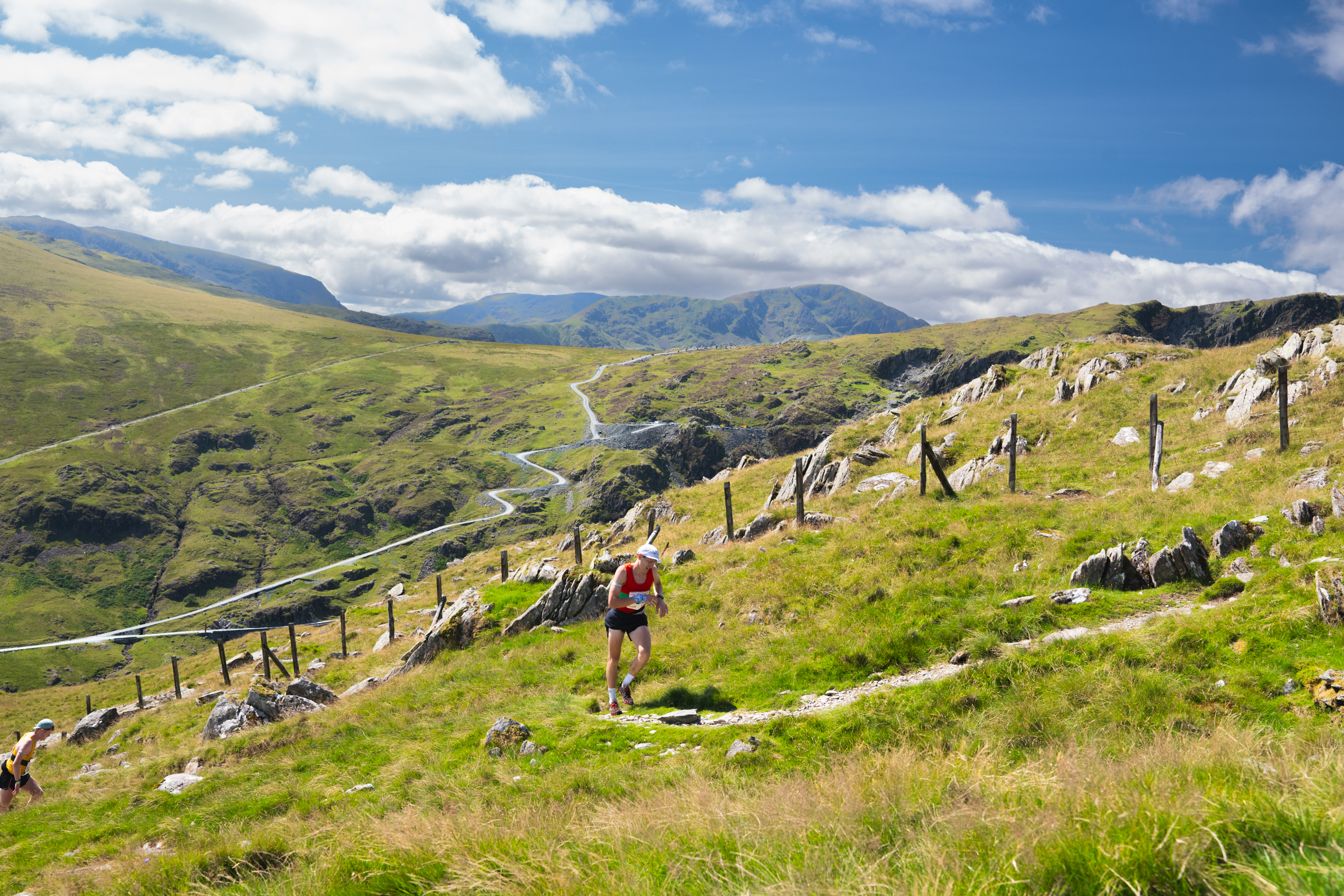
Winner Gets Cake — With no marked route and often brutal conditions, the “quintessentially British sport” is the subject of a new joint film by TCO and Rab. Hannah Bentley explores its vertical climbs, downhill dashes and punk roots.
Mike Ayers’ first foray into fell running came 20 years ago, at the 2006 Cragg Vale relay race. An avid road runner, the then 49-year-old was excited to embark on the last 11-mile leg with his friend across the West Yorkshire hills.
With its sweeping moors peppered with pockets of woodland, vast skies, and copper-green fields, neatly divided by centuries old grey Yorkstone walls, Cragg Vale has long been a place to inspire rural romantics.
Except, the race was in December, and the weather was miserable.
“It was cold and drizzling,” Mike recalls. Mud splattered his legs as he climbed 800ft (244m) of elevation across swollen, saturated ground while the wind bit at his skin, leaving behind chilled sweat and goosebumps. With steep ascents and hazy rain making visibility low, “it was the hardest run” Mike had ever done. Cramps began burning throughout his body and his complexion started to ashen. “We were getting hypothermia,” he casually explains. “And it was brilliant.”
Read next: The rogue runners taking on New York state
Mike finished the race with a “reasonable time” and no noteworthy ranking – but he didn’t care. “My endorphin level was just so high. It was like somebody had squirted benzedrine into my system. I was buzzing for the next 24 hours. [The race] was cold. It was hard. It was tough,” he grins. “I loved it – and I didn’t want to do anything else.”
Since then, Mike has got hypothermia three more times. He’s always had a taste for risk, which is exactly what appealed to him about fell running.
That passionate, “gnarly attitude” pulses through Winner Gets Cake, a short documentary produced by TCO and Rab. Named after the sweets treats rewarded to runners, the film premiered at the 2025 Kendal Mountain Festival. It follows the 2024 Championships rivalry between Ben Rothery and Finlay Grant, while also capturing the tight-knit community and gritty culture that define the sport, including interviews with prominent fell running figures like Mike.
For director Hendrik Faller, whose background lies in extreme sports filmmaking, fell running was relatively unfamiliar territory. But its “understated, uncomplicated, DIY nature” – and the “mad” characters it attracts – quickly proved compelling.
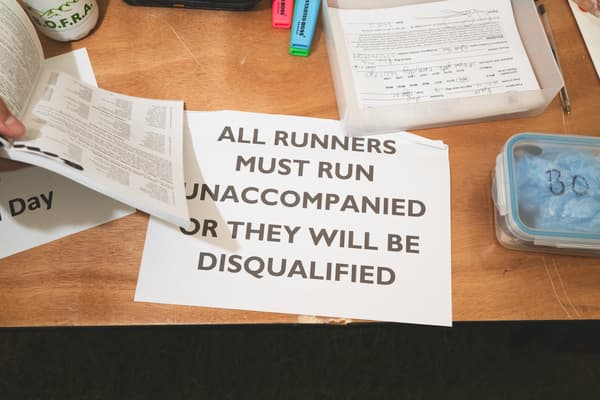
At its simplest, fell running involves racing across mountainous terrain, tackling steep climbs and descents over rugged, rocky earth. It’s a sport primarily rooted in northern Britain, and unlike trail running, it prioritises wild landscapes over established trails, demanding navigational skills and self-sufficiency. There are often unmarked, barely defined routes, with racers given starting and end points, with no GPS allowed for navigation. Steep hill runs are the name of the game, and part of the race’s challenge relies on runners finding the fastest and most efficient ways between the checkpoints.
Though people have forever explored the fells, one of the earliest recorded races dates back to the 11th century, when Scottish King Malcolm Canmore is said to have staged a hill race to find a royal messenger capable of crossing Scotland’s challenging terrain at speed. As advances in transport reduced its practical purpose, fell running evolved into a recreational pursuit, becoming a fixture of local fairs and festivals. The sport’s community became more established with the Fell Runners Association founded in 1970, followed by the British Fell Running Championships in 1972.
Now, races span from a sharp 8km (5 miles) blast over Ilkley Moor in the Yorkshire Dales to the 24-hour Bob Graham Round – a 100km (62 miles) circuit linking 42 Lake District peaks and a total of 27,000ft (8,200 metre) elevation. With an extensive list of runs held all around the north of Britain, Hendrik began to see fell running as more than competition. “It’s a community exploring where they’re from and celebrating their landscape,” he says.
To the German director, it’s “quintessentially British”. The UK’s hills are rarely forgiving: thick clag, horizontal rain, bog underfoot. “If you don’t like the weather, you’re never going to go outside,” he says. “So, it breeds a hardy attitude – an acceptance that having fun doesn’t always mean comfort.”
Self-organised races where people test themselves against weather and gradient for fun is undeniably punk – something Boff Whalley, former Chumbawamba guitarist and fell runner drew explored in his 2021 book Faster! Louder! He chronicles the life of Gary Devine, a punk rocker from Leeds and 90s fell running champion who raced with a mohican and a snarl, demonstrating the connection between punk’s DIY spirit and the culture of the fells: rough around the edges and allergic to gloss.
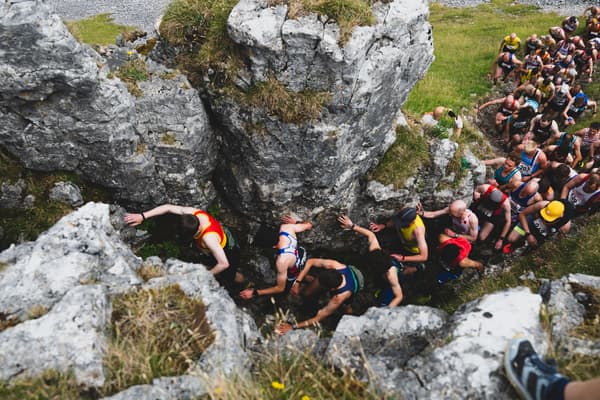
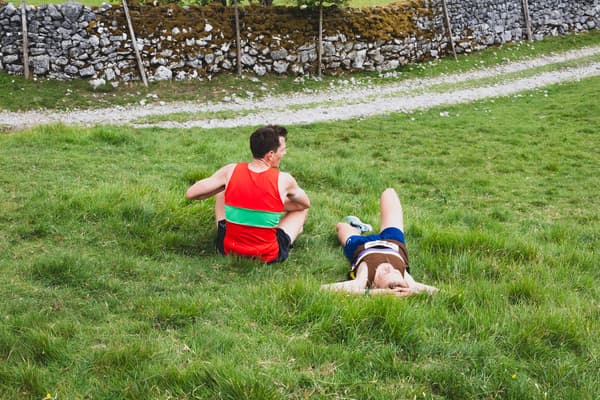
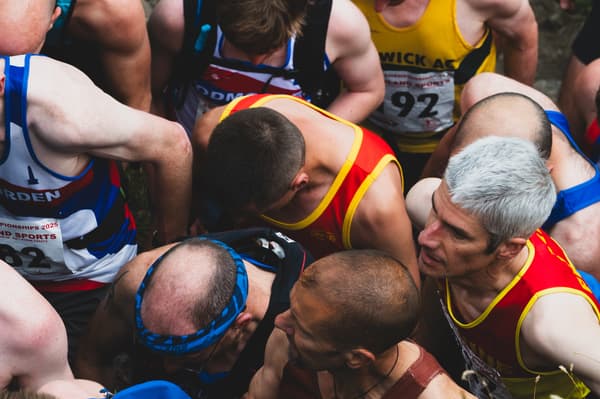
This stoicism carries through to the start line, where elites and amateurs, teenagers and seniors, line up together with little ceremony. Unlike many of Hendrik’s previous subjects in extreme sports, these runners didn’t have a “hardcore backstory” or grand narrative, “they just loved running”.
And in a sport where spectators are sparse, with few willing to hike up Scafell Pike or Great Gable just to watch, that love has to be intrinsic. As one runner put it to Hendrik: “I’d do it even if no one was watching.” Most of the time, no one is.
“There’s a spiritual element to it, whether that’s a connection to nature or to the divine.”
Mike feels the same. One of his most treasured runs was entirely solitary.
During the week, the 69-year-old manages a pest control company in north Leeds. One afternoon, he finished a job early and realised he had enough time to squeeze in a run up Dove Crag.
The lower slopes were all ferns and bramble, brittle with frost, clawing at his calves as he climbed. But when he reached the summit, the crag’s usual scarred, rough top had been sanctified by a fall of pristine snow. Bracken lay buried beneath wind swept snow, sculpted into ripples, like waves frozen just before breaking. The plateau stretched out in a white silence untouched by hoof, paw or footprint.
As a Christian for nearly 50 years, Mike says moments like these help him feel close to God. Fell running is “another version of church”, he says. “There’s a spiritual element to it, whether that’s a connection to nature or to the divine” that always rouses a mindful moment within him. Blisters, breath and belief are rewarded with dramatic landscapes that to him are “an example of the glory and grace of God” – something he’d seldom see if he’d continue to pound pavements.
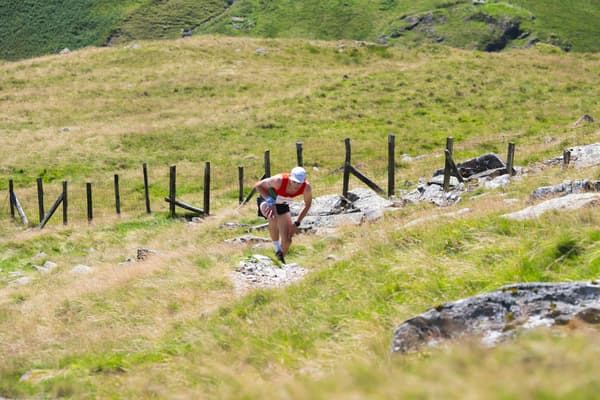
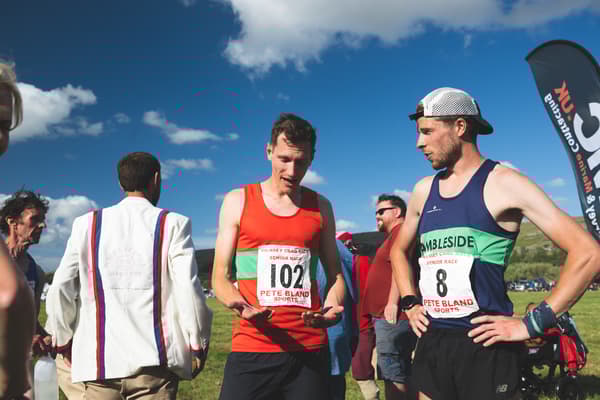
Two-time English fell running champion Ben Rothery agrees. There’s a unique meditative process that only occurs when you’re halfway up a hill, dodging rocks and sucking in fresh mountain air. “In road running you can put one foot in front of the other,” he explains, “so it’s easy for your thoughts to wander.” But in the mountains there’s no such luxury – “you have to be focused on what you’re doing physically.”
As a GP and soon-to-be father of two, Ben is protective of his time in the fells. “There’s not many times in a day when you can just completely switch off.”
The 31-year-old was first introduced to fell running by his sixth form teacher, and from there “the bug stuck”. Now he’s got roughly 75 races behind him and numerous Great Britain vests earned from across Europe. But you’ll struggle to get him to talk about his titles. The fell running community deals in humility, not hype. Ben prefers “useful” prizes, like socks, over trophies that “just gather dust”.
What’s earned Ben his many pairs of socks is his speedy downhill dash. Compared to his main rival, Finlay Grant, Ben’s racing edge shows when the gradient tilts and the mountain falls away behind him. In the fell running community there’s a certain mantra for when you’re faced with a dizzying descent: ‘breaks off, brains off’.
“When you’re running downhill, just don’t think too much – it’s where people tend to go wrong,” Ben says with a smile. “It doesn’t mean close your eyes, it’s about letting gravity do its thing, otherwise you overanalyse every footing and end up tripping over your own feet.”
“When you’re running downhill, just don’t think too much – it’s where people tend to go wrong. It’s about letting gravity do its thing.”
There was a time, Ben admits, when he’d get “too het up” about races. But leaning into the rhythmic chaos of fell races has allowed him to enjoy competing more. The nerves are still there at the start, but the drama of a race feels lighter now – less of a solo battle and more like a shared adventure. In such a close community you’re always climbing into the clag alongside familiar faces, making race day more about the chance to have “good craic with your mates”, rather than the glory of winning.
As the marathon boom continues and trail running picks up pace, this fell running philosophy is drawing in more runners, coming for its own unique challenge. “It’s definitely growing, but at a slow pace,” Ben explains (although geography remains a gatekeeper to the sport). The appeal is “a sense of freedom”. Charging down a mountain “like a child” isn’t embarrassing, it’s the point. No one’s tracking their runs on Strava or posing for Instagram in coordinated work out gear. There’s no room for vanity in the fells.
Accepting that you’re going to be drenched, muddied, and even bloodied, means you learn to “find the joy in getting filthy”. If you’re “stiff and stressed,” Ben says, then you’re not going to be a good fell runner. Success lies in “trusting your legs and relaxing into it” – surrendering to the gradient and letting instinct take over. After all: “What’s more natural than running in the hills?”
Winner Gets Cake is a joint production between TCO and Rab. It premiered at Kendal Mountain Festival 2025, and travels to the Sheffield Adventure Film Festival 2026, which takes place between March 20-22.
Hannah Bentley is a freelance journalist. Follow her on Instagram.
Yushy is a freelance photographer. Follow him on Instagram.
Buy your copy of Huck 82 here.
Enjoyed this article? Follow Huck on Instagram for more from the cutting edge of sport, music and counterculture.
Support stories like this by becoming a member of Club Huck.