Trinity UMC history is Houston Black history
Trinity’s centuries-spanning story connects Black education, Juneteenth, civic activism, military history, and generational achievement.
 Black News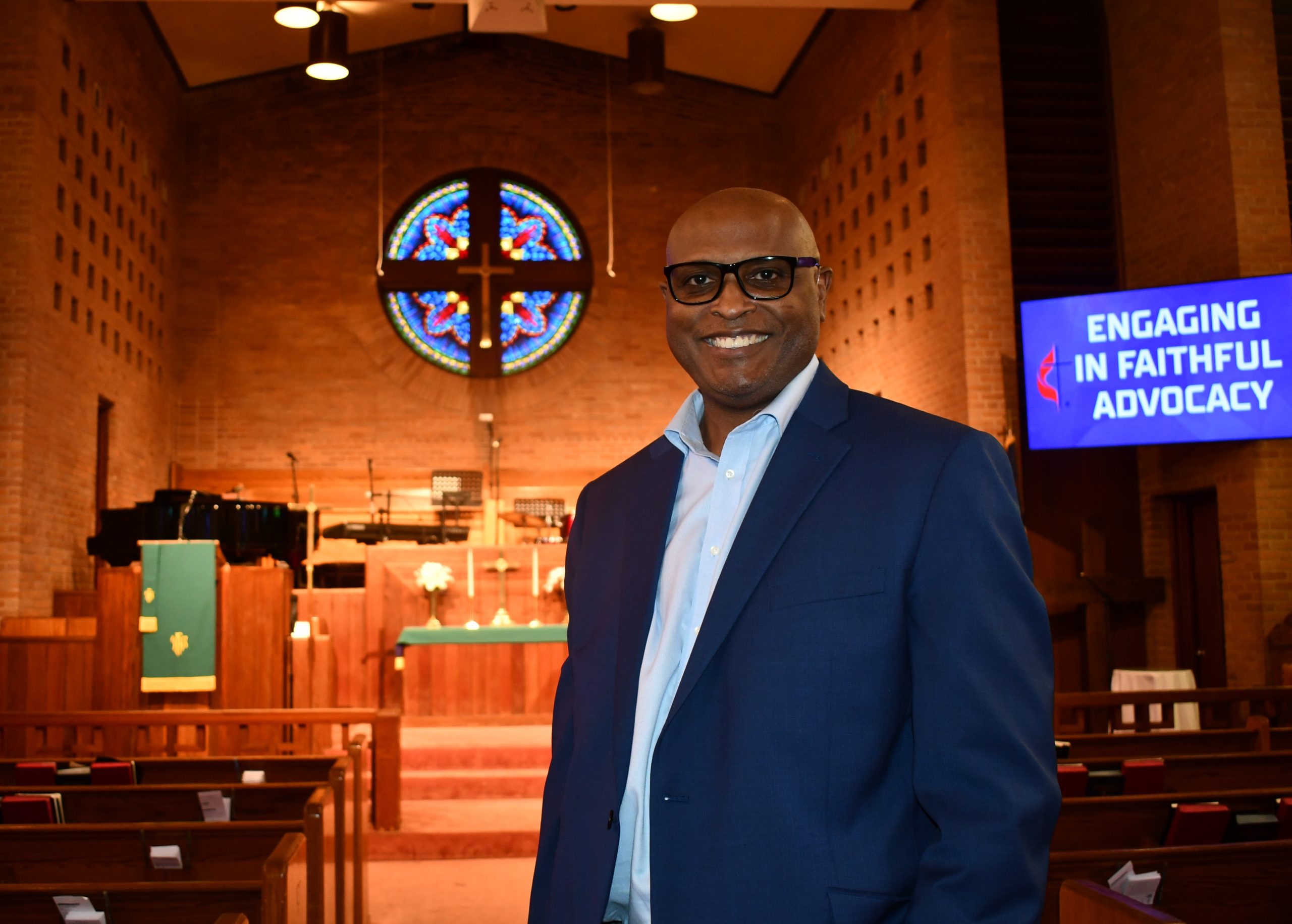

Pastor Ed C. Jones III thought he knew Trinity United Methodist Church’s history after nearly a decade of leading the Third Ward congregation.
Then came a grant application for a restoration project.
As Jones dug deeper into Trinity’s past, he kept discovering “new” pieces of a story that connected the church to Houston’s educational, cultural, and civic development.
“It’s been a very phenomenal discovery of all of the impact the church has made on our culture, our educational system, not only Wiley College, TSU, and all the other schools that came out of this church,” Jones said. “It’s a historic thing and one that helped give me a little bit more focus on what, as a pastor, I need to focus on in this season.”

That history reaches from the era of enslavement to Juneteenth, from historically Black colleges and universities to Houston’s public schools, and from Camp Logan to today’s efforts to prepare another generation.
An education pipeline
Jones is himself part of Trinity’s legacy. As a child, he attended what was then Bunny Land, the same location where Trinity Preparatory Academy now operates.
“And it just so happened one of those kids, me, became the pastor here,” Jones said.
Education has long been woven into Trinity’s identity. Jones says more than 20 schools have been named for Trinity members across the Houston metropolitan area and beyond.
The church’s educational legacy is also reflected in its stained glass, including the “Education Window,” which depicts a mother teaching two children while holding an ancestral quilt that symbolizes history, wisdom, and generational knowledge. At the bottom are Wiley College and Texas Southern University, reflecting what Jones describes as the role churches played in establishing and nurturing educational institutions.
“Many of the HBCUs that started across the nation find their roots in churches,” he said.
That tradition continues through Trinity members such as Ernestine Mitchel, who wrote her first book in her 90s and followed it with another at age 92.
“That’s the type of DNA [we have at Trinity],” Jones said, of Mitchel, whose educational impact extended from Harris to Fort Bend and Brazoria counties.
Windows that remember
Trinity’s stained-glass windows serve as another history lesson. While the Civil Rights window often receives attention, Jones points to the “24th Infantry Window” as especially meaningful to him as a veteran.
The window recalls Houston’s 1917 Camp Logan incident, involving Black soldiers who were members of the 24th U.S. Infantry.

“At Camp Logan, they were sworn to protect and defend not only the country but their unit,” said Jones. “And their unit came under attack by a white lynch mob. They fought with dignity to protect one another and protect the base as a whole.
“It started a riot, and they defended that base and each other. Many people lost their life on that occasion. And because of that, those soldiers were unjustly tried, and some quickly hanged for their commitment to the country.”
Jones says the episode represents both Black patriotism and the contradiction of Black veterans returning from military service only to face racial violence and injustice.
“This window helps remind me of how patriotic we are for those who have sworn to protect the country,” Jones said, “and when we came back home, how unjustly we were treated.”
He added that the history should be remembered by people who know Memorial Park primarily as a place to exercise and enjoy nature.
“That park was a military base. And I never knew that until I came to Trinity,” he said.


A Juneteenth connection
Trinity’s history also intersects with one of Houston’s most important annual celebrations. Jones says the church’s history reaches back to the 1830s and that its members were instrumental in an 1866 celebration that is now recognized as Houston’s first Juneteenth celebration.
According to Jones, a planned church anniversary celebration in 1865 was delayed by rain and eventually moved to June the following year. Methodists and Baptists joined together for a parade that began at Trinity’s then-location in downtown Houston.
“It’s recorded now as the first Juneteenth celebration in Houston,” Jones proudly shared.
He connects that history to Trinity’s later partnership with Antioch Missionary Baptist Church in purchasing land for Emancipation Park in 1872, linking the church’s early presence in Houston to one of the city’s most important Black civic spaces.
Older than the record books?
Galveston’s Avenue L Missionary Baptist Church, whose origins date to 1840, is widely recognized as Texas’ oldest Black church. Reedy Chapel AME Church, founded in 1848, is also among the state’s historic Black congregations.

In Houston, Antioch Missionary Baptist Church, established in January 1866, is celebrated as the city’s first Black church congregation.
Jones believes Trinity belongs in that conversation.
“Trinity has been here since the beginning,” he said. “One of the things we recently discovered was not only tracing our roots back to 1839, going to 1848, having property in 1851, and just how this church has evolved not only with the city, but really in the nation.”
Preserving the legacy
Anita Lee-Punch, Trinity’s official historian and caretaker of its legacy, helps keep that story alive. Pointing to an image in the church’s history display, she said, “This was our first church. This is where Trinity members gathered during enslavement.”
Lee-Punch can trace Trinity’s four sanctuaries and the long line of educators who belonged to the congregation.
“We have an incredible legacy here, and the legacy continues,” she said.
Jones credits Lee-Punch with carrying forward the work of earlier generations who documented Trinity’s history. Now, he wants the church to tell that story more intentionally while expanding the reach of its ministry.
Building the ‘Future First’
For Jones, preserving history is ultimately about preparing the future.
“In this season I found myself in, my focus is on early education,” shared Jones. “I believe we can impact the pipeline to prison by helping those two, three, four-year-olds get the foundation they need.”
Jones calls the broader vision Future First—supporting people and families as they reach milestones that may represent historic firsts: the first college graduate, high school graduate, medical school graduate, lawyer, or professional in a family.
By preserving its windows, documenting its history, and investing in children, Jones sees Trinity continuing its long-standing role as a place where Black Houston’s past informs its future.
“I believe by making sure we effectively tell our story, we continue to be a launching place where dreams can come true,” Jones concluded.