Trump’s Diplomacy Without Peace In Iran War Is A Dangerous Contradictory Doctrine
By Sophia Gonzalez Photos: Wikimedia Commons On July 10, President Donald Trump announced something that should have stopped Washington in its tracks: The United States would continue negotiations with Iran, but the ceasefire was over. That announcement does not describe a temporary contradiction. It describes an emerging doctrine. For generations, Americans were told that diplomacy and war were different roads. Diplomacy was supposed to keep armies from moving, create room for compromise and end violence already underway. Military force, by contrast, was the failure of that process — or at least its last resort. The Trump administration is erasing that distinction. It is treating talks and attacks as instruments that can be used at the same time, against the same country, for the same political objective. The result is diplomacy without peace. Nearly a week after Trump’s declaration, the White House said conversations with Iran were continuing. At the same time, U.S. military operations, the naval blockade and threats of further attacks remained part of Washington’s message. Associated Press reporting described diplomacy still operating in the background while fighting intensified around the Strait of Hormuz. That is not an off-ramp. It is a pressure chamber. Listen to the language coming from Washington. Talks are no longer presented as a protected space where violence is suspended so difficult choices can be made. They are presented as another deadline, another test of obedience, another brief interval before the next strike. The question is rarely, “What would make an agreement durable?” It is more often, “How much pressure will force an agreement now?” That may produce a signature. It does not necessarily produce peace. There is a familiar argument behind this approach: Bombing creates leverage, leverage produces concessions and negotiations provide a respectable place to collect them. But this logic quietly changes the purpose of diplomacy. Instead of resolving a crisis, talks become one more way to manage it. Instead of creating safety, they become another arena in which military pressure is applied. Once that happens, war no longer interrupts diplomacy. War becomes part of diplomacy’s normal machinery. This is dangerous for a simple reason: Negotiations require some minimum belief that restraint will be reciprocated. When one side is talking while also striking, blockading and publicly threatening more destruction, every diplomatic exchange takes place under a ticking clock. A proposal is no longer judged only on its merits. It is judged under fear of what may be hit next. The United Nations Charter calls on states to seek solutions through negotiation, mediation and other peaceful means when disputes threaten international peace. “Peaceful means” is not decorative language. It reflects an understanding that the method shapes the outcome. A settlement produced under continuing attack may pause a conflict, but it is unlikely to build trust strong enough to prevent the next one. This new model also weakens democratic accountability at home. After hostilities resumed, Trump sent Congress a formal notice that his administration viewed as starting a new 60-day period for military action. That maneuver matters because the Constitution assigns Congress the power to declare war. A presidency should not be able to reset the clock on an open-ended conflict simply by relabeling when one phase ended and another began. Congress has already approved a war powers resolution directing an end to unauthorized hostilities. Yet the fighting continues, and negotiations are now being used to suggest that a political process still exists. This gives the administration the language of restraint without the discipline of restraint. For ordinary Americans, that distinction is not academic. A war that runs alongside negotiations can be sold indefinitely as temporary, limited and close to resolution. Troops remain exposed. Shipping remains vulnerable. Energy markets remain nervous. Families keep paying for a crisis that officials insist is always one more meeting away from ending. Real diplomacy should reduce the role of force, not normalize it. A serious negotiating strategy would begin with a durable ceasefire, clear limits on military operations, congressional authorization for any continued hostilities and sustained mediation through credible third parties. Those are not gifts to an adversary. They are safeguards against turning perpetual war into standard procedure. The administration wants credit for talking while it keeps bombing. Americans should demand a higher standard. Diplomacy is not the presence of negotiators in a room. It is the decision to make peace possible outside it. Sophia Gonzalez, syndicated by PeaceVoice, is an American political analyst focusing on U.S. strategy, Middle East affairs, and global security. She writes to challenge inter
 Black News
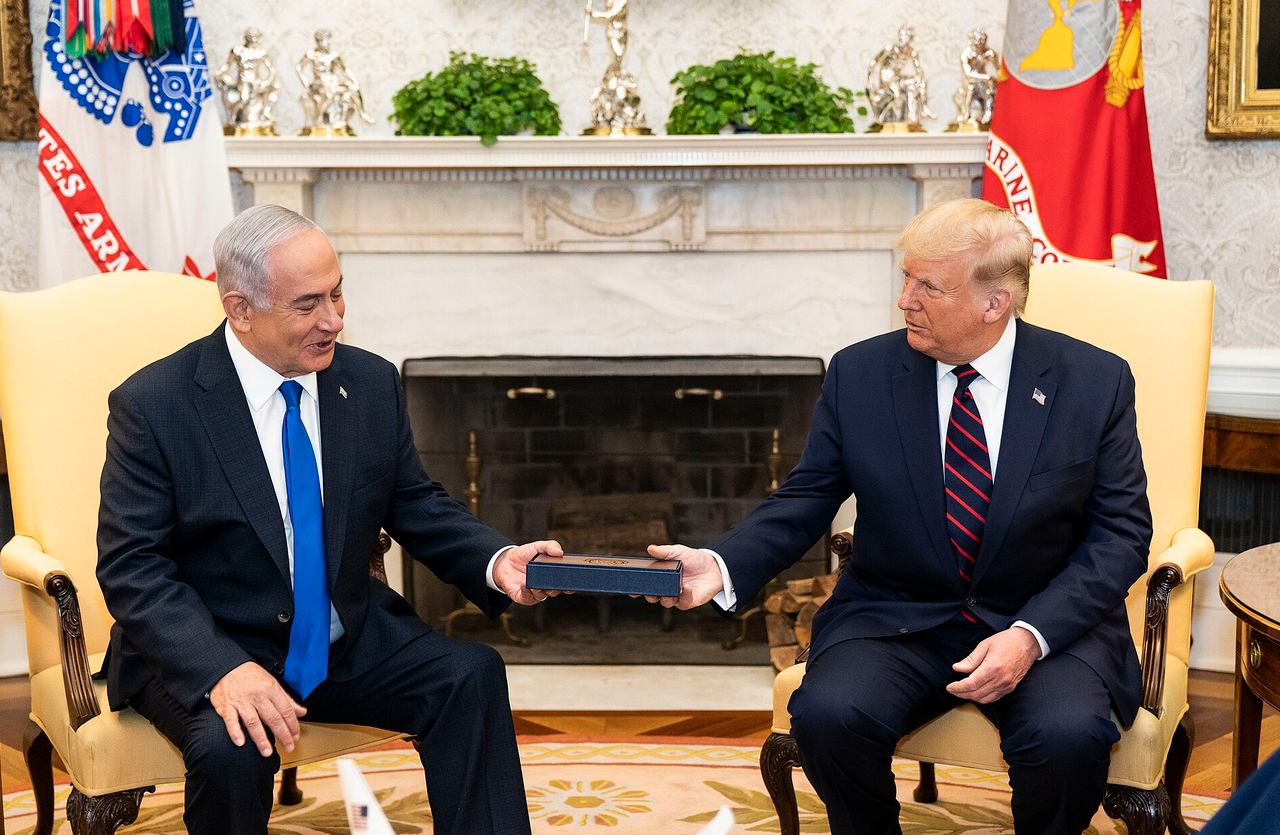
Photos: Wikimedia Commons
On July 10, President Donald Trump announced something that should have stopped Washington in its tracks: The United States would continue negotiations with Iran, but the ceasefire was over.
That announcement does not describe a temporary contradiction. It describes an emerging doctrine.
For generations, Americans were told that diplomacy and war were different roads. Diplomacy was supposed to keep armies from moving, create room for compromise and end violence already underway. Military force, by contrast, was the failure of that process — or at least its last resort. The Trump administration is erasing that distinction. It is treating talks and attacks as instruments that can be used at the same time, against the same country, for the same political objective.
The result is diplomacy without peace.
Nearly a week after Trump’s declaration, the White House said conversations with Iran were continuing. At the same time, U.S. military operations, the naval blockade and threats of further attacks remained part of Washington’s message. Associated Press reporting described diplomacy still operating in the background while fighting intensified around the Strait of Hormuz.
That is not an off-ramp. It is a pressure chamber.
Listen to the language coming from Washington. Talks are no longer presented as a protected space where violence is suspended so difficult choices can be made. They are presented as another deadline, another test of obedience, another brief interval before the next strike. The question is rarely, “What would make an agreement durable?” It is more often, “How much pressure will force an agreement now?” That may produce a signature. It does not necessarily produce peace.
There is a familiar argument behind this approach: Bombing creates leverage, leverage produces concessions and negotiations provide a respectable place to collect them. But this logic quietly changes the purpose of diplomacy. Instead of resolving a crisis, talks become one more way to manage it. Instead of creating safety, they become another arena in which military pressure is applied.

Once that happens, war no longer interrupts diplomacy. War becomes part of diplomacy’s normal machinery.
This is dangerous for a simple reason: Negotiations require some minimum belief that restraint will be reciprocated. When one side is talking while also striking, blockading and publicly threatening more destruction, every diplomatic exchange takes place under a ticking clock. A proposal is no longer judged only on its merits. It is judged under fear of what may be hit next.
The United Nations Charter calls on states to seek solutions through negotiation, mediation and other peaceful means when disputes threaten international peace. “Peaceful means” is not decorative language. It reflects an understanding that the method shapes the outcome. A settlement produced under continuing attack may pause a conflict, but it is unlikely to build trust strong enough to prevent the next one.
This new model also weakens democratic accountability at home. After hostilities resumed, Trump sent Congress a formal notice that his administration viewed as starting a new 60-day period for military action. That maneuver matters because the Constitution assigns Congress the power to declare war. A presidency should not be able to reset the clock on an open-ended conflict simply by relabeling when one phase ended and another began.
Congress has already approved a war powers resolution directing an end to unauthorized hostilities. Yet the fighting continues, and negotiations are now being used to suggest that a political process still exists. This gives the administration the language of restraint without the discipline of restraint.
For ordinary Americans, that distinction is not academic. A war that runs alongside negotiations can be sold indefinitely as temporary, limited and close to resolution. Troops remain exposed. Shipping remains vulnerable. Energy markets remain nervous. Families keep paying for a crisis that officials insist is always one more meeting away from ending.
Real diplomacy should reduce the role of force, not normalize it. A serious negotiating strategy would begin with a durable ceasefire, clear limits on military operations, congressional authorization for any continued hostilities and sustained mediation through credible third parties. Those are not gifts to an adversary. They are safeguards against turning perpetual war into standard procedure.
The administration wants credit for talking while it keeps bombing. Americans should demand a higher standard.
Diplomacy is not the presence of negotiators in a room. It is the decision to make peace possible outside it.

Sophia Gonzalez, syndicated by PeaceVoice, is an American political analyst focusing on U.S. strategy, Middle East affairs, and global security. She writes to challenge interventionism and promote diplomacy.