UAE President Sheikh Mohamed bin Zayed pardons Egyptian poet and activist days after he was handed 10-year jail term and $54,452 fine
UAE President Sheikh Mohamed bin Zayed Al Nahyan has pardoned Egyptian-Turkish poet and activist Abdul Rahman Yusuf al-Qaradawi, days after a federal court sentenced him to 10 years in prison and fined him AED200,000 ($54,452).
 Black News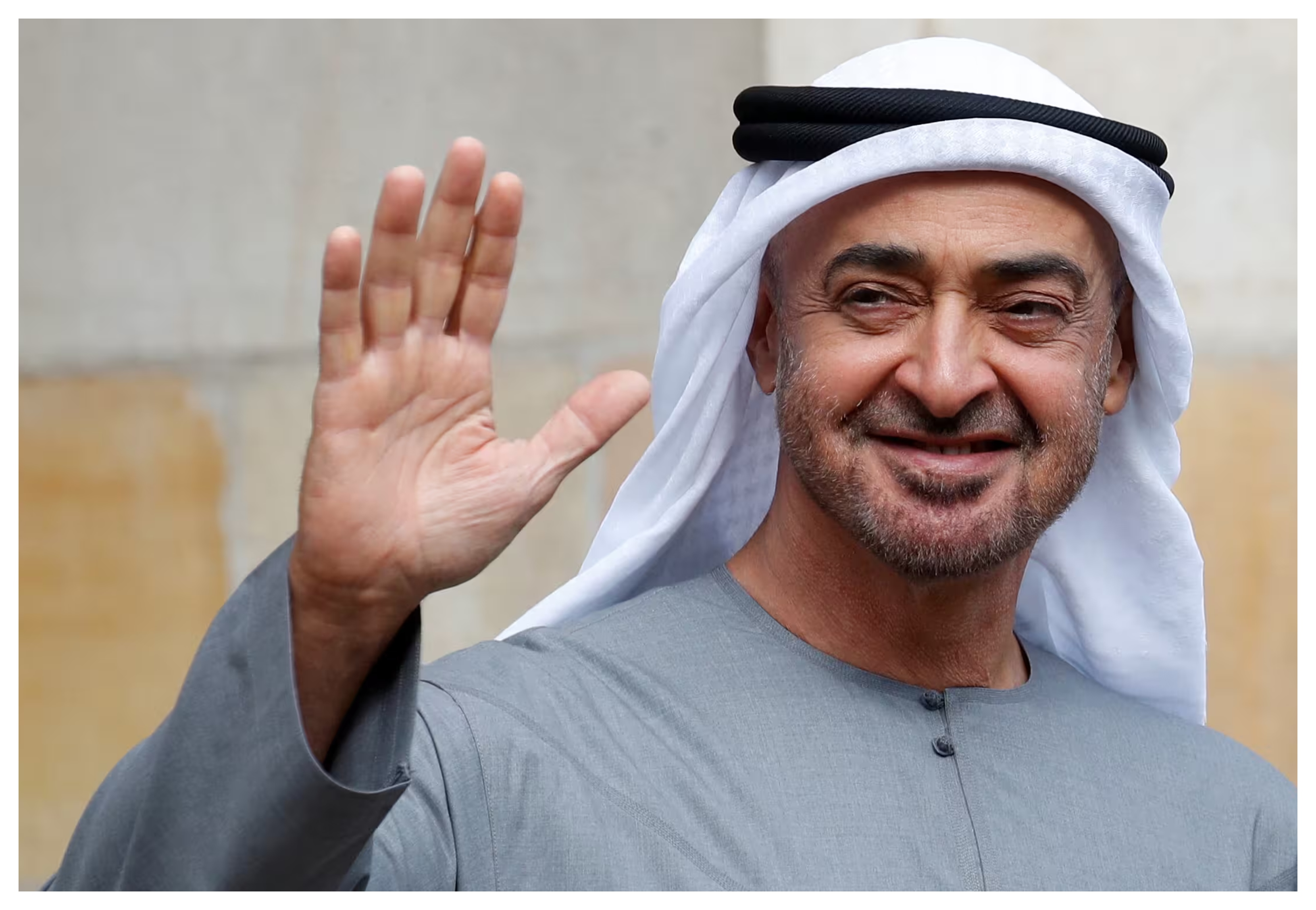


UAE President Sheikh Mohamed bin Zayed Al Nahyan has pardoned Egyptian-Turkish poet and activist Abdul Rahman Yusuf al-Qaradawi, days after a federal court sentenced him to 10 years in prison and fined him AED200,000 ($54,452).
- UAE President Sheikh Mohamed bin Zayed Al Nahyan pardoned poet and activist Abdul Rahman Yusuf al-Qaradawi after he was sentenced to 10 years in prison and fined AED200,000.
- Qaradawi's conviction by Abu Dhabi's Cybercrime Circuit followed his extradition from Lebanon, which drew criticism from human rights groups and UN experts.
- Rights organizations raised concerns about his more than 200-day enforced disappearance and violations of international legal standards.
- The pardon has been welcomed by human rights advocates, with calls for his swift release and reunion with his family.
The state-run Emirates News Agency (WAM) confirmed the pardon on September 4, saying the necessary procedures had been taken to implement the presidential decision.
Qaradawi had been convicted by the Cybercrime Circuit of the Abu Dhabi Federal Court of Appeal on August 27 and sentenced to 10 years in prison.
The pardon marks a major turn in a case that had drawn criticism from international human rights organisations and United Nations experts over his extradition from Lebanon and detention in the UAE.
Extradition and detention draw criticism
Qaradawi was detained in Lebanon in January after both Egypt and the UAE sought his extradition. Lebanese authorities acted on the Emirati request on January 8 and transferred him to the UAE.
His case stemmed from a video posted during a visit to Syria in which he criticised authorities in Egypt, the UAE and Saudi Arabia.
According to Middle East Eye, Qaradawi remained “forcibly disappeared” for more than 200 days after his extradition, prompting rights groups and UN experts to raise concerns about his whereabouts and legal status.
Amnesty International said his extradition amounted to a “flagrant violation of due process guarantees and other international human rights obligations, notably the principle of non-refoulement”.
UN experts also criticised the mechanism used to seek his extradition, warning that it “is being abused by some states to silence criticism, shut down dissent, and pursue activists beyond their borders”.
Samar Elhussieny, executive director of the Egyptian Human Rights Forum, welcomed the pardon and called for his release procedures to be completed quickly.
“I hope the procedures will be finalised as soon as possible for him to be reunited with his family,” she told Middle East Eye.
A prominent opposition voice
Qaradawi is a prominent Egyptian poet and opposition activist who supported the 2011 uprising that ended Hosni Mubarak’s decades-long rule.
He was involved in the Kefaya opposition movement and later worked on Mohamed ElBaradei’s political campaign before moving to Turkey after facing restrictions on his media appearances and publications in Egypt.
He is also the son of the late Yusuf al-Qaradawi, one of the Arab world’s most influential Islamic scholars, who died in Qatar in 2022.