Victory Day: Beyond the Spectacle, Into Russia’s Living Memory of War
For years, Russia’s Victory Day celebrations looked, from a distance, like a carefully staged display of military power. Columns of tanks rumbling across Red Square, tightly choreographed formations, missile systems on parade, and fighter jets cutting through the sky all seemed to project a singular message of strength. But that impression began to shift during […] The post Victory Day: Beyond the Spectacle, Into Russia’s Living Memory of War appeared first on Daily Star.
 Black News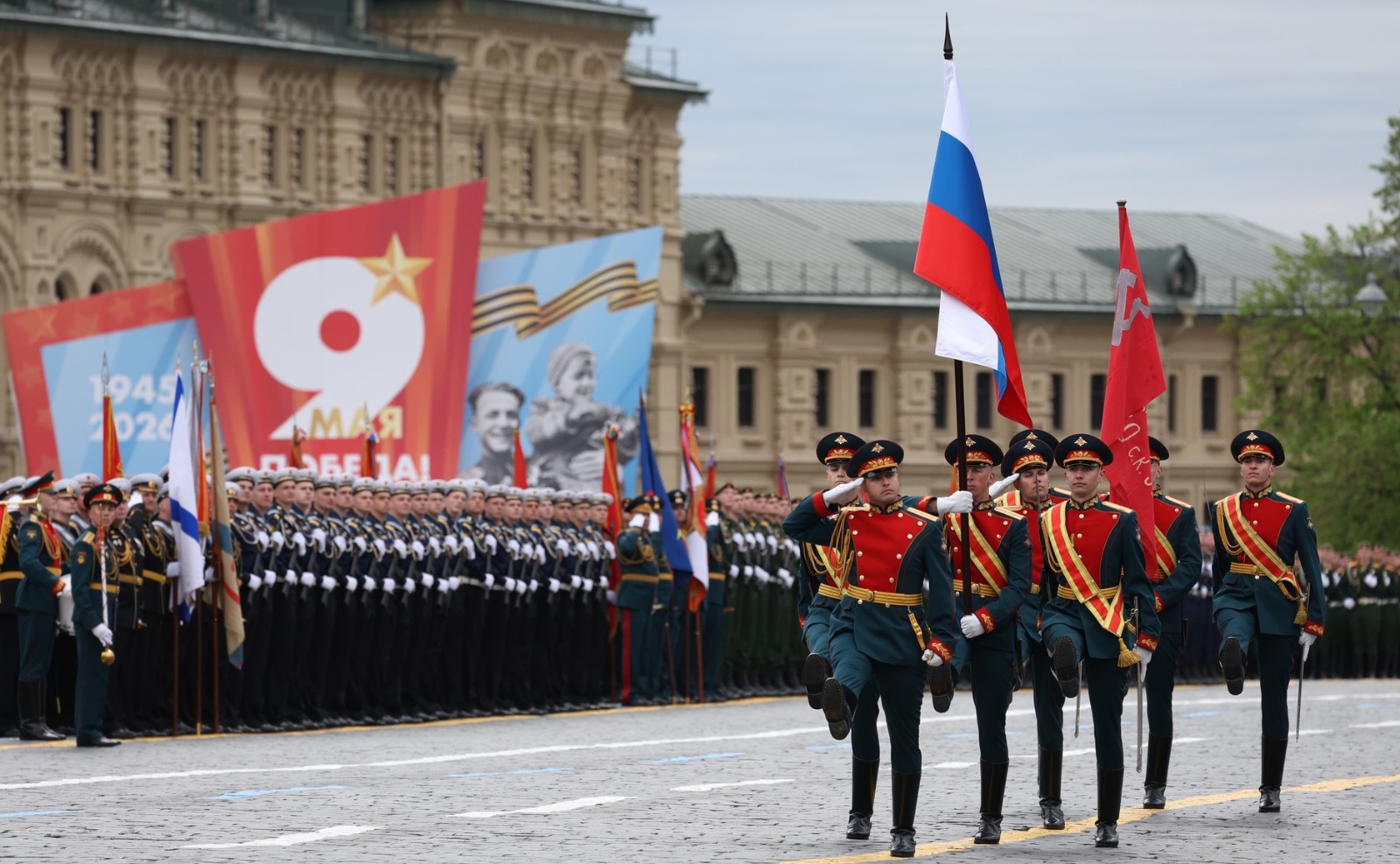
For years, Russia’s Victory Day celebrations looked, from a distance, like a carefully staged display of military power. Columns of tanks rumbling across Red Square, tightly choreographed formations, missile systems on parade, and fighter jets cutting through the sky all seemed to project a singular message of strength.
But that impression began to shift during a Russian language children’s summer camp at King Caesar University, where a lecture unpacked the deeper meaning behind the occasion. What initially appeared as spectacle revealed itself instead as something far more layered a national ritual rooted in memory, grief, and identity.
At the centre of that understanding is what Russians call the Great Patriotic War, a term that refers specifically to the Soviet Union’s fight against Nazi Germany between June 22, 1941 and May 8, 1945. Unlike the broader framing of World War II, this phrase isolates the Eastern Front and elevates it into a defining chapter of national history.
According to Olga Andreevna Atubo, who delivered the lecture, the distinction is not merely academic. It reflects how Russia remembers the war not as one conflict among many, but as an existential struggle for survival.
“In Russian usage, it refers specifically to the Eastern Front of World War II, not the whole war,” she explained. “The phrase carries strong historical and emotional weight because it links directly to the Soviet struggle against Hitler. It is central to Russian national memory.”
That memory is inseparable from loss. The Soviet Union is estimated to have lost more than 27 million people during the war, a figure so vast that it defies abstraction. Nearly every family, every community, was touched in some way. The scale of that sacrifice helps explain why Victory Day is not only commemorative, but deeply personal.
What emerges is a narrative in which victory cannot be separated from suffering. The celebrations, therefore, are not simply about triumph, but about endurance and the cost of survival.
This reframing challenges the instinct to interpret the annual parade as a straightforward projection of military might. While the hardware and discipline are unmistakable, the symbolism runs deeper. The parade functions as a bridge linking present day Russia to the поколение that fought and endured the war.
“The parade is about honouring the legacy and enduring values of the soldiers of Victory,” Atubo said. “It reflects the idea that devotion to the Fatherland unites the country.”
Held at Red Square, the ceremony transforms public space into a stage for collective memory. Soldiers, uniforms, and formations are not just displays of order, but representations of continuity. Through them, the past is made visible and, in a sense, kept alive.
Yet perhaps the most intimate expression of this memory is found not in the parade itself, but in the Immortal Regiment. What began in 2012 in the Siberian city of Tomsk as a grassroots initiative has grown into a central feature of Victory Day commemorations.
In this march, ordinary citizens carry portraits of relatives who fought or died in the war. The act is simple, but its meaning is profound. It transforms remembrance from a state led ceremony into a deeply personal expression of history.
“For many Russians, the march is a way to honour family members who sacrificed in the war and to keep their memory alive in a personal, visible way,” Atubo noted. “It connects private family grief with national memory.”
That fusion of the personal and the collective is what gives Victory Day its enduring resonance. It is not just about what happened in the past, but about how that past continues to live within families, shaping identity across generations.
Over time, the Immortal Regiment has evolved beyond its grassroots origins, becoming part of official commemorations and a broader symbol of unity and patriotism. Yet its core remains unchanged: a reminder that history is not only recorded in archives, but carried in the lives of ordinary people.
What becomes clear, then, is that Victory Day operates on multiple levels at once. It is a state ceremony, a cultural ritual, and a personal act of remembrance. It is as much about mourning as it is about pride.
The Great Patriotic War continues to occupy a central place in how Russia understands itself. Its memory is not distant or abstract, but immediate and lived, reinforced each year through rituals that blend symbolism, storytelling, and personal testimony.
Seen through this lens, the tanks and flyovers take on a different meaning. They are not only instruments of power, but markers of a history that remains deeply embedded in the national psyche.
Victory Day, therefore, is less about showcasing strength to the outside world than it is about reaffirming memory within. It is a reminder that behind the spectacle lies a story of loss, resilience, and a past that Russia continues to carry with it into the present.
The post Victory Day: Beyond the Spectacle, Into Russia’s Living Memory of War appeared first on Daily Star.