Where Black Art Breathes: Moments That Transformed 2025
There is a kind of beauty that comes only after the storm—born of ruin, heavy with truth, luminous as a rain-washed sky. In the year of 2025, when the seams […] The post Where Black Art Breathes: Moments That Transformed 2025 appeared first on Essence.
 Black News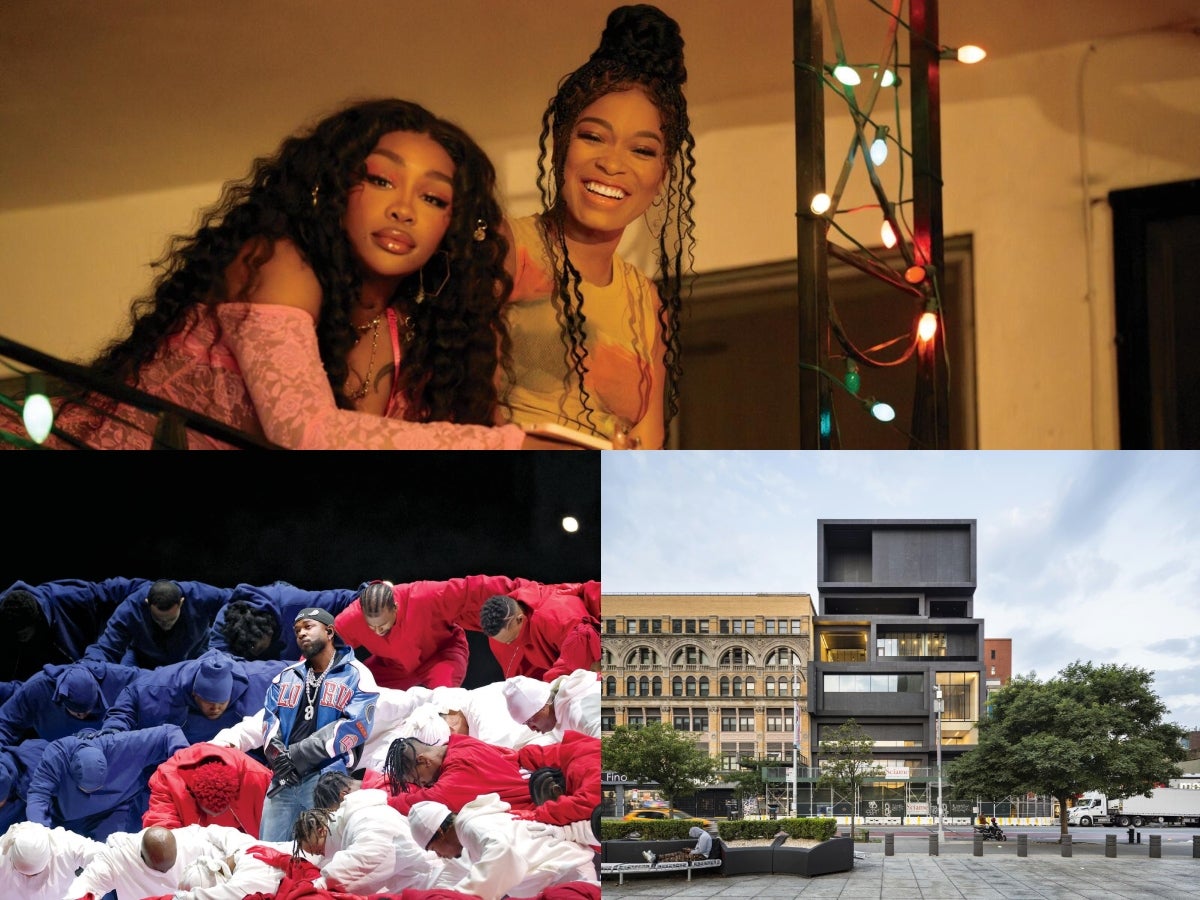
 By Okla Jones & Shelby Stewart ·Updated December 3, 2025 < /> Getting your Trinity Audio player ready…
 There is a kind of beauty that comes only after the storm—born of ruin, heavy with truth, luminous as a rain-washed sky. In the year of 2025, when the seams of the United States strained under the pull of its contradictions, Black artists stitched together something new from the frayed edges. And the cloth they made—rich, unruly, iridescent—covered us in a warmth no winter could dim.
We have been here before. We know what it is to create in the shadow of calamity—to turn scarcity into abundance, exile into sanctuary. But 2025 gave us a new vocabulary for survival, one that stretched across the wide spectrum of Black imagination. Across the country, art of every form became both refuge and rally. Painters, poets, dancers and musicians alike carved out spaces for truth-telling. Galleries and museums swelled into sanctuaries; theaterssrc="https://www.essence.com/wp-content/uploads/2025/12/0925-ES-CWA-001_preview.jpg" alt="Where Black Art Breathes: Moments That Transformed 2025" width="400" height="477" />Studio Museum’s long-awaited renovation signals a powerful new chapter for Black art. Photo courtesy of Studio Museum
Studio Museum In Harlem Steps Into Its Next Era
Studio Museum in Harlem has long been a cornerstone of Black artistry. It’s more than simply a gallery; it has championed works from across the diaspora, while serving as a hub for creativity and a living tribute to the historic neighborhood it has called home for nearly 60 years. In 2018, the museum closed its doors to embark on a bold reimagining that would expand its capacity for innovation and deepen its ties to the city. And on November 15, 2025, Studio Museum reopens to the world, renewing its -mission to amplify artists of color.
Founded in 1968 under the leadership of its inaugural director, Charles E. Inniss, the museum was born into a nation in upheaval. The assassination of Dr. Martin Luther King, Jr., the height of the Civil Rights Movement and a surge of ingenuity all formed the backdrop to its beginnings. At a time of grief and resistance, Studio Museum’s first home at 2033 Fifth Avenue emerged as both a sanctuary and a stage, reflecting the nation’s hard truths while illuminating Black brilliance. Its next location at 144 West 125th Street served as a furniture store in the early 1900s, before being purchased later in the century by the New York Bank for Savings. Where currency once flowed, cultural capital now circulates, with the museum investing in generations of artists and returning dividends to the community at large.
“What this new building represents for us is a new chapter in the museum’s growth,” says Thelma Golden, Ford Foundation Director and Chief Curator of the museum. She explains that when the repository initially moved to the location in 1980, the space was renovated to suit its needs, through what architects call “adaptive reuse”—the process of taking an existing building and giving it new life.
“This is the first purpose-built museum in our history,” Golden says. “But in addition to being important to us for that reason—getting a building that will fully accommodate our audiences, our programs, our collection—it also represents the vision and the ambition of our founders: to create a home for Black art in Harlem that continues to narrate the story of the work of artists of African descent in the past, working deeply within our present but also building toward a future.”
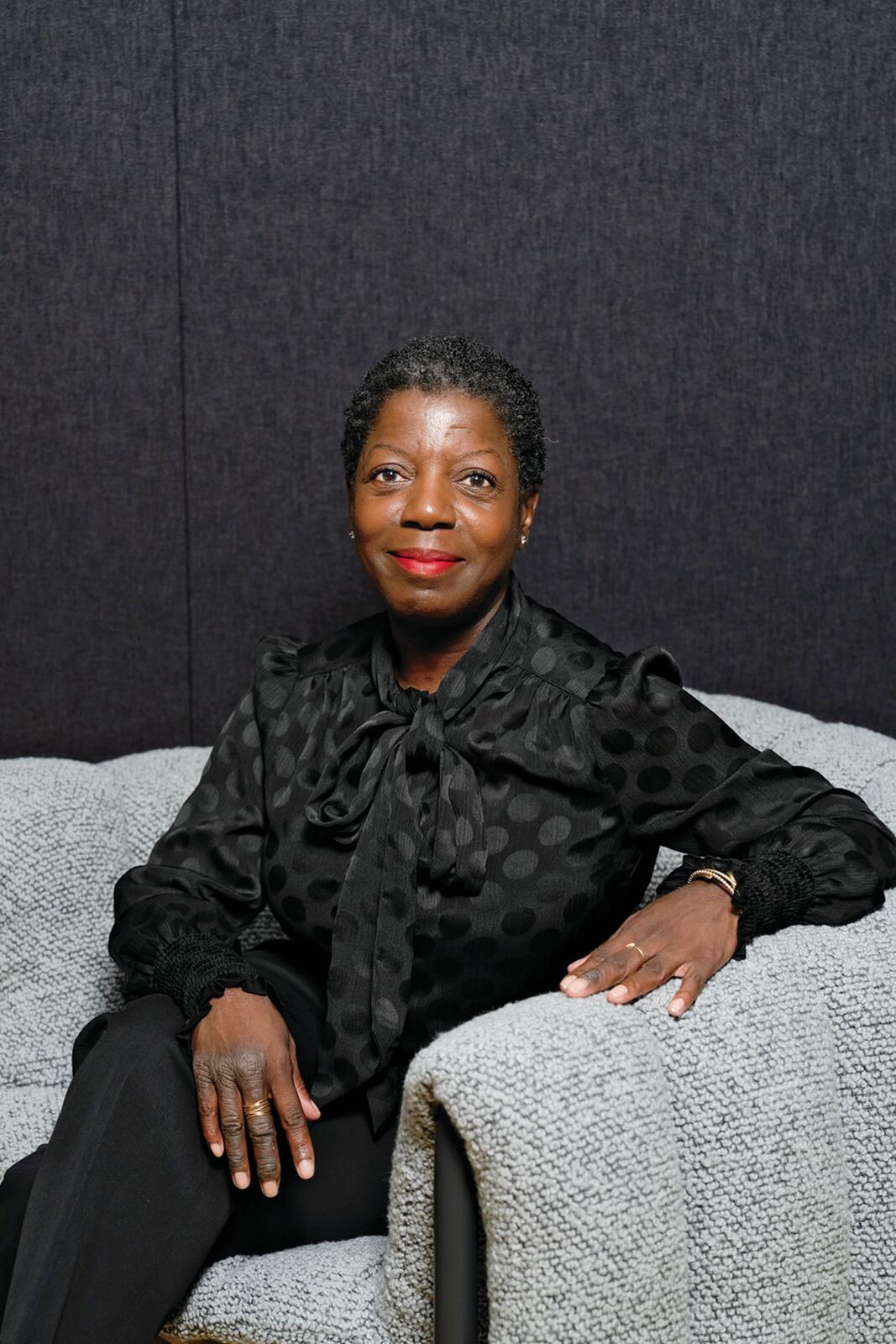 Thelma Golden, Ford Foundation Director and Chief Curator, continues to shape the legacy of the Studio Museum in Harlem. Photo Credit: Julie Skarratt
 In many ways, Studio Museum has always functioned as a kind of time capsule, where artistic lineages converge and evolve. Its debut exhibition, Electronic Refractions II, showcased the work of Tom Lloyd, an artist who boldly embraced abstraction and technology at a time when Black artists were often expected to produce representational work. Now the museum returns with a major presentation of Lloyd’s practice, bringing its history full circle. Alongside this, visitors will experience the first installment of a rotating display from the museum’s renowned permanent collection.
The reopened museum’s inaugural programming also includes an exhibition of archival photographs and ephemera from its 57-year history, as well as a landmark presentation by more than 100 alumni of its Artist-in-Residence program. These alums were invited, through an open call, to submit new works on paper—a gesture Golden describes as a way “to quite literally bless the walls of this new studio.” The resulting presentation underscores the impact of generations of past residents, while affirming the program’s ongoing role in shaping the future of artists of African origin. Over the course of the museum’s first year back, new site-specific commissions by Camille Norment, Christopher Myers and Kapwani Kiwanga will also be unveiled.
Several iconic works, closely tied to the building’s legacy, are set to return to the renovated location. Glenn Ligon’s “Give Us a Poem” (2007) will greet visitors upon their entrance in the lobby. Originally commissioned for the former building, the neon installation >American Sublime, the largest survey of her career to date, Sherald confirmed her place as one of the most important portraitists of her generation. But the exhibition, which recently concluded at the Whitney Museum of American Art after opening at SFMOMA, has also become something more: a lightning rod in the ongoing battle over which stories art institutions choose to tell.
Spanning nearly two decades of work, American Sublime gathers close to 50 paintings, from early single-figure studies to more recent multi-figure compositions. Sherald’s use of gray scale frees her subjects from reductive readings, while the saturated backdrops and stylized settings evoke a world where Black existence is beautiful. During a moment when Black lives continue to be politicized, -Sherald offers images that insist on presence, dignity and depth.
Sherald reclaims the word “sublime” to describe the fullness of Black humanity itself. Works like “The Bathers” (2015) and “Ecclesia (The Meeting of Inheritance and Horizons)” (2024) draw on European precedents while deliberately rewriting them, inserting Black figures into historical scenes from which they had long been excluded. This reclamation carries political weight, but Sherald renders it with softness that never loses sight of her sitters’ individuality.
Yet American Sublime has also been marked by controversy. Earlier this year, Sherald withdrew the show from the -Smithsonian’s National Portrait Gallery after the museum raised concerns over one painting, “Trans Forming Liberty” (2024), a portrait of a trans woman >landmark retrospective brings one of the 20th century’s most uncompromising voices to the National Gallery of Art in Washington, D.C., the very city that shaped the artist’s formative years. Featuring more than 150 works across sculpture, printmaking, painting and drawing, the exhibition, which ran from March 9, 2025, through July 6, 2025, illuminated Catlett’s decades-long career as an artist-activist who refused to separate her craft from her politics. From the poignant linocut “Sharecropper,” melding African-American and Mexican campesino iconography, to the marble bust “Naima: My Granddaughter,” Catlett’s art bridges geographies, histories and cultures.”
Organized in collaboration with the Brooklyn Museum and the Art Institute of Chicago, the show underscored Catlett’s deep commitment to racial, gender and economic justice, as well as her belief in art’s role as a tool for liberation.
Rashid Johnson: A Poem for Deep Thinkers
In Rashid Johnson: A Poem for Deep Thinkers, which runs through January 18, 2026, the Guggenheim’s spiraling rotunda isdecoding="async" src="https://www.essence.com/wp-content/uploads/2025/12/0925-ES-CWA-003_preview.jpg" alt="Where Black Art Breathes: Moments That Transformed 2025" width="400" height="599" />A closer look at Superfine: Tailoring Black Style, a groundbreaking exhibit that redefined fashion history. Photo Credit: Arturo Holmes/MG25/Getty Images for The Met Museum/Vogue
Superfine: Tailoring Black Style
With Superfine: Tailoring Black Style, the Costume Institute of New York’s Metropolitan Museum of Art delivers a three-century journey through the story of Black dandyism. On view through October 26, 2025—and the theme of this year’s Met Gala—the exhibition examines how self-presentation has served as both a form of resistance and a declaration of identity within the African diaspora. Inspired by Monica L. Miller’s seminal text Slaves to -Fashion, the show unfolds across 12 sections—including Champion, Respectability, Heritage, Beauty, Cosmopolitanism and more—each revealing a distinct facet of this aesthetic tradition.
Viewers encounter everything from 18th-century garments to contemporary looks by Black designers. There are also paintings, photographs and decorative arts, by artists including Torkwase Dyson, Tanda Francis, André Grenard Matswa and Tyler Mitchell. These works trace dandyism’s evolution from Enlightenment-era England to the runways of New York, London and Paris, illuminating its fusion of African and Europeandecoding="async" src="https://www.essence.com/wp-content/uploads/2025/12/0925-ES-CWA-004_preview.jpg" alt="Where Black Art Breathes: Moments That Transformed 2025" width="400" height="607" />Quentin Earl Darrington and Jayden Brockington take their bows at the Broadway opening of Ragtime. Photo Credit: Janette Pellegrini/Getty Images
Ragtime
Ragtime returns to Broadway this fall, bringing its sweeping portrait of America’s turn-of-the-century struggles back to the stage with fresh urgency. Opening September 26, 2025, and playing through January 4, 2026, at Lincoln Center’s Vivian Beaumont Theater, this revival sees Tony Award–nominee Joshua Henry step into the role of Coalhouse Walker, Jr., a proud Black pianist whose fight for justice lies at the heart of the story. When it premiered in 1998, Ragtime’s original cast featured two icons of theater: Audra McDonald, who won her second Tony for her portrayal of Sarah, and Brian Stokes Mitchell as Coalhouse. Adapted from E.L. Doctorow’s novel, the musical interweaves the lives of African–Americans, Eastern European immigrants and wealthy White Americans, against the backdrop of historical figures such as Booker T. Washington and Evelyn Nesbit. With its soaring score, layered characters, and timeless themes of justice, equality, and the -American dream, Ragtime remains a theatrical masterpiece.
Alvin Ailey American Dance Theater’s Holiday Season
Alvin Ailey American Dance Theater is back at the New York City Center, with a historic five-week holiday engagement that ushers in a new chapter under Artistic Director Alicia Graf Mack. Joined by Associate Artistic Director Matthew Rushing, Mack honors Ailey’s legacy with dynamic revivals while expanding the company’s reach through daring premieres. The new season, from December 3, 2025, through January 4, 2026, features five world premieres, each a celebration of innovation and storytelling: Fredrick Earl Mosley’s “Embrace,” a soulful meditation on human connection set to music by Adele, Stevie Wonder and Ed Sheeran; Maija García’s “Jazz Island,” an Afro–Caribbean folktale inspired by Geoffrey Holder; Matthew Neenan’s exuberant company debut; Jamar Roberts’s “Song of the Anchorite,” a modern reimagining of Ailey’s 1961 “Hermit Songs”; and “The Holy Blues,” a spirited blend of gospel and blues by Jawole Willa Jo Zollar, with Samantha Figgins and Chalvar Monteiro.
LIVE MUSIC
Kendrick Lamar’s Super Bowl Halftime Performance
On February 9, 2025, Kendrick Lamar took center stage for one of the most-watched gigs in the world—the Super Bowl halftime show—and turned in something far more than a performance. Following the critical and commercial triumph of GNX, which claimed the title of the longest-running No. 1 on Billboard’s Top Rap Albums chart (22 weeks), Lamar entered the Caesar’s Superdome with the weight of his legacy and the eyes of millions upon him.
GNX had become a cultural lightning rod before the show even began. Its fearless lyricism, complex production and raw honesty struck a chord with the industry and listeners alike. But beyond the music itself, the album reignited one of rap’s most intense rivalries: Lamar’s ongoing, very public clash with Drake. That feud, splashed across headlines and social media timelines, sparked fierce debates around authenticity, artistic integrity and what it means to hold space at hip-hop’s most exclusive table. Lamar’s halftime performance blurred the line between cultural statement and artistic manifesto.
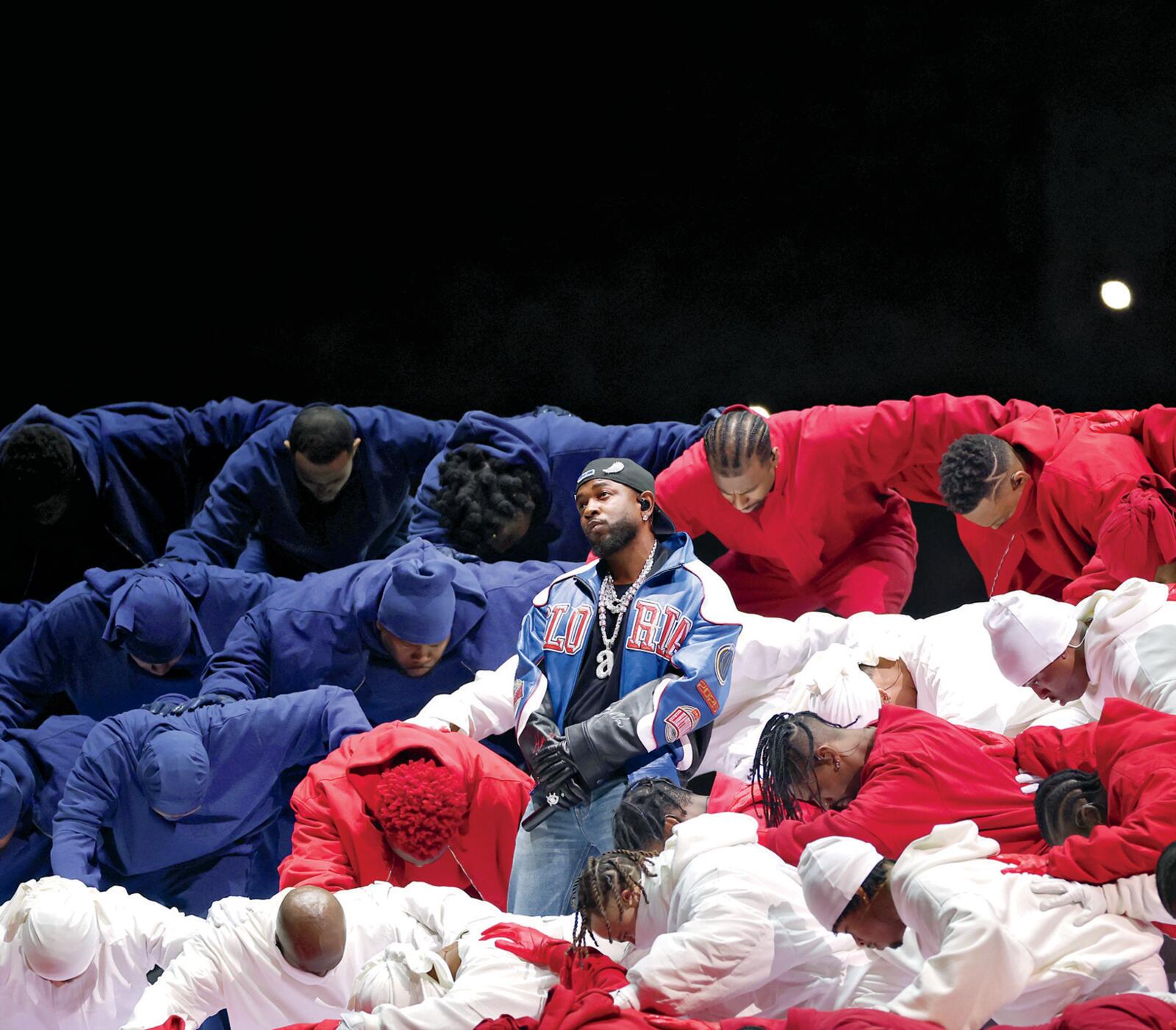 Closing out a banner year, Kendrick Lamar delivers the ultimate encore on the biggest stage in entertainment. Photo Credit: Gregory Shamus/Getty Images
 On stage, Samuel L. Jackson appeared as “Uncle Sam,” in a costume drawn from early 20th-century recruitment posters but altered with 16 stars pinned to his lapel—a subtle nod to Kendrick’s lyric in “Wacced Out Murals.” Against a backdrop of West Coast street tableaux and shifting silhouettes, Lamar moved through a setlist that stitched together the urgency of regionalism with the intimacy of confession. Each beat carried the density of Black history and the contradictions of American life, folding decades of West Coast hip-hop lineage into a performance that still felt unmistakably forward-looking.
Megan Thee Stallion at Weekend One of Coachella
Megan Thee Stallion’s Coachella set on April 13, 2025, was a convocation of Black womanhood and a celebration of lineage. On Weekend One, beneath the vast California sky, Megan claimed the stage by carrying the weight and talent of those who came before. Her 18-song set traced the arcs of joy, triumph and femininity.
The evening’s most profound moments were those of communion. When Queen Latifah emerged, the stage became consecrated ground. Their duets on “Plan B” and the anthem “U.N.I.T.Y.” were more than nostalgia; they served as a dialogue across generations. Latifah, whose voice helped define the era of conscious hip-hop, and Megan, the force of contemporary Southern rap, created a lineage that felt alive and sacred.
Victoria Monét’s collaboration with Megan on “Spin” and “On My Mama” was a choreography of gesture and energy that embodied solidarity—and the unspoken understanding that Black women’s artistry is communal. Later, Ciara’s appearance to perform “Roc Steady”—sampling “Goodies”—reminded the audience of the continuum of influence and the ways mentorship and artistry ripple outward, carrying memory and power across time.
Beyoncé’s Cowboy Carter Tour
In 2025, Beyoncé did not simply perform—she testified. The Cowboy Carter & the Rodeo Chitlin’ Circuit Tour, which ran from April 28 through July 26, was an act of cultural excavation. Beneath the weight of decades of erasure, Beyoncé unearthed a history of the Black West that had been relegated to the shadows, brushing off the dust and breathing it back into life. Night after night, under the heat of stadium lights, she summoned a lineage.
The cowboy—mythic, solitary, seared into the American psyche—has long been painted in the pale hues of Hollywood’s imagination. But the truth, the one Beyoncé dared the world to see, is that nearly one in four 19th-century cowboys were Black. Her stage became a living archive. It melded the deep blues of gospel laments, the open-throated wail of country ballads and the kinetic joy of hip-hop.
In the spaces between her notes, Beyoncé told the stories of Black cowboys, Black homesteaders and the overlooked architects of the American frontier. She wove their voices into her own, turning oral history into something you could dance to, cry to and carry home with you. She was not merely singing about them; she was standing with them, in a chorus that spanned centuries.
The tour’s impact was as measurable as it was immeasurable. According to Billboard Boxscore, it became the highest-grossing country-music tour in history—a commercial feat that doubled as a cultural gauntlet. But its ripple effects reached beyond the box office. In its wake came a shift; the Recording Academy announced it would divide the Best Country Album Grammy into two categories for 2026: Best Contemporary Country Album and Best Traditional Country Album. For some, the move was a recognition of how country’s borders have expanded, making it a genre porous enough to hold R&B cadences, gospel swells and the outlaw spirit all at once. For others—particularly White country artists, who bristled at Beyoncé’s win—it felt like a line in the sand. It was a reminder that Black artistry has no fixed boundary, no “proper” lane and no limit to the stages it can claim. Either way, the message was clear: The map of country music has been redrawn, and Beyoncé helped hold the pen.
More than a concert, this was a mirror, polished with truth and turned toward us. It asked: Who do we erase when we tell our stories? Who deserves to be remembered? In that reflection, Beyoncé handed the mic not just to herself but to a people, a past and a future that refuse to be forgotten.
Solange’s “Eldorado Ballroom” Houston
When Solange Knowles returned home to H-Town in 2025, she stepped into this legacy with a vision that was part reverence, part reimagination. Through her creative platform Saint Heron, she curated the “Eldorado Ballroom” series, a luminous, avant-garde celebration of live performance in all its evolving forms. In partnership with Performing Arts Houston, the project unfolded on June 10-20, 2025, across six programs and three venues—Jones Hall, the Museum of Fine Arts, Houston and the Eldorado Ballroom itself—each evening a different lens through which to view the continuum of Black artistry.
The Eldorado Ballroom is not new to this role. Since its founding in 1939, it has been a sanctuary for Black Houston: hosting jazz legends like Duke Ellington and Count Basie, serving as a gathering place for civil rights meetings and echoing with the steps of countless dancers, whose feet kept time with the hopes and heartbreaks of generations. In a city scarred by segregation and gentrification, the Eldorado has endured as a living archive of Black cultural life.
Solange’s curatorial projectdecoding="async" src="https://www.essence.com/wp-content/uploads/2025/12/0925-ES-CWA-006_preview.jpg" alt="Where Black Art Breathes: Moments That Transformed 2025" width="400" height="225" />Dynamic duo: SZA and Keke Palmer star in Tri-Star Pictures’ One ofThem Days. Photo Credit: Anne Marie Fox
FILM
One of Them Days
This woman buddy comedy arrived on January 17, 2025, as a warm, wild reprieve. Directed by Lawrence Lamont and written by Syreeta Singleton, One of Them Days marked both a debut role for SZA and an irresistible showcase for Keke Palmer. It chronicles two roommates—Dreux (Palmer) and Alyssa (SZA)—as they scramble across Los Angeles to replace stolen rent money, evading eviction with humor and heart amid the city’s low-fi chaos. Drawing inspiration from classics like Friday, the film is a deeply humorous celebration of Black female friendship.
Sly Lives! (aka The Burden of Black Genius)
Questlove’s reverent, restless documentary excavates the rise and fade of Sly and the Family Stone while laying bare the unseen toll of genius. Premiering at Sundance in January, and released on Hulu/Disney+ in February, the film is a lush portrait guided by voices such as Andre 3000, D’Angelo, Chaka Khan and Suzanne De Passe. It frames Sly Stone’s electrifying brilliance against the weight of expectation, mental health struggles and the erasure that follows Black genius creators who burn too bright.
Sinners
Director Ryan Coogler’s genre-busting film, released April 18, feels like a seven-course feast—dense, intense and haunting. Sinners is a period piece that folds violence, romance, music and symbolism into a cinematic language that is unapologetically Black. Vampires emerge not as mere monsters but as spectral embodiments of racism’s unending drain on Black life in the South, a haunting metaphor for generational trauma. Among the film’s most striking moments is the recreation of Ernie Barnes’s iconic “Sugar Shack” painting. Here, the elongated, exuberant figures of Barnes’s work—long cherished for their celebration of Black communal joy—are transposed into living choreography, a bridge between visual art, performance and cultural memory.
HIM
Jordan Peele’s Monkeypaw Production steps into the arena of sports horror with a chilling twist. Directed by Justin Tipping, the film, which hit theaters on September 19, follows Cameron Cade (Tyriq Withers), a promising young football player invited to train under Isaiah White (Marlon Wayans), a legendary quarterback whose retreat is as dangerous as it is revered. Then the promise of greatness morphs into a psychological nightmare. With an eerie precision, the film takes the hallowed mythos of American sports and refracts it through horror’s lens—making us question whether the pursuit of ambition demands more than we’re willing to pay.
BEST ALBUMS OF 2025
Ledisi, The Crown
Teyana Taylor, Escape Room
JID, God Does Like Ugly
Clipse, Let God Sort Em Out
Bootsy Collins, Album of the Year #1 Funkateer
Destin Conrad, Love on Digital
Metro Boomin, A Futuristic Summa
Amaarae, Black Star
Tyler, the Creator, Don’t Tap the Glass
Durand Bernarr, BLOOM
TOPICS: beyoncé Issa Rae Kendrick Lamar marlon wayans Studio Museum in Harlem SZAThe post Where Black Art Breathes: Moments That Transformed 2025 appeared first on Essence.