Wurundjeri Woi-wurrung join list of TOs ready for Treaty
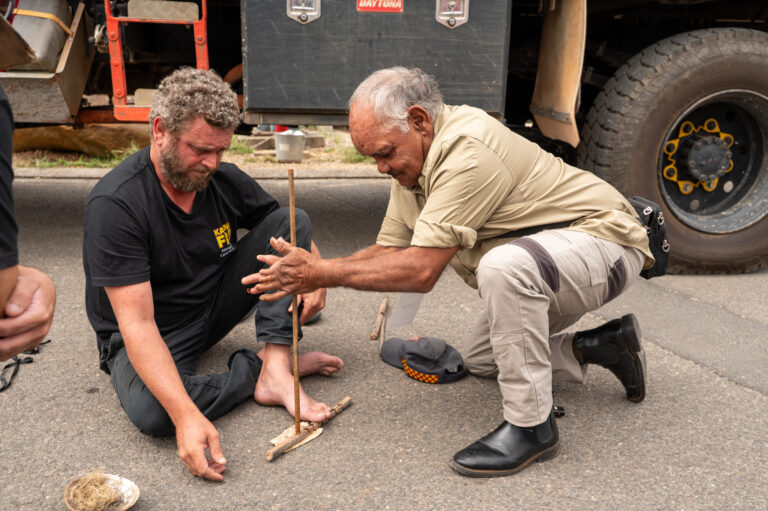
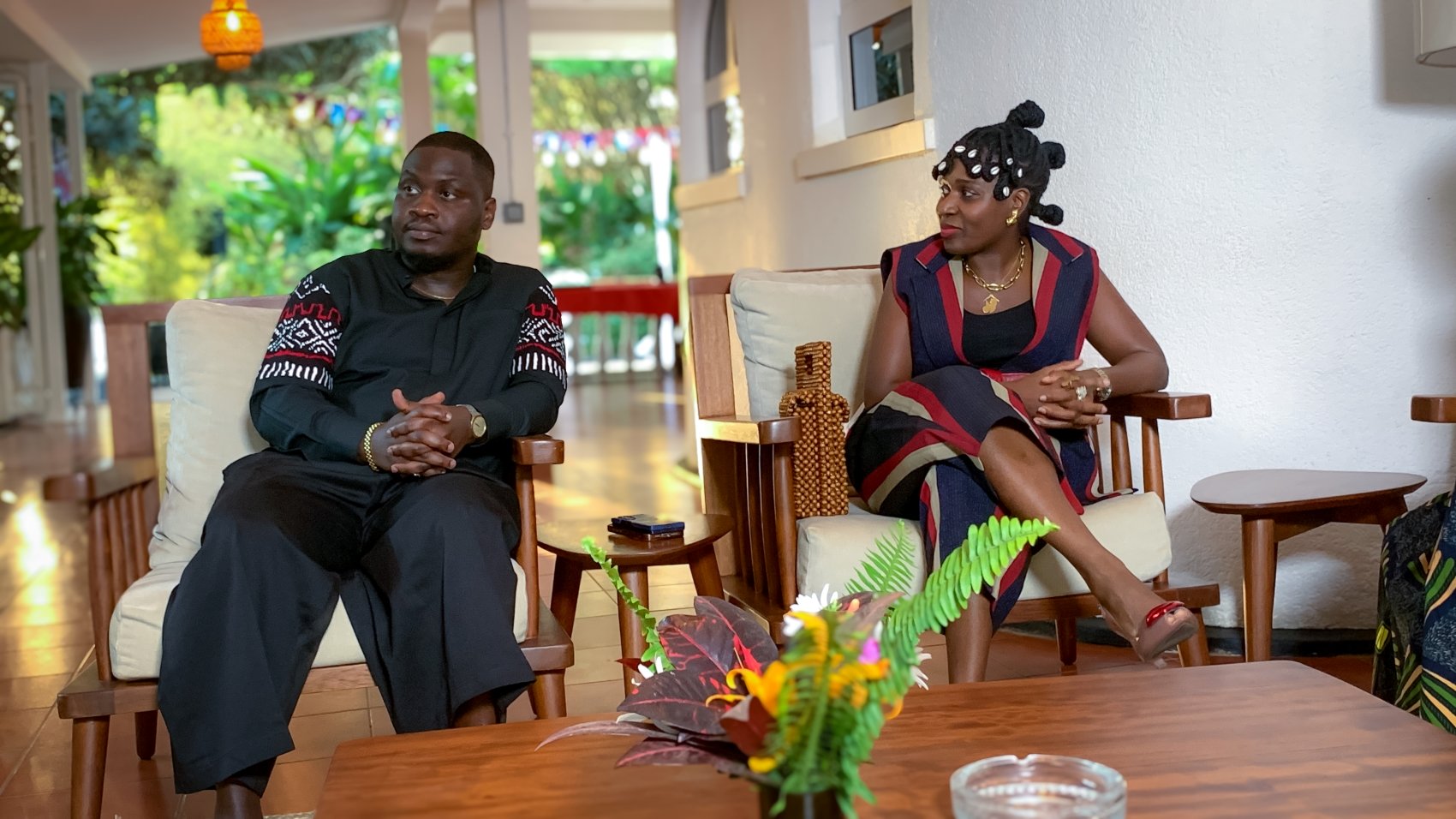
Uncle Andrew Gardiner and Dale Wandin from Wurundjeri Woi-wurrung speak to VAN about the Traditional Owner group's entry onto the Treaty Authority's register. The post Wurundjeri Woi-wurrung join list of TOs ready for Treaty appeared first on Victorian Aboriginal News.
 Black News

Charles Pakana: On the 9th of April this year, the Wurundjeri Woi Wurrung Cultural Heritage Aboriginal Corporation was formally entered into the Negotiations Register by the Victorian Treaty Authority, essentially signalling their intent to negotiate a Treaty for the area over which the Wurundjeri hold Registered Aboriginal Party status.
Joining me today to talk about this is Uncle Andrew Gardiner, who since 2019 has been the Wurundjeri reserved seat holder representative on the First People’s Assembly of Victoria, and Dale Wanden, who’s a crucial member of the Wurundjeri Treaty Working Group. Gents, thanks so much for joining me. Uncle Andrew, great to have you back on the line.
Uncle Andrew Garniner: Good to be here.
Charles: Dale, great to be yarning with you too, brother.
Dale Wanden: Yeah, absolutely. Same to you.
Charles: And Andrew, we’ll start with you, Unc. To get an idea over the country, it’s intended that Wurundjeri will negotiate a Treaty. What are the general boundaries that people would recognise?
Andrew: So our existing boundary under our RAP status is from Footscray to the Werribee River, north along its flyer to its headwaters in the Great Dividing Range, and then easterly across the Mount Baw Baw, then south through Bunyip and then along Princes Highway.
Charles: Yep.
Andrew: Along the freeway back into the city. So that’s our existing RAP boundary.
Charles: That’s a fairly large area.
Andrew: It is. It’s not our traditional country, which we’re going to continue to fight for, but that’s our existing boundary that we’re going to be negotiating our Treaty in firstly.
Charles: Now, that is then you’ve brought up the native title. We’ll acknowledge there is a native title claim in the federal courts. Now, we’re not going to be talking about that because that’s inappropriate to this conversation, but just for our listeners, we are aware of it and down the track, we will be speaking with Wurundjeri about that. But in Treaty, not right now. Unc, I’m really interested because, frankly, you’ve got RAP status, which automatically qualifies you as having minimum standards to be on the register with the Treaty Authority. I’ve got to ask, what took so long to get to this point?
Andrew: Well, it was our community engagement. There was some things that sort of held us back from engaging with community and having a strategy about that. It was done more hit and miss or a little bit ad hoc. We’d communicate with people at certain times where it was available, people had questions. We were starting to increase that interest in what our aspirations needed to be. But we formulated our committee, our work working group and we are more dedicated now and engaging with community about that. So that’s the reason it’s taken a little bit of a while, but then we made the decision. We’ve got this plan in process. We’re communicating with people. Our rap status is there. So we’ve lodged and the next step is then to form a delegation, but that’ll be in due course.
Charles: And we’ll talk about the delegation and some of the implications inherent within forming a delegation in just a few minutes. But you brought up engaging with community. Dale, that really puts you in the hot seat now because that was your key focus, engaging with community and trying to find out who the community is and then engaging with them. So, what are some of the challenges that you found in engaging with community and getting to this point?
Dale: Look, there’s passionate people within community.
Charles: Yep.
Dale: And with passion comes a bit of a mistrust in the process and a lack of understanding of what that could mean in the future. Part of what I do within my engagement is give Wurundjeri people the opportunity to speak on what they want for Wurundjeri based Treaty. It’s entirely up to them on whether or not they wish to engage, but that’s not going to stop Wurundjeri from trying to engage. Even though we’ve put ourselves forward and we’ve submitted it through, the engagement still happens – the engagement’s ongoing. It’s important that we include our people and our members throughout the process from start to finish. I feel as though that we’re on the right track to doing that.
Charles: What are some of the most stark comments that you’ve had? The good, the bad and the ugly. So feel free to be upfront with those things through your engagements. What are some of the really telling points you’ve heard?
Dale: Respecting the views of other people; I’d probably say that without being specific, I think that people do view Treaty sometimes as a similar thing to the Traditional Owner… like to TOSA [Traditional Owner Settlement Act 2010.] and to Native Title. And it’s a part of our job to educate and to also give a bit of guidance and support with our people on why we believe that it’s different and what it can mean if Treaty does get up. And just further to that, one of the things that people are a bit critical of is, what will Treaty do for them if it gets up? That’s why we need their voices, because it’s not about what the RAP status is going to do for a Wurundjeri Treaty. It’s really about what Wurundjeri People want us to put on the table. And to continue those conversations with the Treaty process, it’s important that we’re getting the voices of people. Now, what some of those things are, a lot of people have come to us and said, “look, justice.”
Charles: Yeah.
Dale: Like justice is a massive thing. There’s a lot of incarcerations that we have. I’m talking statewide. Like, our people, they need help. And I want to be able to help people get over the line in any way possible, however that be, whether it be within housing, whether it be helping people within rehabilitations. There’s hardship within our community and it’s important that we identify that and see where that is and use the opportunity that we have to make that better.
Charles: Dale, I’m going to stick with you because I’m aware that you delivered a fairly lengthy submission to the Yoorrook Justice Commission when it was taking evidence and submissions. How important do you see – in the community engagement and the Wurundjeri Treaty Initiative right across the board – is ongoing truth telling?
Dale: Truth telling should be a part of everyday life. I think without integrity, what leg do you have to stand on?
Charles: Yeah.
Dale: It’s the only thing that I’ve known; is to be honest with the people that you’re speaking to. If you’re speaking from where your integrity lies and you’re expecting the same across the table, that’s a nice pillar to base your conversations with.
Charles: Mmm.
Dale: For me, the truth telling side of things is essential to have trust within your community. But it’s also our way of trying to build trust outside of the community. Not just with first nations people, but also with non-Indigenous people. I think it’s important that we also acknowledge the other side of what Treaty is. And that is also the conversations that we’re having with non-Indigenous people, whether it be government, or it be other entities that want to affiliate themselves with the Treaty process.
Charles: One of the things – and I’ll throw this over to you, Uncle Andrew, because you’ve been involved in the Treaty process for so flipping long – one of the things I’ve heard over the years as I’ve been covering Treaty, is from the other side, as Dale mentioned, from the non-Aboriginal communities. You know, “what’s in it for us?” And more accusatory, “why is Treaty just for Aboriginal people?” But it’s not just for Aboriginal people, is it?
Andrew: No, Treaty will affect everybody. And it’s for us individually and collectively as a community, but also broadly. Why? Because Treaty is good for everybody. We’ve been saying that for so long that Treaty is good for everybody. Because as Aboriginal people have projects and we develop those projects and we will be buying goods and services to make those projects work. That means we pay for other organizations or businesses to provide services for delivery, like framing and wiring and sound and all sorts of things.
Charles: Mmm.
Andrew: That business will pay for their person to provide that service. They go home, get paid, they are able to pay for their rent and their groceries and whatnot. So, we are going to be contributing in a larger way to the circular economy. So if we’re going to have the courage to do that, we need to be accepted that we’re coming from a positive perspective in delivering and advancing outcomes for our community. We’re engaging everybody else in the process. So we need the broader community’s support for this, to then put pressure on their local members to support it as well, their local members of Parliament. Now, the Treaty bill has been voted on and supported and it’s been signed into law, but that still needs to be supported this year, especially as it’s an election year in the state. And so it’s important that people understand that the Labor government, Victorian Greens and the Independents supported the Treaty bill becoming law. And therefore we would be seeking to ask the broader community to support them in their election campaigns this year.
Charles: Dale, I just want to stick with you on engagement a little bit. You mentioned justice as being one thing and that’s obviously high on the list of calls in Treaty – statewide Treaty and local treaties right across the state. What were some of the other things that you heard about, such as education, such as housing? What are some of the other aspirations that you heard from community?
Dale: Health.
Charles: Health?
Dale: Health is the big one. You kind of mentioned the other ones, but health was one that really, really came through. And when speaking with the community, you start to realize just how important a healthy community is. And this is not just with physical health and well being, this is mental health as well.
Charles: For sure.
Dale: There’s people out there that require the services that we currently do have, but there’s no reason why we can’t give more to those services because they definitely need it. And there’s a lot of people that do a lot more than what the role entails. And that’s what our community is there for: is to band together and make it count. And we see that. But it’s important that given the opportunity, we continue to make it count and we give to those industries, or to those sectors, that require additional.
Charles: Let me challenge you a little bit, Dale, if you don’t mind.
Dale: Absolutely.
Charles: How do you manage the expectations of your community? Because they are going to be aspirational. Just as the aspirations of community across the state were extremely high when it led up to this first Treaty act of 2025. I know a lot of First Nations people across the state were somewhat taken aback. “Well, where’s the health implications? Where’s the housing? Where’s the education in the Treaty act?” Essentially, that was setting up the foundation. We know that now. But when it comes to talking and engaging with your own Wurundjeri mob, you know full well that in that first Treaty that you may negotiate with the state government, you’re not going to provide a resolution for everything. So what is that challenge? And how do you deal with that challenge of keeping their expectations realistic?
Dale: It’s important that we don’t limit what people’s aspirations are. I think that by doing so you’re kind of restricting what their views are and what their thoughts are around what Treaty is for them.
Charles: Yeah.
Dale: I think where we’re actually honing in on what we want for Wurundjeri Treaty is that with all the voices that we hear from, is that we prioritise the things that have the higher volume. So if we’re hearing 50% of people wanting more done around housing, well, then that can be a focus. If we’re wanting 25% there around health, well then it becomes another focus. So it’s about prioritizing those that are spoken about more. And that’s probably where the starting blocks are there. After then, when the negotiations come in, I think that that’s where we’re really going to start to realize where those aspirations lie in terms of what the conversations are with government.
Charles: Unc, we’ll come back to you because I’m interested to see, as the reserve seat holder in the First People’s Assembly, or what will now be known as Gellung Warl going forward. How do you balance your work in Gellung Warl with regard to advocating for a statewide Treaty, yet supporting Dale and Kylie and the others in the engagement team here, or the Treaty working group, here in Wurundjeri?
Andrew: Well, participating in the working group is a key factor because that gives me the opportunity to provide information that I can. Because some information is covered by confidential material-
Charles: Of course.
Andrew: So you can leak out some stuff but not everything. But the main thing is to enable others then to know about what that stuff is because it adds to our strategy development. If people ask, “what’s Treaty doing for us today?” Well, the First People’s Assembly have developed Treaty to this point as the backbone about developing other treaties. So the Treaty act only gives us the capacity to establish Gellung Warl, the review process of making government accountable and its funded agencies and also furthering the outcomes of the Yoorrook Justice Commission report. Those key items were in the act. That’s incumbent on communities now to develop responses to that. The act wasn’t going to be the ultimate or anything…
Charles: Not the ultimate Treaty.
Andrew: This is the starting point that enables… self determination.
Charles: Yeah.
Andrew: It enables individual communities to self determine their futures, which are generically similar, but lots of cases there’ll be specific differences. So when we say, oh, what are the common things? What can we get a bead on what’s going to be common? Each one’s going to be different. Our one we can talk for, others we can’t talk for. The statewide Treaty? The key focus is health, probably housing and justice system.
Charles: Well, that brings up a point. And I just want to follow on with what Dale was saying, that the overwhelming response from the Wurundjeri community has been “health, we want health and local Treaty.” Does that then influence you to advocate more strongly for health outcomes in the next iteration of the Treaty, the statewide Treaty?
Andrew: Absolutely. Absolutely.
Charles: And do you see that the other reserve seat holders would be meeting with you to determine, okay, what are the key outcomes are required from our particular community, seeing if there’s synergy there and jointly advocating for these in the next Treaty.
Andrew: That’s correct. So the reserve seat holders will have a monthly meeting. We all get together and say, this is what’s happening in our backyard. How’s that affecting you? Oh, you got a lead on that? How can that involve and include us and how we can improve what we do or think about how we could do our thing better?
Charles: Yeah.
Andrew: So it’s about sharing of information, standards and processes. And so the general elected members have their sessions to them as well because they’ve got a different reporting mechanism.
Charles: Mmm.
Andrew: They’ve got to have these regular meetings back to the broader community. We need to be sitting in those too, so we can get an idea of what all that means for us as well. And so, it’s all about information sharing.
Charles: Dale, I know Uncle Andrew and I have talked and almost laughed about this at times, or even despaired about it at the times. But there’s always that hoary old issue of the extremists saying, “Well, Treaty’s gonna be coming after our backyard, putting a levy on our hill’s hoist and paying taxes to go into local parks.” Realistically, were there any indications from anybody within your Wurundjeri community that would be considered going against the ownership of land and the access to land of ordinary Victorians?
Dale: In the most articulate way that I can say that, is that whilst the conversation is between First Nations and non-Indigenous Australians with government. None of those conversations have involved taking away land from anyone that currently owns land on Wurundjeri country. It never has and it never will come up because they’re not realistic things to put in a Treaty. And… *sigh* what lessons are there? What is it that we’re really doing if we’re taking away from people?
Charles: Exactly.
Dale: To me that defeats the purpose of what a Treaty is. So it’s, it’s bringing people along the journey. Not to make people feel like Treaty’s a bad taste in their mouth, because it’s not supposed to be one of those things.
Charles: Unc, I just want to talk about the delegation because that’s the next stage in this and according to my research, you’re looking at about a six month process of forming a delegation. Now, the delegation being those people that have an interest and can prove an interest in Wurundjeri country as we know it right now under the RAP. What are some of the challenges that you see going forward in forming that delegation?
Andrew: Well, it’s just interest. It’s us engaging with the broader Wurundjeri community. Engaging them to have a greater level of interest and participation in being a part of the delegation. So, it might be that we have an agreement about three from each family group to form that cluster group.
Charles: Right.
Andrew: Because inevitably a component of the delegation will be the negotiating team, for want of a better word. And so it could be larger, that can then have a review group, which is the physical negotiating team. We might just land on five or six people and out of a group of 20. But that needs to be communicated with our broader community. So they have a level of interest and there’s a level of representation that we can all get along and have a common view about getting the same goals. So yes, it should take up to six months because we’ve got to go through an information process.
Charles: Yeah.
Andrew: And engaging, just like we’re doing at the moment but more broadly about “Can you please be involved? Because we think you’ve got a really good level of experience in this area and your participation would be brilliant.”
Charles: Let me get you to gaze into your crystal ball then, Unc, and let’s talk about additional negotiating parties. You know, one of the passions I have is with local government and its involvement with Treaty. Do you see at this stage there is a role, without being specific, for local government authorities in the Wurundjeri state government Treaty going forward?
Andrew: Yeah, there will inevitably. Because We’ve got about 27 that cover our-
Charles: 29, actually.
Andrew: -29 that covers. We have 29 that cover our catchment. So in that way, the larger ones, we already have a good relationship. We need to form a better relationship with the broader scope of those. We’re doing that engagement through the MAV as we speak. And so we see the opportunity of having local government’s involvement and support. If we get to a point where there’s a local government that just digs its heels in, doesn’t want to be supportive, then we’ve got to have a strategy about how to overcome that.
Charles: Yeah.
Andrew: Because they shouldn’t feel our wanting to discuss stuff with them is a threat. They should be saying, “How can we act on our residents and ratepayers behalf?” Because nobody’s coming after anybody’s backyard, number one.
Charles: As we’ve heard.
Andrew: Yeah. So, that should be something they can easily tell all their community about and say, “Wurundjeri’s not a threat.” We’re talking about local government issues about how they can act on a better way for Aboriginal and Torres Strait Island people living in their backyard. More particularly our people, our Wurundjeri Woi Wurrung people. So there’s two levels statewide Treaty has been engaging with local government about Aboriginal and Torres Strait people in their LGA. When we come along to negotiate our Treaty with them, we will be doing that specifically about Wurundjeri people living in their backyard. So we might not touch base with every one of the 29. We’ll get an estimate about who lives where and we’ll be going to those local governments and having a conversation with them about how you can support our people in your backyard. Importantly, that should go towards namings of things or renamings of things. We spoke about this through the Yes ‘23 campaign, letting people know, firstly, like I said, we’re not after anybody’s backyard, but we do want to change names and co-naming things from the outset is a good thing that local government have an agreement with us about.
Charles: I like the fact you emphasised co-naming. I think that’s still respect for the legacy that others have got in those particular areas. We will obviously keep everybody up to date with regard to the Wurundjeri and its local Treaty aspirations. Until then, Uncle Andrew, thanks for your time.
Andrew: Thank you very much.
Charles: Dale Wanden, thanks so much. Great to catch up with you again, brother.
Dale: Likewise. It’s been a pleasure.
The post Wurundjeri Woi-wurrung join list of TOs ready for Treaty appeared first on Victorian Aboriginal News.