White Women Black Folks Don’t Play About: Diana, Dolly, Anne, Sophia & More
Dolly Parton’s legacy goes far beyond country music. The legendary singer, songwriter, actress and philanthropist died at 80 on Aug. 25, 2026, following a brief and private battle with cancer. She passed away peacefully at Vanderbilt-Ingram Cancer Center in Nashville, Tennessee, surrounded by loved ones. Fans will forever remember Parton for timeless hits like “Jolene,” […] The post White Women Black Folks Don’t Play About: Diana, Dolly, Anne, Sophia & More appeared first on MadameNoire.
 Black News

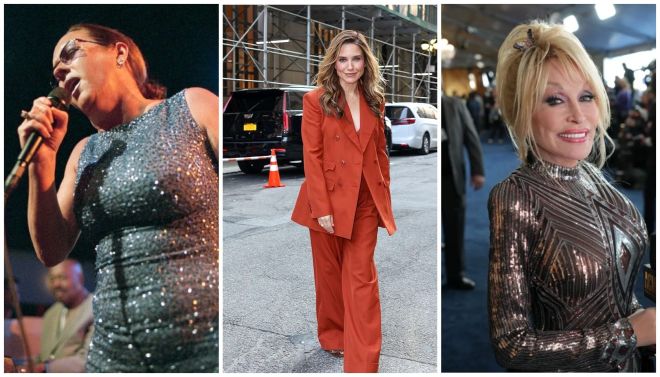
Photos by Gregory Bojorquez/Kevin Mazur,Jason Howard/Bauer-Griffin/Getty.
Dolly Parton’s legacy goes far beyond country music. The legendary singer, songwriter, actress and philanthropist died at 80 on Aug. 25, 2026, following a brief and private battle with cancer. She passed away peacefully at Vanderbilt-Ingram Cancer Center in Nashville, Tennessee, surrounded by loved ones. Fans will forever remember Parton for timeless hits like “Jolene,” “9 To 5” and “I Will Always Love You.” But her impact stretched far beyond the recording studio. Parton was a white woman from Nashville who not only fought for Black people but also stood up for our civil rights unabashedly.
Throughout her career, Parton used her platform, money and influence to support communities and causes close to her heart, never afraid to speak publicly about racial inequality or show her support when doing so may have put her career in jeopardy.
Dolly’s Whitney Houston connection became a gift to Nashville.

One of the most memorable examples of Parton putting her money where her mouth was came through Whitney Houston’s iconic version of “I Will Always Love You.”
During a 2021 appearance on Watch What Happens Live with Andy Cohen, Dolly Parton revealed that she used royalties from Houston’s recording to purchase an office complex in a predominantly Black Nashville neighborhood, in order to honor the legendary singer. The legendary song made around $10 million in royalties for Parton, according to Forbes.
“It was mostly just Black families and people that lived around there,” Parton said. “It was a whole strip mall. And I thought, ‘This is the perfect place for me to be, considering it was Whitney.’ ”
Parton set up a recording studio in the complex in 1997. At the time, major artists and record labels rarely brought their business or production jobs to that specific part of town. Her presence brought immediate jobs and industry attention to the neighborhood, WKRN News 2 noted. Rather than pocketing the money or investing it in elite areas of town, Parton intentionally placed millions of dollars directly into the local economy of “Whitney’s people,” ensuring the neighborhood had financial backing from one of music’s biggest stars.
“I just thought, ‘This was great. I’m going to be down here with her people, who are my people as well,’” Parton added during her interview with Cohen in 2021. “And so I just love the fact that I spent that money on a complex. And I think, ‘This is the house that Whitney built.’ ”
It was a powerful full-circle moment. Houston turned Parton’s song into one of the biggest recordings in music history, and Parton used the financial success of that song to invest in a community in Houston’s own hometown.
She wasn’t quiet about Black Lives Matter.
Parton also made her position clear during the nationwide racial justice protests that followed the 2020 killing of George Floyd.
In an interview with Billboard that year, Parton pushed back against the idea that supporting Black lives somehow diminished the importance of anyone else.
“I understand people having to make themselves known and felt and seen. And of course Black lives matter. Do we think our little white asses are the only ones that matter? No!” Parton said.
For a country music superstar with generations of fans, it was an especially blunt and unapologetic statement.
That willingness to speak up, rather than simply remain on the sidelines, became another part of the affection many fans had for Parton.
And she certainly wasn’t the only white celebrity who has supported Black people, Black artists and civil rights. Over the years, several white women in entertainment have used their platforms, money and careers to stand alongside Black communities.
Here are several famous white women who have fought for Black people over the years.
1. Jane Fonda
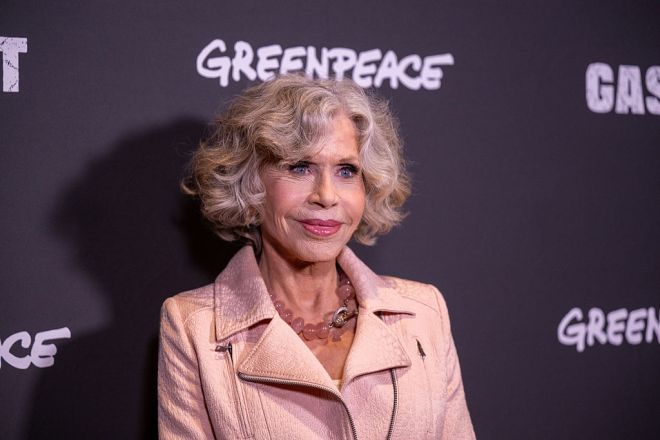
Fonda became heavily involved in racial and social justice activism during the 1960s and 1970s. According to Time, she formed alliances with members of the Black Panther Party and supported community initiatives connected to the organization, including programs designed to provide food and other resources to underserved communities.
Her activism extended well beyond simply making public statements. Fonda participated in protests, raised money for political causes and developed relationships with prominent activists, including Angela Davis, whom she visited in prison in 1971. Her willingness to put her celebrity behind controversial movements made her one of Hollywood’s most outspoken political figures of her generation.
While Fonda’s activism has remained controversial in some circles, there is little question that she used her visibility to bring attention to racial inequality and other forms of systemic oppression at a time when doing so could come with significant professional consequences.
RELATED CONTENT: ‘So Much Of What We Love Comes From Black Culture’ — Sophia Bush & 6 Other White Celebrity Allies Invited To The Cookout
The post White Women Black Folks Don’t Play About: Diana, Dolly, Anne, Sophia & More appeared first on MadameNoire.