African finance chiefs race to secure financing as US–Iran war, aid cuts pressure growth
African finance ministers and central bank governors are turning to global lenders as the economic fallout from the US–Iran war threatens to reverse recent stabilisation gains across the continent.
 Black News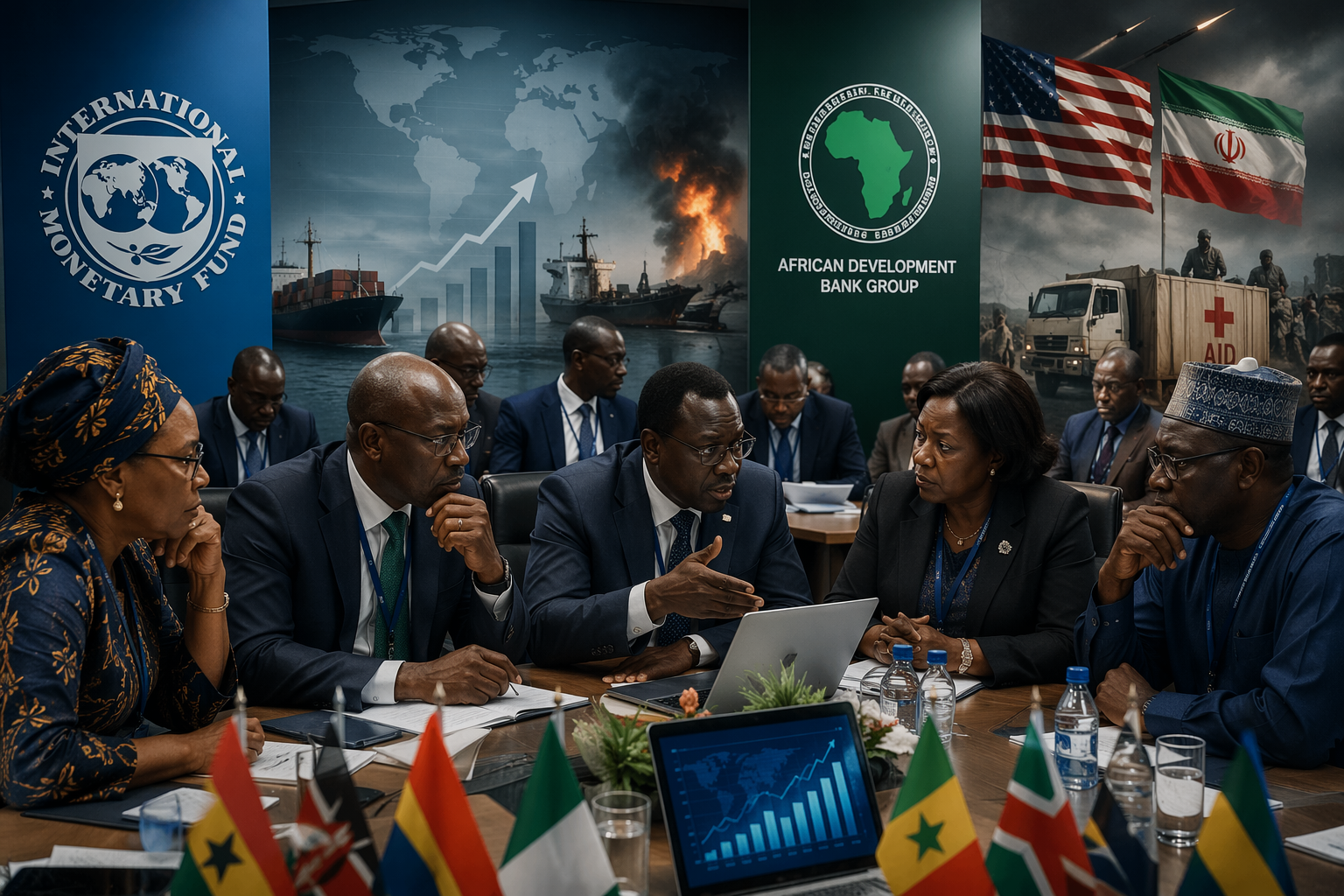



African finance ministers and central bank governors are turning to global lenders as the economic fallout from the US–Iran war threatens to reverse recent stabilisation gains across the continent.
- African policymakers are seeking support from global lenders as the US-Iran conflict disrupts recent economic gains across the continent.
- Rising energy costs and supply chain issues are threatening growth, with IMF projecting a slowdown from 4.5% in 2025 to about 4.2-4.3% in 2026.
- Inflation and food insecurity are rising, prompting several countries like Congo, Angola, and Kenya to request emergency loans from global lenders.
- Countries with recent fiscal reforms and better debt management are faring better, while those with weaker economies face mounting financing pressures.
Meeting on the sidelines of the IMF and World Bank Spring Meetings, policymakers said a convergence of external shocks including higher energy costs and supply chain disruptions, casued by the US–Iran war, is weakening Africa’s growth outlook, though they differed on the scale of the impact.
Sub-Saharan Africa entered 2026 on firmer ground after growing by about 4.5% in 2025, supported by earlier stabilisation efforts. However, the Middle East conflict has since weakened the outlook, pushing up fuel and fertiliser prices and worsening food insecurity, poverty, and social pressures amid declining aid.
The IMF now projects growth to slow to 4.3% in 2026, with uneven performance across countries. It warned that risks remain tilted to the downside due to global uncertainty and domestic vulnerabilities, urging a balance between short-term shock response and longer-term resilience building.
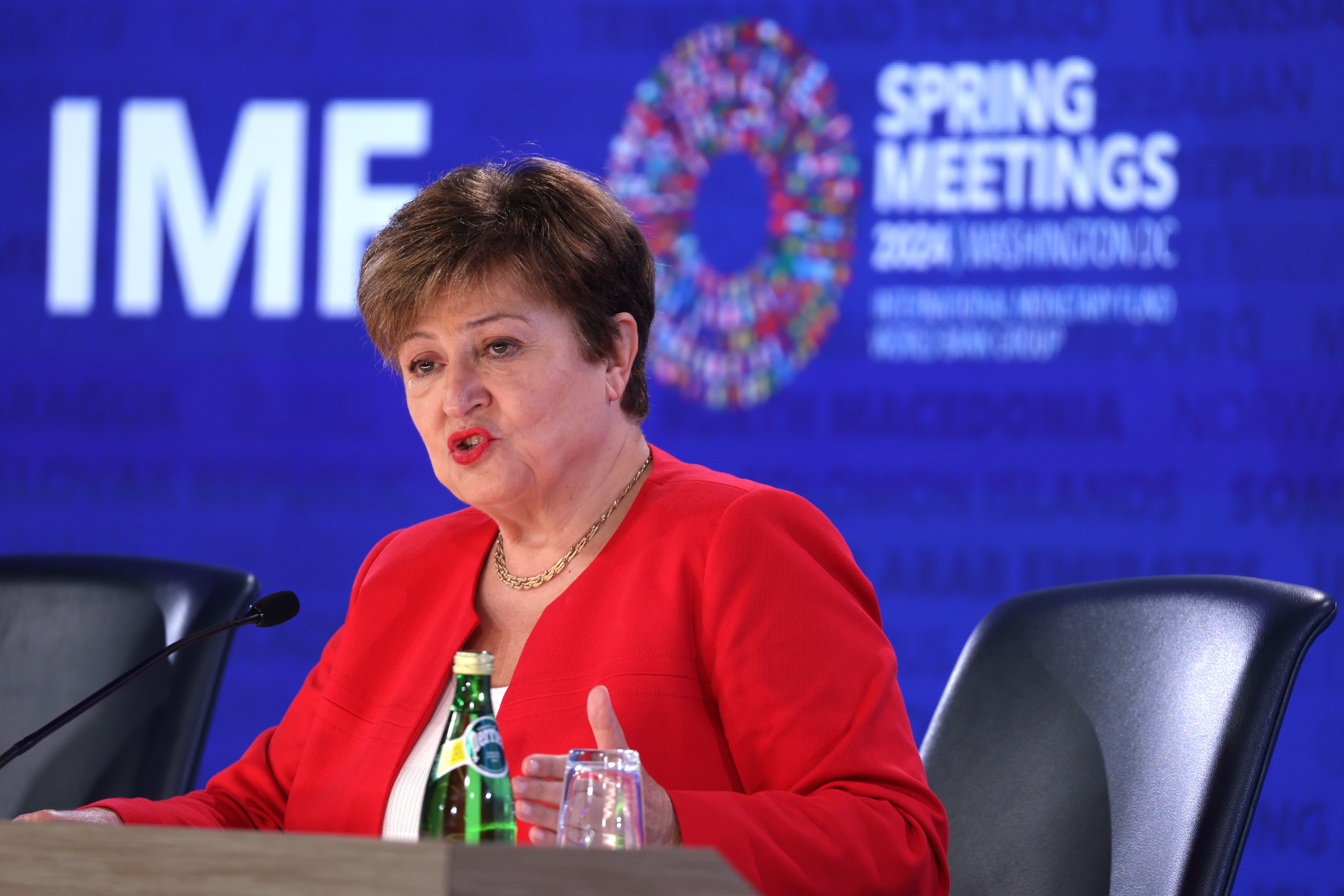
“The war adds another layer of complexity, with the potential for severe scarring, including inflation, food shortages and social tensions,” said Seedy Keita, chairman of the African Caucus and finance minister of The Gambia, alongside IMF Managing Director Kristalina Georgieva in a joint statement.
The IMF warned that at least a dozen African countries may seek new loan programmes, while cautioning that even a quick resolution would not fully prevent lasting disruptions if key shipping routes such as the Strait of Hormuz remain affected.
The Fund projects Africa’s growth to slow from 4.5% in 2025 to 4.2% in 2026, with sharper downgrades in North Africa. Inflation is also expected to rise again, reversing recent gains in price stability.
Mounting financing pressures expose economic fault lines
Several countries are already moving to secure emergency support.
The Republic of the Congo has requested a fresh programme from the International Monetary Fund after completing its previous arrangement in 2025, while Angola is seeking a $165 million budget support loan from the African Development Bank as part of a broader $1 billion external financing plan as per Reuters.
Kenya has also requested rapid financial support from the World Bank to manage fuel shortages and inflation risks triggered by rising oil prices. Its central bank governor warned that the request was “significant,” highlighting the scale of pressure facing import-dependent economies.
For other nations like Mozambique, the coast is not yet clear for an IMF support. The Fund said the country does not currently meet the conditions for a new financing programme, stressing the need for urgent measures to correct macroeconomic imbalances.
According to the IMF’s resident representative in Mozambique, Olamide Harrison, analyses are underway to identify solutions to restore economic balance, including an assessment of both domestic challenges and external pressures.
The position follows the government’s early repayment of more than $700 million to the IMF, settling obligations from previous programmes. Despite this, the institution clarified that such payments are not a prerequisite for negotiating new agreements.
Authorities in Maputo, however, remain committed to securing fresh support, with negotiations ongoing in Washington during the IMF and World Bank Spring Meetings.
At the same time, a divide is emerging across the continent: countries with stronger fiscal reforms and improved debt management are sustaining investor confidence, while weaker economies face rising financing pressures amid tighter global liquidity conditions.
Nigeria’s Minister of Finance and Coordinating Minister of the Economy, Wale Edun, said the country is not seeking a new programme from the IMF at this stage, pointing instead to ongoing domestic reforms and efforts to stabilise fiscal and external accounts.
Edun has previously emphasised Nigeria’s focus on revenue mobilisation, exchange rate unification, and reducing reliance on external borrowing, as the government seeks to rebuild macroeconomic stability following years of FX constraints and fiscal strain.
With no clear timeline for resolution of the conflict, African policymakers now face a difficult balancing act - managing inflation, protecting vulnerable populations, and sustaining growth while relying increasingly on external financing to navigate an uncertain global landscape.