Africa’s SMEs Power the Economy, But Survival Remains the Biggest Challenge
Across Africa, small and medium-sized enterprises (SMEs) have become the backbone of economic activity, quietly driving employment, innovation, and local development across the continent. According to recent estimates, Africa is home to more than 100 million SMEs, with figures rising to nearly 244 million MSMEs when informal businesses are included. Together, these businesses contribute between […]
 Black News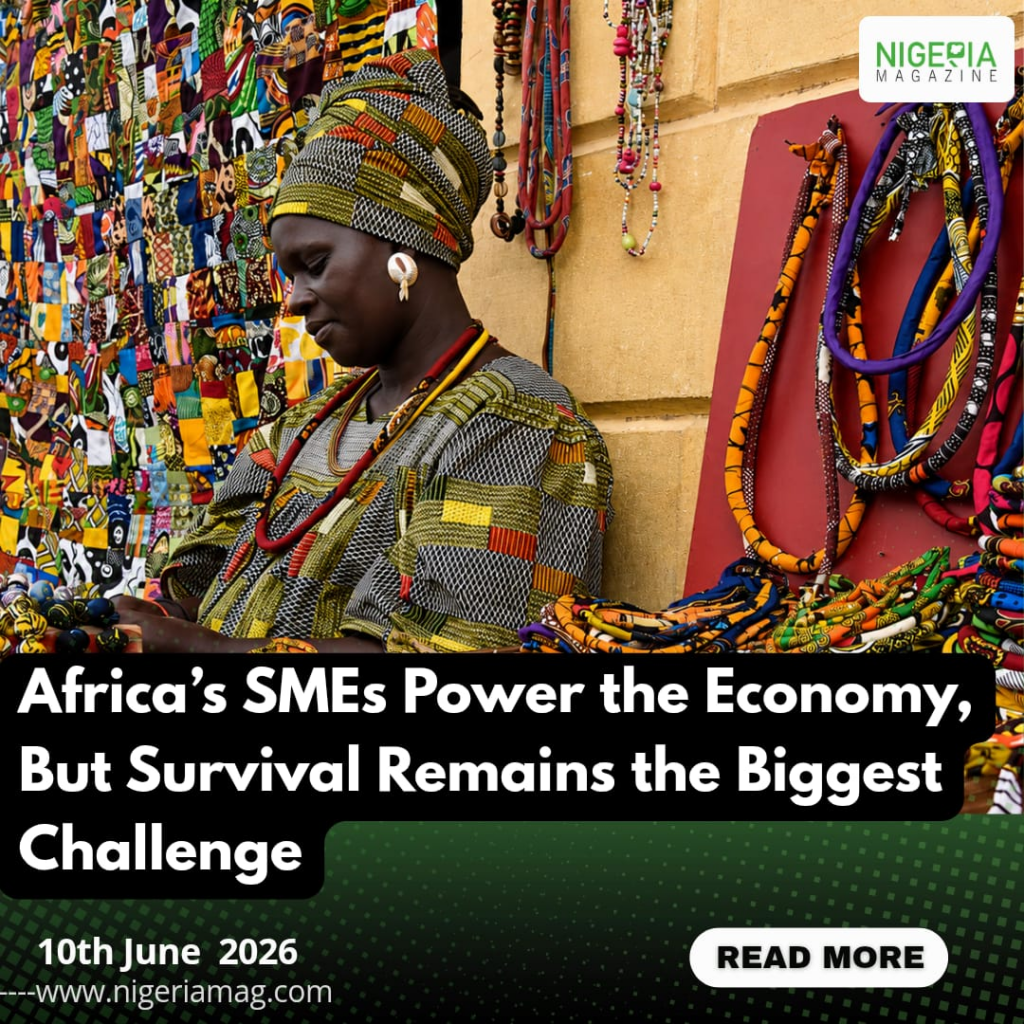

Across Africa, small and medium-sized enterprises (SMEs) have become the backbone of economic activity, quietly driving employment, innovation, and local development across the continent.
According to recent estimates, Africa is home to more than 100 million SMEs, with figures rising to nearly 244 million MSMEs when informal businesses are included. Together, these businesses contribute between 40% and 50% of Africa’s GDP while accounting for up to 80% of employment across many countries.
From local manufacturers and logistics providers to tech startups, online vendors, creative entrepreneurs, and service businesses, SMEs have become deeply woven into Africa’s economic structure. In recent years, a growing number of these businesses have also become digital-first, technology-enabled, and growth-oriented serving customers beyond their immediate communities and increasingly participating in the global economy.
Yet despite their importance, survival remains one of the biggest struggles facing African businesses.
For many entrepreneurs, growth is not the primary challenge, staying alive is.
Across several African markets, businesses continue to battle:
Rising inflation
Currency instability
High operational costs
Poor infrastructure
Limited access to funding
Multiple taxation systems
Unstable power supply
Low consumer spending power
In countries like Nigeria, Kenya, Ghana, and South Africa, entrepreneurs are increasingly forced to operate in highly unpredictable economic environments where planning for long-term growth becomes difficult.
Even profitable businesses are not immune.
Many SMEs that employ workers, pay taxes, and generate steady revenue still struggle with cash flow pressure, rising logistics costs, and reduced purchasing power among consumers. For startups and young businesses, the challenge becomes even more severe as access to financing remains limited compared to developed economies.
Despite these realities, Africa’s entrepreneurial ecosystem continues to expand.
Technology has played a major role in this transformation. Digital payment systems, e-commerce platforms, social media marketing, and mobile banking have lowered barriers to entry for millions of entrepreneurs. Young Africans are increasingly building businesses online, creating brands through content, and accessing customers beyond traditional physical markets.
This shift has contributed to the rise of a new generation of African SMEs businesses that are:
Tech-enabled
Mobile-first
Service-driven
Community-powered
Built for regional scale
However, experts warn that innovation alone may not be enough without stronger institutional support.
Many business leaders argue that governments across Africa must move beyond celebrating entrepreneurship rhetorically and instead focus on building systems that genuinely support business survival. This includes improving access to affordable financing, reducing regulatory bottlenecks, investing in infrastructure, simplifying tax structures, and creating policies that encourage long-term business sustainability.
The conversation AME especially important because SMEs are not just businesses, they are employers.
Every struggling SME often represents:
Jobs at risk
Families affected
Reduced local economic activity
Slower national growth
For Africa’s young population, the stakes are even higher. With millions entering the workforce annually, SMEs remain one of the continent’s largest sources of employment opportunities.
Still, optimism around Africa’s entrepreneurial future remains strong.
Investors continue to show interest in African startups, local innovation is accelerating, and more entrepreneurs are building solutions tailored specifically to African realities. Across sectors such as fintech, logistics, healthtech, agriculture, education, and commerce, SMEs are increasingly proving that African businesses can compete globally when given the right environment to thrive.
The challenge now is ensuring that survival no longer becomes the biggest achievement.
Because while Africa’s SMEs may already power the continent’s economy, their long-term success could determine the future of Africa’s growth itself.