AI Strategist for Visionary Leaders
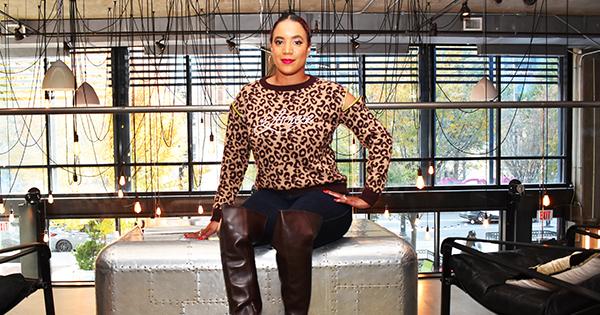
In an exclusive interview with Black Business Magazine, Tamar Huggins, Founder and CEO of Tech Spark AI, shares a bold vision for building technology that reflects culture, community, and ownership. This conversation explores how AI can move beyond generic systems to become a tool for empowerment, representation, and economic advancement.. Interview By Norman Musengimana Tamar [...]
 Black News
In an exclusive interview with Black Business Magazine, Tamar Huggins, Founder and CEO of Tech Spark AI, shares a bold vision for building technology that reflects culture, community, and ownership. This conversation explores how AI can move beyond generic systems to become a tool for empowerment, representation, and economic advancement..
Interview By Norman Musengimana
Tamar Huggins is an award-winning AI strategist, author, and serial tech entrepreneur. She is the Founder and CEO of Tech Spark AI, an education technology company that uses culturally responsive AI to empower underserved communities through inclusive innovation. Tamar developed Spark Plug AI, the first generative AI chatbot designed specifically to center the Black experience using African American Vernacular English and cultural intelligence. Through her proprietary Legacy Intelligence framework, Tamar helps businesses and institutions unlock their historical knowledge and integrate AI in a way that protects budgets, reduces bias, and builds equity. Her work has supported over 200,000 students and helped raise over $20M for Black and Brown founders. Tamar has been featured in Essence, BET, TechCrunch, and Black Enterprise, and is recognized as a leading voice in AI, education, and digital sovereignty. She is also the author of Bossed Up: 100 Truths to Becoming Your Own Boss, God’s Way.
You’ve spent over 15 years building platforms like Driven Accelerator, Tech Spark, and now Spark Plug AI to center Black founders, students, and communities in tech. What personal experiences first pushed you to create tech and funding systems specifically designed for Black and underrepresented innovators?
In 2009, after being laid off during the recession, I stepped away from corporate marketing and launched my first business, Knexxion Communication Group, a boutique PR agency that supported media and entertainment clients. But as I grew that business, I noticed a pattern: Black entrepreneurs had brilliant ideas but no access to capital, tech training, or industry networks.
That gap led me to found DRIVEN Accelerator Group in 2012, Canada’s first tech accelerator for Black and Brown founders. I witnessed firsthand how Black-led innovation was overlooked unless it fit traditional, white-centered models of success. Our founders were solving real-world problems with genius and grit, yet they were shut out of the very systems meant to support entrepreneurship.
That fire followed me into education, where I saw Black students disengaging from tech because it didn’t reflect them. That’s why I created Tech Spark in 2015, and later, Spark Plug AI, to build systems that reflect our culture, amplify our genius, and keep us from having to code-switch just to be seen. My mission has always been to give our people the tools, capital, and confidence to build the future on our terms.
Spark Plug AI is described as the first generative AI chatbot built to center the Black experience, and your Legacy Intelligence framework focuses on ownership and institutional memory. How do you define “digital sovereignty” for Black communities, and why is it so important that we own the data and AI systems built from our culture?
To me, digital sovereignty means owning our culture, our code, and the data that powers our futures. It’s the difference between being users of someone else’s system and being the architects of our own. Historically, Black communities have contributed immensely to culture, language, and innovation, but in tech, we’ve been consumers, not decision-makers.
With Spark Plug AI, we flipped that script. It’s the first AI chatbot trained on Black vernacular, cultural cues, and the lived experience of young Black voices, including my own daughter’s. It doesn’t just “sound Black.” It thinks in culturally fluent ways that affirm our identity and intelligence.
Through Legacy Intelligence, we help organizations, especially schools, nonprofits, and corporations, unlock decades of untapped knowledge trapped in PDFs, reports, and outdated systems. We then transform that into actionable data that fuels AI built for our communities. If we don’t own our data, we risk being erased by the very technologies shaping society.
Digital sovereignty is not a luxury. It’s a lifeline. If AI is the future, we have to be more than included. We have to be in control.
From helping raise over $20M for minority-led startups to raising $4M to “build AI for the culture,” you’ve navigated funding spaces that don’t always understand Black-led innovation. What do investors still get wrong about Black tech founders, and what mindset shifts are needed to truly back our ideas at scale?
Investors still make the mistake of measuring Black founders against a framework that was never built with us in mind. We’re expected to prove more, earn less, and scale faster just to be seen as “investable.” Meanwhile, white founders often get funded on just a slide deck and a Stanford email address.
What’s misunderstood is that Black founders aren’t just building products, we’re solving generational problems. Our ideas often have cultural and economic depth that’s hard to quantify on a spreadsheet, but incredibly impactful in real life.
When I raised $7M to build culturally responsive AI, it wasn’t just about tech. It was about reclaiming narrative power. Similarly, the founders I’ve supported, who raised over $20M, weren’t just pitching apps. They were pitching equity, access, and innovation born from lived experience.
The mindset shift investors need is simple. Stop looking for comfort. Start looking for cultural clarity. The future is intersectional, and Black founders are building for what’s next, not what’s familiar. Back us accordingly with capital, not just claps.
Tech Spark has delivered Afrocentric, culturally responsive STEM education to hundreds of thousands of students. What have you learned from working with Black youth and families about how representation, language, and culture change the way they engage with technology and see themselves as builders of the future?
What I’ve learned is simple. When Black students see themselves in the technology, they stop consuming it and start building it. It’s not that they lack interest or ability. It’s that traditional tech spaces lack cultural fluency.
At Tech Spark, we use culturally relevant pedagogy and AI tools like Spark Plug AI to reflect our students’ identities, histories, and voices. We speak their language—literally. When a chatbot uses AAVE, or references Beyoncé, or affirms their brilliance, it makes them feel seen. That emotional resonance unlocks cognitive engagement.
Black families have also told us that they’ve never seen their children so interested in coding or AI until we brought culture into the curriculum. So much of learning is about trust, and culture builds that bridge.
Representation in tech isn’t a nice-to-have. It’s the gateway to innovation. If our kids don’t see themselves in the future, they won’t believe they can build it. But when they do, they become unstoppable.
For Black entrepreneurs who are building in AI, education, or community-centered tech but feel under-resourced or underestimated, what key message or practical first step would you offer about protecting their vision, building ownership, and “building the future on our terms”?
First, protect your vision like it’s sacred. Because it is. If you’re building tech for the culture, you’re not just an entrepreneur. You’re a legacy architect. And that means not everyone will understand your mission. That’s okay. Keep building.
Second, start with what you do have. Your story. Your community. Your values. If capital isn’t available, build credibility through traction, storytelling, or partnerships. Ownership starts with clarity. Know what you’re creating and who it serves. Then document it. Trademark it. Pitch it with power.
Finally, don’t shrink your idea to make it palatable for people who were never meant to lead it. The future we need won’t be built with safe ideas or soft strategies. It’ll be built by those bold enough to break the mold.
You don’t need a huge following, just undeniable influence. If God gave you the vision, trust that He’ll make provision. But you’ve got to move. The world is waiting on what you’re building. Just make sure it’s on your terms.
Disclaimer: The views and opinions expressed in this interview are those of the guest and do not necessarily reflect the official policy or position of Black Business Magazine or its affiliates. The magazine is committed to supporting Black entrepreneurs and fostering conversations that promote inclusion and economic empowerment.