Are Renewed Sanctions an Answer to Settler Violence in the West Bank?
“The shit is hitting the fan,” said Anton Goodman, speaking on Friday afternoon from the West Bank village of Al-Tuwani The post Are Renewed Sanctions an Answer to Settler Violence in the West Bank? appeared first on Moment Magazine.
 Black News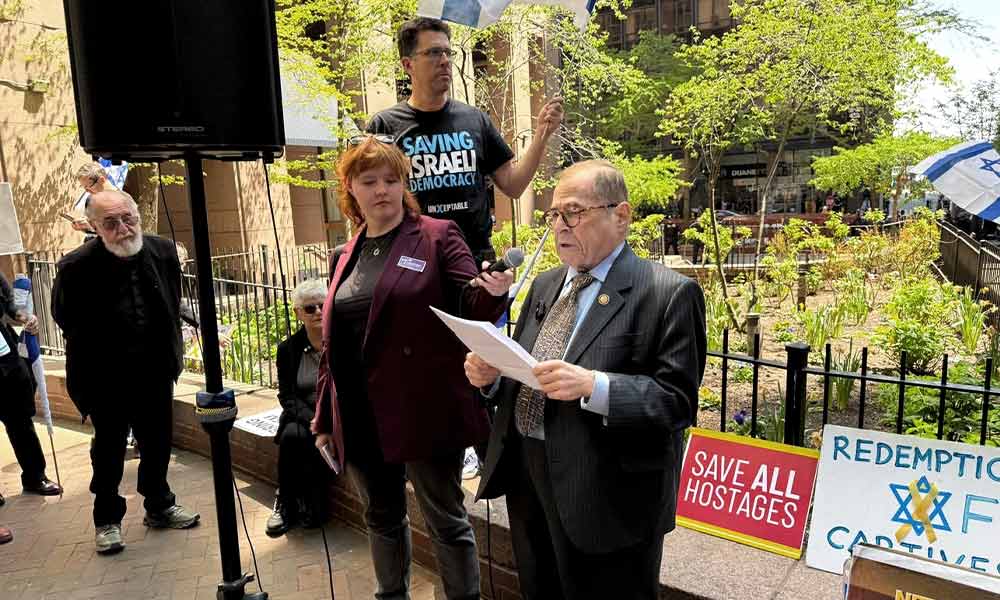
“The shit is hitting the fan,” said Anton Goodman, speaking on Friday afternoon from the West Bank village of Al-Tuwani in the South Hebron Hills.
Two Israelis and four Palestinians had been killed that morning near the village of Tell, southwest of Nablus, and settlers were moving into other Palestinian villages in the area to exact retribution for the slain Israelis, calling on militias to move on Palestinian towns throughout the weekend.
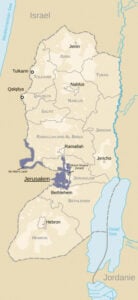
Map of the West Bank
It was yet another terrible example of a situation that seems stuck. In incident after incident, West Bank Palestinians and Israeli settlers assert their right to be there, while settlers continue to push the boundary of what “there” means, and everyone expresses outrage when people on their own side are killed. International calls to curb the violence are growing louder, including here in the United States, where legislation to impose economic sanctions on any individuals or entities so engaged in the West Bank still lacks bipartisan support but is gaining traction.
Accounts of what happened Friday varied, but according to the IDF, a group of Israeli civilians had been hiking and crossed into Palestinian Authority-controlled territory without permission. A confrontation with Tell villagers ensued, and an armed Israeli security officer from nearby Gilad Farm (an outpost of the Havat Gilad settlement) arrived. A Palestinian villager grabbed his gun and shot him. The commander of an IDF unit that arrived on the scene was also shot and killed in the melee, along with four Palestinians.
“As we’re speaking, we’re experiencing one of the worst days of violence in the West Bank,” said Goodman, who is the acting director of the Jerusalem-based organization Rabbis for Human Rights (RHR). He’d pulled his four Israeli ground coordinators out of West Bank areas north of Ramallah and ordered his two Palestinian staffers to stay home. “People are being killed, and so they need to stay indoors and away from it as much as possible,” he said.
David Zini, who heads Israel’s security agency Shin Bet, had just spoken from the site of the violence and urged Israeli citizens not to take the law into their own hands.
“It’s at least a positive sign that he went there. It shows he knows the urgency of the situation,” said Goodman. RHR was calling for the Israeli army to go further and announce closed military zones, a mechanism meant to be quickly imposed and enforced when there’s a high level of violence or threat of violence. By keeping anyone from going in or out of such zones, the IDF could protect innocent lives and gain some control of a situation that, in Goodman’s estimation, was “about to boil over and will lead us into full-on conflict in the West Bank—which is what a lot of the settlers want.”
The response by Israel’s far-right leaders didn’t allay his fears. Israel’s Minister of Finance Bezalel Smotrich and Knesset members Zvi Sukkot (Religious Zionist Party) and Limor Son Har-Melech (Otzma Yehudit) had posted the single word nekama (revenge) on social media, he said. “They’re all writing ‘gerush,’ which means expulsion. These people are part of the government.”
In a joint statement issued the same day, Prime Minister Benjamin Netanyahu and Defense Minister Israel Katz called for “forceful action in villages acting as terrorist hubs,” including confiscating arms and revoking work permits of West Bank Palestinians, reinforcing military units throughout the region, separating traffic routes and “accelerating the legalization of farm outposts and establishment of new ones.”
Friday’s confrontation in Tell came on the heels of a week of violent incidents involving Palestinians and Israeli settlers in the West Bank—violence that, since October 7, 2023, has claimed over a thousand lives and injured, displaced and traumatized far more.
Earlier this month, on July 7, at the end of a tense interview with Netanyahu, CNN’s Dana Bash pressed the Israeli leader on why he and his government hadn’t done anything to curb documented violent activity perpetrated by Israeli settlers against Palestinians in the West Bank. Netanyahu chalked up the violence to “what you would call juvenile delinquents.”
Estimating their number to be “150 or so,” he added that these violent youths “are not, by the way, from the settler community. They’re brought into the area.” While condemning West Bank violence, Netanyahu blamed lenient courts for letting young perpetrators off the hook.
Netanyahu may have been referring to the notorious Hilltop Youth, but in fact, destruction and/or seizure of property, intimidation, displacement and physical harm have all occurred in the occupied West Bank at the hands of adults connected to the settlement movement and sometimes even under the watchful eyes of IDF soldiers. In addition to Palestinians murdered or beaten and homes leveled, farm animals have been killed, olive trees uprooted, graves desecrated, mosques and businesses torched. Increased media coverage has prompted heavy criticism from American politicians, even those who voice strong support for Israel and its response in Gaza to the October 7 Hamas terror attacks.
In April of last year, Democratic Congressman Jerry Nadler of New York introduced the West Bank Violence Prevention Act (WBVPA) in the House, aimed at restoring sanctions imposed by the Biden administration that had targeted individuals and organizations engaged in such activity.
Now, as the American public’s support for Israel has plummeted, lawmakers’ interest in acting to curb West Bank violence is growing.
3 Decades of Expansion, 11 Months of Sanctions
The UN’s International Court of Justice has deemed the settlement movement in the West Bank to be a violation of international law, a characterization Israel disputes. Israel occupied the area, along with Gaza, East Jerusalem and the Golan Heights, in the Six-Day War of 1967, and over the last 30 years, Israeli settlers have continued to confiscate land from Palestinians under religious and historical claims to it. Settlement expansion and associated violence ramped up in late 2022, when Netanyahu’s far-right government came to power, and again after October 7.
In February of 2024, then President Joe Biden issued an executive order titled “Imposing Certain Sanctions on Persons Undermining Peace, Security, and Stability in the West Bank.” Initially, sanctions were imposed on four individuals accused of land seizures and violence against Palestinians in the West Bank. More people were added to the sanctions list in the coming months, along with settlement farms and outposts and organizations that supported them, including the multimillion-dollar pro-settlement construction company Amana. According to Brad Brooks-Rubin, who worked on sanctions issues at the U.S. State Department at the time, by the end of Biden’s term sanctions had been imposed on 17 settlers, nine entities involved in the building and expansion of settlements, and six settler outposts that the U.S. government took action against for their connections to violence.
Yinon Levi was among the first settlers sanctioned in early 2024. The following year, on July 29, 2025, he would be seen on video shooting and killing unarmed Palestinian activist Awdah Hathaleen. This was six months after Biden left the White House and after Donald Trump, on his first day back, revoked the sanctions with his own executive order.
“Since then, violence has continued to plague innocent Israelis and Palestinians,” says Nadler, “which undermines Israel’s long-term security and pushes the prospect of a negotiated two-state solution, including a viable Palestinian state, even further out of reach.”
Nadler, who retires at the end of this year after 34 years in Congress, introduced the West Bank Violence Prevention Act to enshrine into law President Biden’s executive order, which, he says, had “for the first time, established a meaningful framework that sought to prevent and punish individuals and organizations responsible for violence in the West Bank.” In addition to the 32 Israeli entities placed on the Specially Designated Nationals and Blocked Persons (SDN) list during Biden’s term, Nadler notes that the Palestinian militant group Lions’ Den was also sanctioned.
More than a Slap
When laypeople hear that sanctions have been “slapped” on a person or a government or some other entity, it sounds both punitive and expeditious. But of course there’s a whole process by which economic sanctions are applied and enforced. The SDN list is maintained by the Treasury Department’s Office of Foreign Assets Control and includes everyone named across all sanctions programs, whether country-specific or not—from South American drug cartels to Iranian oil sales to Russian oligarchs.
“Technically, when the United States imposes economic sanctions, those who are legally required to comply with those sanctions are U.S. banks, U.S. companies and every U.S. person,” says Brooks-Rubin. In short, America and its citizens can’t transact with parties on the list, who see their U.S. financial accounts frozen, their ability to buy property in the states blocked, and so on.
“One of the reasons I think these sanctions were impactful, even for the time they existed, and have the potential in the future to be impactful is because of the enormous amount of connectivity to the U.S. financial system and to U.S. persons.” Over time, he notes, the requirement to comply has come to essentially mean anyone transacting in U.S. dollars.
Could Jewish charities that raise money for settlements be considered as indirectly supporting policies that “threaten the peace, security and stability” of the West Bank?
Software providers can integrate banks’ transaction systems to issue a red flag, then block a transaction if someone on the sanctions list attempts one. It makes it much harder for those entities to conduct business or fundraise.
Bentzi Gopstein, a resident of the Kiryat Arba settlement in the West Bank and founder of the ultra-nationalist organization Lehava, learned of the reach of sanctions against him when, as reported by Assa Sassan in Haaretz, he went to buy gas in the spring of 2024, and the card reader spit back the message: “Due to your inclusion on the U.S. Treasury sanctions list, we have been forced to block your [credit] card.”
Known as a former student of the late convicted terrorist Meir Kahane and as a close advisor to fellow Kahanist and Minister of National Security Itamar Ben-Gvir, Gopstein remains on other sanctions lists as detailed in the OpenSanctions database, including those of Australia, the UK and Singapore.
When Israelis who were sanctioned by the United States in 2024 saw their Israeli bank accounts blocked, it was often a result of Israeli banks complying with U.S. sanctions, says Delaney Simon, senior analyst with the International Crisis Group. And something the Israeli government tried to put a stop to.
Brooks-Rubin notes that many banks around the world will also comply with the U.S. sanctions list because they don’t want to run afoul of the United States.
Post-Rubicon Post Mortem
Simon says it was “a step across the Rubicon” for a U.S. administration to issue such a clear condemnation of settler violence. But she thinks the implementation was “a little bit watery” in that the Biden sanctions didn’t get to the root cause of violence in the West Bank—that is, Israeli state support for the settlement movement, which she says has involved either turning a blind eye or sometimes actively encouraging it. Ultimately, she says sanctions failed to stem rising settler violence during the 11 months they were in effect. “Targeting Amana and some of these big settlement organizations came too late,” she adds. “Anyway, it was all a wash because after 11 months, it was overturned, so we didn’t really get to see how it played out.”
Brooks-Rubin, who worked on the sanctions, is more sanguine about what they accomplished and about managing expectations.
He has written that sanctions are often deemed a failure because there’s a mistaken expectation that they’ll change behavior. “Diplomacy and negotiations (or jail) change behavior; when sanctions work best, they disrupt behavior to create leverage for those other processes to take hold, often over frustratingly long periods that require excruciating patience.”
The fact that there have been debates in the Knesset about crafting ways to prevent Israeli banks from complying with foreign sanctions could be taken as a sign of disruption.
An August 2024 Jerusalem Post report on debate in Israel’s Knesset Constitution Committee quoted committee chairman MK Simcha Rothman, who charged that the sanctions violated Israel’s sovereignty “in the most basic sense,” and that sanctions by foreign states expressed a lack of trust in Israel’s legal system.
A portion of the Israeli public was also critical, says Simon, who authored a June 2025 report, “The Lessons of the Biden Administration’s Efforts to Sanction Israeli Settlers.”
“Most of the Israelis I spoke to distanced themselves from the settlers and were categorically against settler violence—even if the sanctions themselves irked many Israelis because they seemed to be either ineffective, or suggested an encroachment on sovereignty or mixed messaging in terms of U.S. support for Israel.”
“If lawmakers really want to deal with West Bank settler violence, sanctions should be one in a big toolkit,” she says. She also worries that if they’re implemented again they won’t include off-ramps.
“If you really want to incentivize individuals through sanctions, then you say, okay, I’m going to sanction you, and your life is going to be really hard. And if you want your life to get easier, change your behavior, and I’ll lift the sanctions. That wasn’t really baked into [the 2024 West Bank] policy. That’s a big policy problem with sanctions in general.”
Brooks-Rubin agrees that offramps are often missing but are very useful for sanctions policy to clarify goals. “You’re saying, we actually want you to be better; if x happens, then we’ll take you off the list.”
It’s worth noting that the Senate version of the West Bank Violence Prevention Act offers a general offramp for how sanctions could be terminated: “…if the President certifies to the appropriate congressional committees that someone is no longer engaging in the activity that was the basis for sanctions OR has taken significant, verifiable steps toward stopping the activity AND the President has received reliable assurances that the person will not knowingly engage in any activity subject to sanctions in the future.”
Daily, Engineered Humiliation
The text of the West Bank Violence Prevention Act is identical to Biden’s original executive order, and while the intent is characterized as halting violence, it contains rather sweeping language. To wit, the Act implicates anyone:
“…responsible for or complicit in, or to have directly or indirectly engaged or attempted to engage in any of the following:
(A) Actions, including directing, enacting, implementing, enforcing, or failing to enforce policies, that threaten the peace, security, or stability of the West Bank.
(B) Planning, ordering, otherwise directing, or participating in any of the following actions affecting the West Bank:
(i) An act of violence or threat of violence targeting civilians.
(ii) Efforts to place civilians in reasonable fear of violence with the purpose or effect of necessitating a change of residence to avoid such violence.
(iii) Property destruction.
(iv) Seizure or dispossession of property by private actors.”
A layperson might read that last line as describing the primary action of the settlement movement. And could Jewish charities that raise money for settlements be considered as indirectly supporting policies that threaten the peace, security and stability of the West Bank? Brooks-Rubin says that targeting actions that threaten peace, security and stability is pretty standard language in executive orders placing sanctions on other countries, for example, Sudan or Myanmar, and that the text of Biden’s executive order 14115 and the WBVPA could allow the potential to target broader issues.
For example, in addition to looking at, say, how police or the military could better thwart violence in the West Bank, there’s also the issue of intimidation, whereby settlers don’t commit violence against Palestinians per se but make their lives difficult.
Michelle Dardashti is the senior rabbi at Kane Street Synagogue in Cobble Hill, Brooklyn. She spent a week in Jerusalem earlier this month attending the Shalom Hartman Institute’s annual Rabbinic Torah Seminar. On a visit to the West Bank, she witnessed conditions in the Palestinian village of Umm al-Khair in Hebron. It’s where Palestinian activist Awdah Hathaleen was murdered and where his family still lives.
“What stayed with me most was the shame in how the Hathaleen family described losing access to their own bathroom and their animals ever since a settler caravan was built next to their home,” Dardashi says. After constant friction, the Israeli army eventually declared the area a closed military zone, which in theory would keep the two sides separated. “The closure is enforced only against them. They cannot reach their bathroom at all and can reach their animals only briefly, when soldiers are present to accompany them. The army does nothing to stop settlers from entering the same zone freely,” Dardashti notes.
Eid Hathaleen, a cousin of Awdah’s, described to her the particular indignity of having to use a neighbor’s bathroom. “Not just the practical burden, but what it does to a person to be reduced to asking,” Dardashti relays. “It’s not only a denial of infrastructure. It’s a daily, engineered humiliation.”
In addition to driving Israeli flags on sticks directly into the roof of the Hathaleen’s house, she says the settlers built a swing facing directly into the family’s house, within that same closed zone, and they sit on it to taunt them. That this is all done in the name of Judaism—by people claiming the same tradition and homeland I claim—is excruciating,” Dardashti says.
Looking Ahead
While going after the broader system that allows settler violence to occur may be harder politically, the goal to target violence seems to be resonating with Democratic lawmakers. The House version of the WBVPA gained 11 co-sponsors in July, including staunch Israel supporter Rep. Ritchie Torres of New York, bringing the current total to 165. The Senate version, introduced by Corey Booker of New Jersey, has 44 co-sponsors.
“As the situation in the region continues to deteriorate, and more and more Americans are paying closer attention, it has become clear that clamping down on violence in the West Bank is a cause that unites many across political difference,” says Nadler. “I am proud that over 160 of my colleagues in the House of Representatives have cosponsored the bill, including support from the entire Democratic House leadership team, as has nearly every Democrat in the Senate.”
Could the WBVPA attract bipartisan support? No Republicans in either chamber have signed on as cosponsors. After being first introduced in the House on April 28, 2025, the bill was referred to the Committee on Foreign Affairs and the Committee on the Judiciary. There’s been no movement there.
Republican Mike Lawler, considered a moderate, represents a large Jewish community in New York and won his primary but faces a tough election in November. He chairs the subcommittee on the Middle East and North Africa, so presumably a hearing would go through him. His office did not respond to requests for comment.

If Democrats take back the House, Senate or both in the upcoming midterm elections, the bill could pass in the next Congress. The chances Trump would sign it are low, despite his reportedly asking Netanyahu to calm things down in the West Bank in a meeting late last year. But as a congressional source (unauthorized to speak on behalf of their boss on pending legislation) told me, passage would still send a message to parties in the West Bank, signaling how active U.S. lawmakers want to be on this issue and what the next administration might do.
One question is whether a renewed sanctions policy to try to stop violence in the West Bank would sanction higher-profile targets such as Smotrich and Ben-Gvir.
Interestingly, Congressman Nadler introduced the WBVPA at the “Say No to Ben-Gvir” Rally in New York City on April 24, 2025, to coincide with the minister’s visit as a representative of the Israeli government. “Ben-Gvir has repeatedly excused or minimized settler violence, praised the Hilltop Youth as ‘sweet kids’ and has reportedly also used his authority as minister of internal security to direct Israel’s police to shield perpetrators of settler violence, including giving them ‘a secret sense of backing’ from the Israeli police,” says Nadler. “This kind of incitement is dangerous for Israelis, dangerous for Palestinians, and fundamentally inconsistent with the democratic values articulated in Israel’s founding documents. As Americans, the WBVPA also sends a clear message: Ben-Gvir’s incitement is not welcome in our communities and in the United States.”
Looking ahead, while it might be a harder sell for members of Congress, Simon suggests that a new sanctions policy would do best to address the system that supports settler violence. That system includes expansion—adding blocks and roads to existing settlements, setting up outposts and farms—as well as the forces that finance, build, supply and either police or allow it all to go on.
“The bear should be poked,” says Simon. “Obviously, the behavior is not okay, and much of what is happening is in clear violation of international law. There are many of us around the world who still care about that.”
Top image: Congressman Jerry Nadler (D-NY) introduced the West Bank Violence Prevention Act at the “Say No to Ben-Gvir” Rally in New York City on April 24, 2025. Credit: office of Congressman Nadler.
The post Are Renewed Sanctions an Answer to Settler Violence in the West Bank? appeared first on Moment Magazine.