Sebastian Thiel Talks Fightland, Directing with Heart and Taking London Global
Sebastian Thiel is a Zambian-born British filmmaker and director from Northwest London. From Dreaming Whilst Black and Riches to Supacell, Thiel has built his career across British television after getting his start creating shorts and web series. He now directs episodes three and four of Fightland, the 50 Cent backed crime drama set in the […]
 Black News

Sebastian Thiel is a Zambian-born British filmmaker and director from Northwest London.
From Dreaming Whilst Black and Riches to Supacell, Thiel has built his career across British television after getting his start creating shorts and web series. He now directs episodes three and four of Fightland, the 50 Cent backed crime drama set in the world of boxing, where family, revenge and criminal power collide.
Bringing together his love of action, music and character-driven storytelling, Thiel discusses giving London cinematic scale, finding the heart beneath the action, his surreal experience at Fightland’s New York premiere, and why feature films are firmly in his sights.
Please introduce yourself.
My name is Sebastian Thiel. I’m a film director and writer from Northwest London, though I was born in Zambia and came to the UK when I was three. I’m a Virgo!
Describe your life currently, in one word or a sentence.
Surreal. The way things are happening right now, the combination of events and people all meeting at once, it feels like a bit of a dream sometimes.
Why are we here?
Philosophically, I believe we’re here to leave the world better than we found it, in small ways and big ways, whether that’s improving something, creating something, helping people, or leaving a mark that inspires. That’s what I feel I’m here to do. And more literally, we’re here to talk everything Fightland.
Tell us about Fightland in your own words. What is it to you?
I loved it the moment it came through, because it was so different from a lot of what I’ve done. There’s maybe something in common with Supacell, that intensity of the world in certain places, but this was its own thing. What made it exciting wasn’t just that 50 Cent was attached. It was the calibre around it: brilliant showrunners from the US and the UK, great writers, and a cast full of peers and people I’d already worked with. And it lives in the world of boxing, which I’ve always loved. I’ve done martial arts myself, so getting to delve into that was the pull. In some ways it’s a revenge story centred around family – and yes, it’s violent, but it’s really about someone fighting for what they believe in. Questions of right and wrong; an exploration of what family and love actually means. That core is what I connected with.
Daniel and Marlon have created a very particular world. When you came onto Fightland, what did you immediately understand about what the show needed to feel like on screen?
Fightland lives in the very particular world of boxing, but for me it was about heart and the heart of these characters was easy to understand. I loved the small details: who they are, the specifics of them. That’s what made it exciting to play in this world. I think I understood the tone immediately because I’m familiar with 50 Cent and Power, so I knew what that could feel like translated into the UK. Working with all of them was genuinely fun, and I felt very aligned with what the vision needed.
You directed episodes three and four, when Duke is getting pulled deeper into the underworld. How do you stand out when there are multiple directors on a project?
I really like my episodes because they’re a bridge between worlds and lay the foundations for exciting things to come. Duke is getting in deeper, and the consequences start hitting much closer to home. I never set out to stand out; I just bring my energy and my flair. It’s about blending in, so the whole thing feels seamless. Everyone naturally brings their own energy, and it’s up to the audience to sense whether an episode feels different. That’s not for me to decide. There are details I care about that maybe someone else wouldn’t focus on. I love music, for instance, and I had a real vision for how my episodes could sound and feel. And I looked for ways to bring the culture into the show, getting cameos and collaborators whose work I love, from Michael Dapaah to Michael “Venom” Page. Finding those moments mattered to me.
There’s the boxing, the crime and the violence, but also incredibly intimate family scenes. Which side of Fightland interested you more, the action or the quieter moments?
I was excited by the boxing, the crime, the violence, because sometimes that’s the stuff that makes you go, ‘this is crazy, I’m actually making films‘. You’re doing fight set pieces, things are exploding, it’s fun. But I love the family moments and the intimate scenes just as much, because they drive the story differently. The fights don’t mean anything without them. You need to see what’s at stake. You need to feel it. When Duke is fighting in some of my scenes, it’s for a reason; he’s trying to save people and you only know how he feels about those people because of the quieter scenes. So, I was never interested in either or. I was interested in the blend, how you power these scenes with heart and character, and how you make both sides inform each other.
How did you approach London visually, making the city feel recognisable and authentic while still giving it cinematic scale?
London’s a beautiful city, and making it feel recognisable and authentic is something you can do when you’re from here; you know the specific places to find. What pushed it even further is that we knew this was for an American audience, so you want the landmarks. You want London to feel like London. That fed into a lot of choices. The gym set we built had the London skyline outside it. The intimate scene between Cebella and Nikolai was shot in a penthouse at the Four Seasons, overlooking the Shard and Tower Bridge. Knowing it’s for an American audience actually makes you push harder; you lean into London vibes, and that was fun.
You’re working with a cast full of very different energies. How much room did you give the actors to find things that perhaps weren’t obvious on the page?
This is one of the things I find most exciting about the job. Actors are all different, with different approaches, techniques, interests, ways of working. As a director, you have to adapt to them, and they have to adapt to you. Finding what isn’t obvious on the page is exactly where you need to know each actor intimately, their process. Is this someone who likes to be questioned? Someone who works through visualisation? Someone who finds it gradually as they keep moving through the text? You build those instincts over years; eventually you read it impulsively. They all worked very differently and brought different energies, which I love. A lot of the time, when something isn’t obvious on the page, it comes down to subtext, understanding what the scene actually needs. If there’s any confusion around that, I’ll go to the showrunners so we can ground the notes in what the scene is really doing, rather than everyone being vague.
Reflecting on your journey, from Illegal Activity to Fightland, what’s been your biggest aha moment about how long it’s taken to get a job like this?
It’s been a crazy journey. To go from Illegal Activity, a short film, to a project like Fightland is phenomenal for me. I loved Supacell, and what’s exciting about Fightland is 50 Cent, yes, but also its footprint in the US. I’ve always wanted to work there specifically. I love the content that comes out of it, and expanding into a new market is always exciting. So, this moment in the US and the UK, because I feel it’s a joint thing, is really special. As for how long it’s taken, I don’t really look at time like that. I try to stay in the moment and focus on whatever I’m doing, and however long something takes is how long it was meant to take. You never know when jobs are coming or how life is going to move, so I go with the flow. Honestly, at 36, to have done this amount of work, I feel like it’s just the beginning. I’m excited about what’s next, because I really want to get into feature films. All this experience, starting in short films and web series’, learning at that level to grow into this one, I’m forever grateful for it.
Speak about the New York premiere, being in 50 Cent’s orbit, getting that cosign, and the reaction so far.
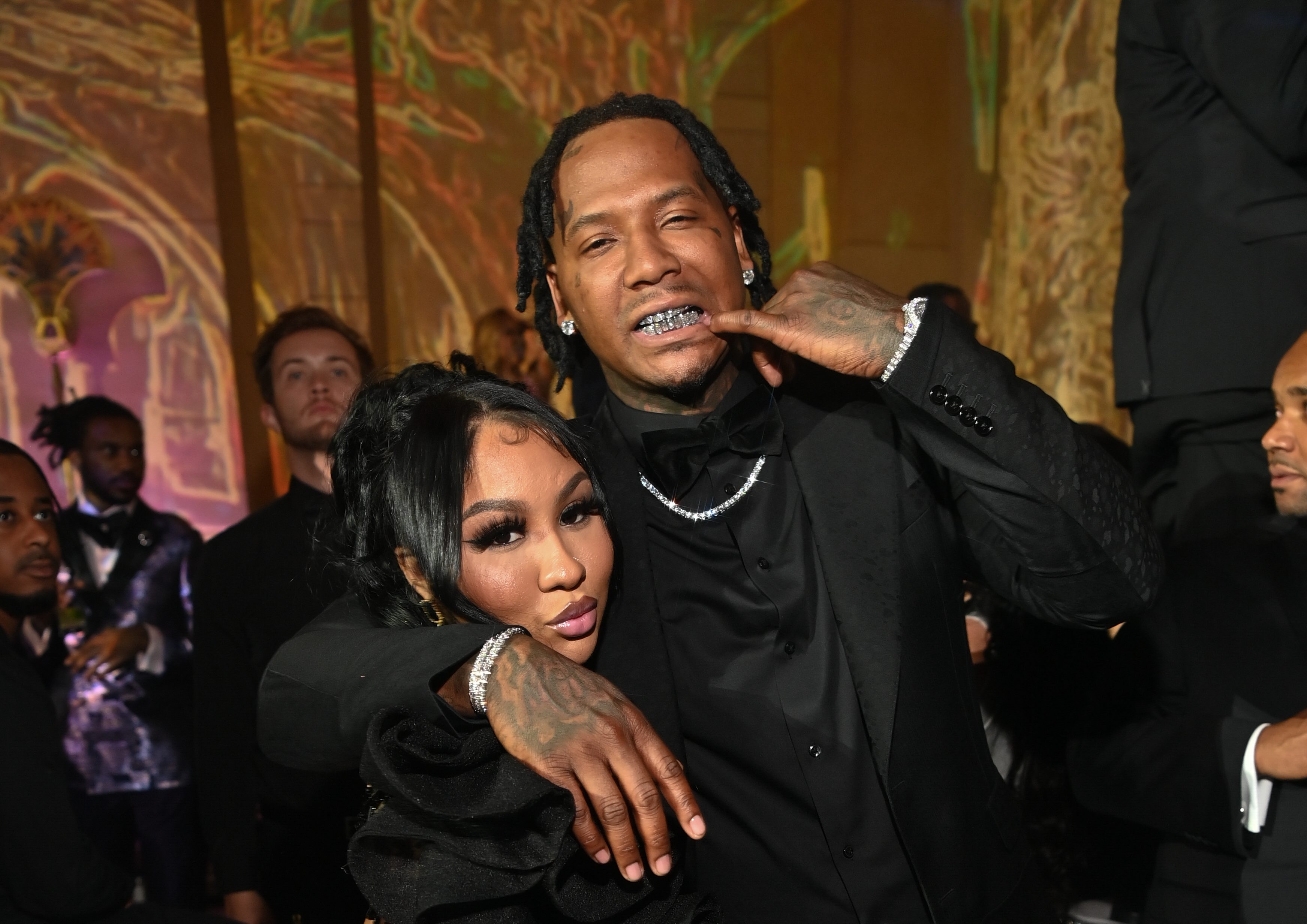
The New York premiere was insane, the best premiere I’ve ever been to, and it was crazy to be part of it. It started with the red carpet and the interviews, all the fun of that. I’m looking around and seeing people I’ve watched online for years: DJ Envy from The Breakfast Club, Tony Yayo, a lot of the stars from Power. After the interviews, you rock up to the punching machine, have a go, then stand around talking and chilling.
Then we went into the screening room, and 50 gave a speech, a funny one. He ended it on a bit about dodging a family member who he spotted in the crowd, then just disappeared off stage, which had everyone laughing. We watched the first episode, and afterwards there was a surprise performance from him and a load of other New York acts. It was at the Lincoln, so many performances, so many songs; it essentially turned into a 50 Cent concert. Then we all headed to the after-party, four floors of it, more networking, and 50 performing again.
So much fun. What struck me was how immersed he is in the show, how involved he is, how hard he’s pushing it. He’s genuinely using his presence to elevate it, and he really loves it. That means a lot. As for the reaction, I catch it online here and there, but I tend not to watch reactions. I’ll talk to my peers and friends, but once a job’s done, it’s done. I know people are enjoying it, and that’s great, but by then my mind is already on the next project.
Who were the people you leaned on during this process?
What was great about this project is that it was surrounded by so much experience, from the showrunners to the producers to the other directors. We all leaned on each other. I was there when people needed support, and they were there when I needed it. It was one of the most supportive sets I’ve ever been on, and I really enjoyed the process because of it.
How did you prepare for or approach your work?
It starts with reading the scripts over and over. Then I break each scene down: character intention, objectives, energy, tone, where the comedy/drama is, and any areas that might need changes. I’ve got a whole list of things I use to break a script down. I’ll have action verbs ready for notes in case an actor needs prompting, and I’ll think through alternative ways to give a note in case the tone switches- mine, theirs, or the producers’. I like to be prepared and have the other options in my pocket. After that, I break down how I see it visually: shots, angles, lens ideas, pacing. Then I collaborate with the DP, share my ideas, take on theirs, and let them fly with it too. It becomes properly collaborative. But I do a lot of my prep first, so I understand it and know what I want. That way I can be clearer with everyone, whether it’s about locations, clothing, whatever it is.
What did you find most challenging?
TV is always challenging. You always want more time to shoot. That’s just part of the process, and finding creative solutions around it is where you have to stay focused. There were plenty of challenging things on this, but we always found creative ways around them.
What did you enjoy or connect with most easily?
I think I connected most with the emotion of wanting something and not letting anything get in the way of it. So many of our characters are like that: Duke, Isabella, Zeek, Kim, Kingsley, Joy, etc. They all want something desperately, and they won’t let anything stop them. I enjoy that kind of story and relate to it in some ways.
Tell us about your other ventures, Dope Black Art, Diaspora Calling, and where you’re taking your other hustles.
I’ve been fortunate to do loads on this little gap after Fightland. One of my ventures is Dope Black Art, which I’m continuously building and looking to expand. It’s an art platform where we give opportunities to artists, big and small: exhibitions, events, a shop, and more to come. Right now I’m taking it slow as I build it out.
Diaspora Calling was something else. To be involved in any capacity was amazing. I literally got a call while I was in New York from a friend, and the next minute I was in a group chat with Lauryn Hill, then on Zoom having creative conversations. I got to contribute my creativity, contacts, ideas and connections to help in small ways around the show. It was all about bringing relationships and ideas together, everyone working as one. She’s a legend and a huge inspiration, so that felt really surreal. And then getting to meet and chat with Dave Chappelle, another huge inspiration, made the whole month feel surreal.
GETTING TO KNOW YOU …
If not this, then what? There’s no plan B. It would be this; it was always meant to be this. But if I had to say something, maybe basketball.
What are you watching? Rewatching Dave Chappelle’s stand-up.
What are you reading? The Law of the Sublime by Robert Greene, who was kind enough to give me an advance copy.
The last film you watched? Obsession.
The last play you saw? I can’t remember the last one, but the last play that really made an impact on me was Misty, though that was a while ago now.
The last live music event you attended? Piano People. I love a bit of Amapiano.
What’s on your playlist right now? An Afrobeats and R&B vibe, a mix of people like Odeal and a few others. And since going to Brazil, I’ve been heavily into Latin music too, which has been fun to get into.
Which podcasts are you listening to? I haven’t had much time for full pods lately since I’m writing, but I’m loving the Trevor Noah clips from his podcast ‘What Now? with Trevor Noah‘ at the moment.
What’s on your bucket list? The Himalayan mountains and The Pyramids. Two places I haven’t been that I’d love to see.
Where’s your happy place? The basketball court.
Celebrate yourself… I’m proud of materialising dreams. My own and others.
Where can we find you? @sebastianthiel @upshotreels @dopeblackart
Where can we see or hear your work? Fightland is out now on Starz in the US and Sky in the UK. Supacell is on Netflix. Dreaming Whilst Black is on BBC and Paramount+. Riches is on Amazon. Just a Couple is on BBC Three. And you can browse some of the older stuff on my YouTube.