Beyond Personal Gain: Choosing What Benefits All
Too often, we evaluate leaders, policies, and decisions based on a simple question: “What have they done for me?” While that question may seem reasonable, it can be dangerously incomplete. A leader who does something good for me may not necessarily be good for everyone. Personal favors, individual advantages, and special access can cloud our judgment and prevent us from seeing whether decisions are truly advancing the common good. The post Beyond Personal Gain: Choosing What Benefits All appeared first on The Westside Gazette.
 Black News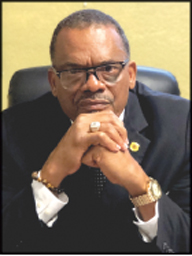
A MESSAGE FROM THE PUBLISHER
By Bobby R. Henry, Sr
One of the greatest challenges facing our communities, our nation, and our politics today is learning the difference between what benefits us personally and what benefits us collectively.
Too often, we evaluate leaders, policies, and decisions based on a simple question: “What have they done for me?” While that question may seem reasonable, it can be dangerously incomplete. A leader who does something good for me may not necessarily be good for everyone. Personal favors, individual advantages, and special access can cloud our judgment and prevent us from seeing whether decisions are truly advancing the common good.
Perhaps this is where politics becomes messy.
When personal benefits begin to outweigh the benefits for all, we lose sight of justice. We become more concerned with protecting our own interests than ensuring fairness and opportunity for everyone. Yet history teaches us that real progress comes when people are willing to look beyond themselves.
The Montgomery Bus Boycott stands as one of the greatest examples of this principle. Rosa Parks’ refusal to surrender her seat was not simply about one woman being mistreated. A negative situation that affected one person became the catalyst for transforming an entire system. The goal was not special treatment for a select few. The goal was justice for all.
Thousands sacrificed. Many walked miles to work. Some lost jobs. Others faced threats and intimidation. Yet they remained committed because they understood something we often forget today: true leadership seeks the good of the whole community, not merely the comfort of the individual.
The boycott succeeded because people were willing to place principle above personal convenience. They understood that when justice prevails for the least among us, everyone benefits.
This lesson is deeply rooted in Scripture.
In Isaiah 1:17, God commands His people to “learn to do right; seek justice. Defend the oppressed. Take up the cause of the fatherless; plead the case of the widow.”
Notice what God does not say. He does not tell us to seek advantage for ourselves. He does not tell us to protect only those who can help us. Instead, He directs our attention toward those who are vulnerable, overlooked, and unable to repay our kindness.
The oppressed, the fatherless, and the widow represented the people with the least power in society. God’s concern was not about preserving privilege. His concern was about ensuring justice.
The same call remains before us today.
Who are the oppressed in our communities? Who are the children without advocates? Who are the elderly, the struggling families, the forgotten neighborhoods, and the unheard voices? Seeking justice means refusing to ignore their plight. It means challenging systems that harm them and supporting efforts that lift them up.
This is not merely social responsibility. It is spiritual responsibility.
As followers of Christ, we are called to reflect the heart of our Father. We are called to care about what He cares about. We are called to champion causes that extend beyond our personal interests.
We must also recognize another truth: not everyone is meant to help us fulfill our individual purpose. Some people will support us, some will challenge us, and some will simply be part of our journey. Yet when each person fulfills the purpose God has placed before them, everyone benefits from the result.
Dr. Martin Luther King Jr. fulfilled his purpose. Rosa Parks fulfilled hers. Countless unnamed foot soldiers fulfilled theirs. Their sacrifices created opportunities that benefited generations they would never meet.
That is the model we should pursue.
When choosing leaders, supporting causes, or making decisions that affect our communities, we should ask not only, “What does this do for me?” but also, “What does this do for us?” We should measure success not by personal gain but by collective progress.
Justice has never been about securing a better seat for ourselves. It has always been about making room at the table for everyone.
When we seek justice, defend the vulnerable, and choose what benefits the whole over what benefits only ourselves, we reflect the heart of our Father. And in doing so, we move closer to the kind of community—and the kind of nation—that God intended us to be.
SIDEBAR
“The Women Who Helped Spark the Montgomery Bus Boycott”
While Rosa Parks is rightfully remembered as the face of the Montgomery Bus Boycott, the movement was built upon the courage of others who challenged segregation before December 1, 1955.
Claudette Colvin: The Teenager Who Refused to Move
Nine months before Rosa Parks made history, 15-year-old Claudette Colvin refused to give up her seat to a white passenger on a Montgomery city bus on March 2, 1955. She was arrested, handcuffed, and removed from the bus.
Colvin later became one of the plaintiffs in Browder v. Gayle, the federal court case that ultimately ruled bus segregation unconstitutional. Although she did not become the public symbol of the movement, her bravery helped pave the way for the legal victory that ended segregation on Montgomery’s buses.
“I felt as though Harriet Tubman was pushing down on one shoulder and Sojourner Truth was pushing down on the other,” Colvin later recalled.
Lucille Times: The Woman Who Started Driving for Freedom
Before the Montgomery Bus Boycott officially began, Lucille Times was already taking a stand. Frustrated by the disrespect and mistreatment Black passengers endured on city buses, she stopped riding them and began transporting Black workers in her own vehicle.
Her informal transportation effort became an early example of the alternative transportation system that would later sustain the 381-day Montgomery Bus Boycott. By helping people get to work without relying on segregated buses, Times demonstrated that the Black community could organize and support itself in the pursuit of justice.
A Movement Built by Many
History often remembers a few names, but great movements are built by many hands. Claudette Colvin, Lucille Times, Rosa Parks, Dr. Martin Luther King Jr., and thousands of ordinary citizens each played a role in transforming a local injustice into a national movement for civil rights.
Their legacy reminds us that change rarely begins with the powerful. More often, it begins with ordinary people who decide that injustice can no longer be accepted.
The post Beyond Personal Gain: Choosing What Benefits All appeared first on The Westside Gazette.