Beyond the main stage: AFRAM’s vendor marketplace fuels Black artistry and entrepreneurship
Though AFRAM is best known for the R&B, hip-hop and soul artists who headline the festival each year, the Baltimore tradition also doubles as a vibrant marketplace for visual artists, fashion designers and other creatives from across the East Coast. As thousands gather for the music, artisans use the weekend to share work rooted in Black culture, identity and storytelling. The post Beyond the main stage: AFRAM’s vendor marketplace fuels Black artistry and entrepreneurship appeared first on AFRO American Newspapers.
 Black News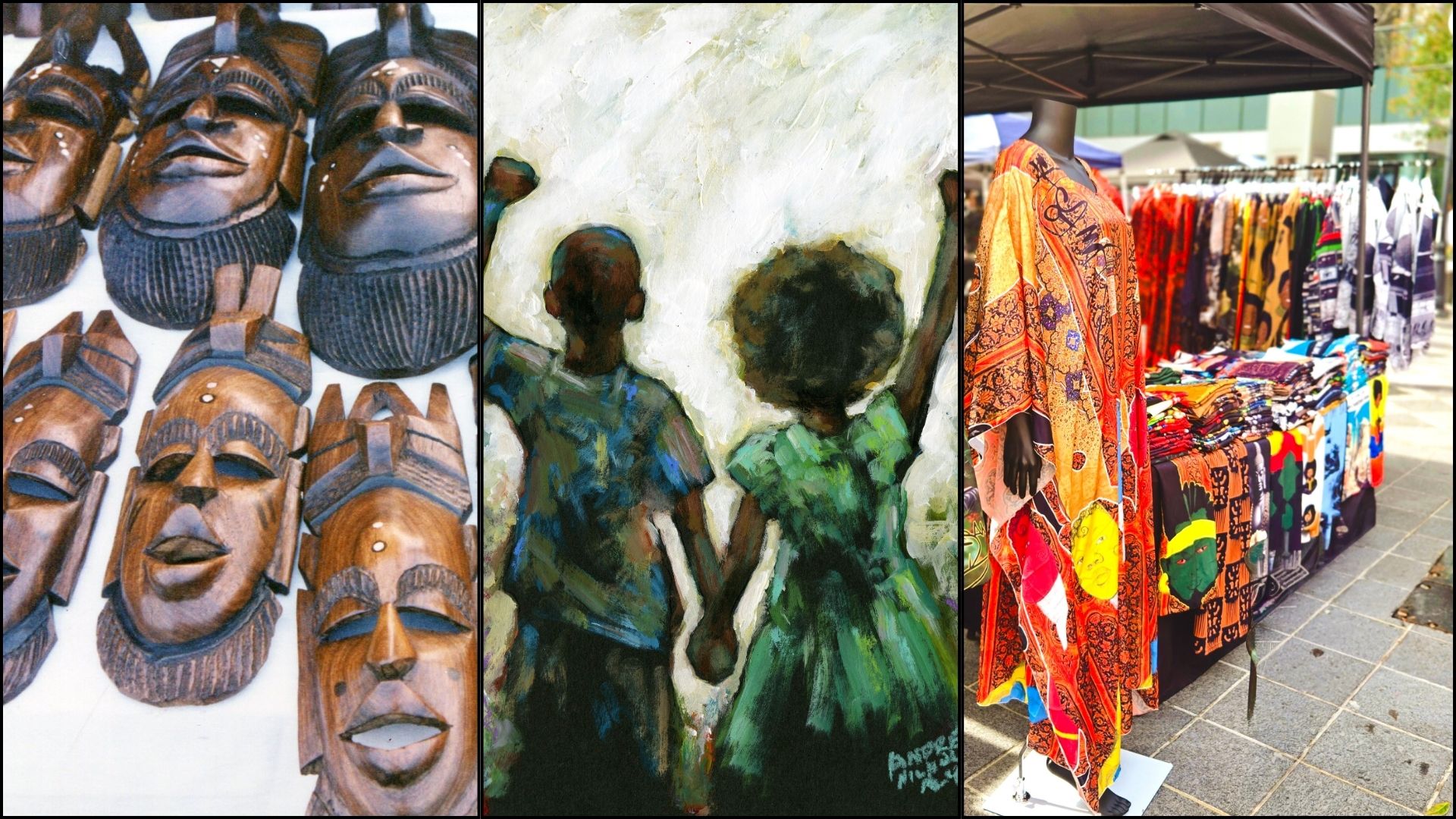


AFRO Staff Writer
Megan Sayles
msayles@afro.com
Though AFRAM is known for legendary R&B, hip-hop and soul performances, another show unfolds along the rows of tents and tables assembled in Druid Hill Park for vendors.
There, artists offer up their talents via vibrant paintings depicting Black life and history. African masks, handbags and soaps are put on display as the scent of essential oils and perfume waft through the air. Jewelry makers arrange handcrafted pieces across eye-catching displays of earrings, necklaces, bracelets and more.

Valkyri Ashaqua awaits her next customer at AFRAM 1996. CREDIT: Courtesy of the AFRO American Newspapers Archives / Afro Charities 
Something of interest was available for every member of the family at AFRAM, from good food to entertainment, to booths and exhibits. Checking out the latter are Janet, Robert and Robert Stansbury Jr. at AFRAM on Aug. 13, 1994 CREDIT: Courtesy of the AFRO American Newspapers Archives / Afro Charities 
Amni Black, a visual art company created by South Carolina-based artist Basama (born William Cutler), focuses on providing affordable apparel inspired by African and Black culture. This year will be the brand’s first appearance at AFRAM. Credit: Photo courtesy of Amni Black 
Shown here, a painting of American singer-songwriter and pianist Nina Simone (left) and a painting entitled, “Unity,” both by Andrew Nichols. Credit: Photo courtesy of Andrew Nichols 
Scenes From 1993 AFRAM Exposition: Vendors brought items from as far away as Senegal. Credit: Photos by Ray Gilbert Mask credit: Courtesy of the AFRO American Newspapers Archives / Afro Charities
Clothing designers spotlight local Black institutions and African-inspired prints. As the sounds of AFRAM’s musical performances reverberate through the park, thousands of festivalgoers browse, purchase and connect with the creatives that help the event thrive.
Each year, more than 100 vendors reinforce the festival’s role not only as a cultural celebration, but as an economic engine for Black artists and entrepreneurs. For countless Black artisans, AFRAM has offered more than a weekend of sales. It has served as the place to build businesses, reach new audiences and share art that might otherwise go unseen.
Nate Couser has experienced its impact firsthand. Couser first participated when the festival was being held in the parking lots surrounding Oriole Park at Camden Yards. At the time, he was working as a curator for Iroko, a Baltimore-based contemporary African art gallery that was struggling to attract visitors.
AFRAM changed that.
“When I first started with AFRAM, we got to meet other galleries, curators, art collectors and dealers from other cities, which helped us to do bigger and better events at Iroko,” said Couser.
After the gallery closed, Couser continued returning to AFRAM with his own handcrafted, sustainable jewelry and wearable art through his first business, VashtiBlue Jewelry Studio. The relationships he built there eventually helped him launch a second business, The Artist Exchange, a platform that connects creatives with branding and marketing opportunities.
More importantly, the festival expanded his reach far beyond Baltimore, with AFRAM attendees from across the country calling to request pieces or recognizing him at other festivals.
“It allowed me to get my business out there in a way where it wasn’t just local anymore,” said Couser. “It went beyond the walls of Baltimore City.”
This year, Couser is attending AFRAM not as a vendor but as a support of the artists and entrepreneurs continuing the tradition. After five decades, he said the festival remains one of the few spaces where Black artists and audiences can come together knowing the event was built for them and by them.
Brooklyn, N.Y. native Andrew Nichols says there is power in expanding Black representation in the arts.
“One of the things that I noticed when I was going to a lot of my friends’ houses was that they didn’t have images on their walls that depict us,” said Nichols. “I figured if I created some imagery or concept that people can relate to, I would have meaning by bringing something different to the community.”
Today, the figurative painter and illustrator creates pieces that portray experiences of the African Diaspora in religion, music, romance, history and everyday life.
This year will be Nichols’ third appearance at AFRAM. He said the festival is exactly the kind of event he seeks out, allowing him to place affordable art into the hands of the community that inspires it.
One of his favorite parts of participating in AFRAM has been the conversations that happen across the booth table. Young artists often stop to ask questions about his process, and Nichols makes a point to encourage them to continue developing their own crafts.
On a more personal level, Nichols said he views his participation in AFRAM as a contribution to the celebration of Black culture that AFRAM promotes each year.
“I get to put another feather in the cap of what AFRAM is trying to achieve: unity, community, vibrant energy and gathering a village of people that can relate to each other,” said Nichols. “I’m a component to make that puzzle complete.”
That desire to make Black history and culture more accessible also inspired South Carolina-based artist Basama (born William Cutler).
“It was the need to provide images for Black people at an affordable price,” said Basama.
Through his art and apparel brand, Amni Black, Basama produces art prints, accessories, clothing, shower curtains and home decor that pays tribute to African and Black history.
The name of the company carries a double meaning. Though spelled “Amni,” Basama is referring to “omni,” the Latin word for “all.” The intentional, unconventional spelling is meant to evoke the idea of a black sheep, or someone who doesn’t conform to society.
Basama said he believes it’s the research and commitment to sharing information about Black and African history that sets him apart from other artists.
Today, AFRAM is one of the largest African-American cultural festivals on the East Coast, generating significant economic activity for local businesses and artists while continuing to serve as a Baltimore summer tradition. Couser told the AFRO he is happy to see the festival return year after year.
“I’m glad that leadership over time has not just let it go because so many things have been let go when they weren’t working. People found a way to keep it going even when attendance or the location wasn’t the best–that’s Baltimore in general,” he said. “Baltimore is a very tenacious and dedicated city to it loves…and AFRAM has been something it loves.”
AFRAM 50 will be held at Druid Hill Park Friday, June 19 from 3-9 p.m.; and June 20-21. The festival will run on Saturday and Sunday from 12 p.m. to 9 p.m.
The post Beyond the main stage: AFRAM’s vendor marketplace fuels Black artistry and entrepreneurship appeared first on AFRO American Newspapers.