BoG opens monetary policy process to students
The Bank of Ghana has launched the Monetary Policy Committee Educational Oberservership Programme (MPC-EOP) as part of efforts to deepen public understanding of the country’s economic decision-making process. The initiative launched during the Bank’s 131st Monetary Policy Committee (MPC) meetings forms part of the Bank’s broader commitment to promoting transparency, strengthening policy credibility and improving … The post BoG opens monetary policy process to students appeared first on Ghanaian Times.
 Black News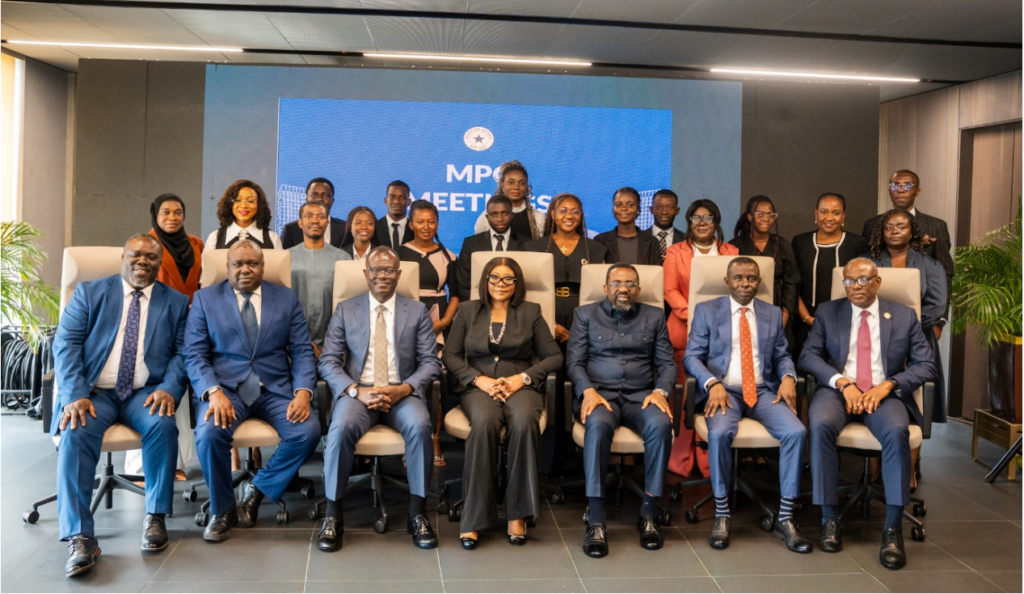
The Bank of Ghana has launched the Monetary Policy Committee Educational Oberservership Programme (MPC-EOP) as part of efforts to deepen public understanding of the country’s economic decision-making process.
The initiative launched during the Bank’s 131st Monetary Policy Committee (MPC) meetings forms part of the Bank’s broader commitment to promoting transparency, strengthening policy credibility and improving public engagement.
It is also to bridge the gap between classroom learning and practical policymaking.
Students from University of Ghana are the first group to be given the rare opportunity to observe how the Bank of Ghana (BoG) formulates its monetary policy.
The programme began with an orientation on the Bank’s mandate, Ghana’s monetary policy framework and the role of the MPC before students observed technical presentations that informed the Committee’s deliberations.
They were taken through inflation trends, macroeconomic developments, the external sector, financial markets, agriculture and the wider economy, and a broad range of data considered before a policy decision is reached.
Speaking at the opening of the MPC meetings, the Governor of the Bank of Ghana, Dr Johnson Pandit Asiama, said the initiative was aimed at making monetary policy more accessible to the public.
“Monetary policy is most effective when it is understood, trusted and supported by the public,” he said.
“Through this initiative, we seek to demystify the monetary policy process by providing students with practical exposure to the analytical work, technical discussions and communication processes that underpin the Committee’s decisions.”
Dr Asiama said the programme also sought to strengthen collaboration between academia and public policy institutions while nurturing the next generation of economists and policymakers.
He said beyond observing technical sessions, the students would also attend the Monetary Policy Committee press briefing where the policy decision will be announced, before engaging the Governor in a post-meeting discussion to better understand the rationale behind the Committee’s decision.
One of the students said the programme had dispelled the common misconception that the Governor alone determined the Monetary Policy Rate.
“Watching the presentations and discussions has shown us that the decision is based on rigorous analysis and contributions from many experts, not just one individual,” the student said.
The participant described the observership as an opportunity to translate classroom theories into practical policymaking, adding that it had also inspired new research ideas on the economy.
Faculty members accompanying the students described the initiative as an important step in complementing classroom instruction with practical experience.
For many economics and finance students, monetary policy is a subject largely studied through textbooks and lectures. However, the observership gave participants first-hand exposure to the extensive research, analysis and discussions that precede every policy rate decision announced by the Bank.
BY KINGSLEY ASARE
ollow our WhatsApp Channel now! https://whatsapp.com/channel/0029VbAjG7g3gvWajUAEX12Q

The post BoG opens monetary policy process to students appeared first on Ghanaian Times.