Brain tumor survivor reclaims her life, reshapes art and advocacy beyond disability
After surviving a life-altering brain tumor, Zazel-Chavah O’Garra refused to let disability or societal prejudice define her future. Once a successful dancer and model, she rebuilt her life through resilience, community support and faith—eventually becoming a licensed social worker and founding an inclusive dance company for disabled performers. Alongside mentor Dr. Donna R. Walton, O’Garra highlights the challenges disabled women face, while demonstrating the power of perseverance, representation and self-determination. The post Brain tumor survivor reclaims her life, reshapes art and advocacy beyond disability appeared first on AFRO American Newspapers.
 Black News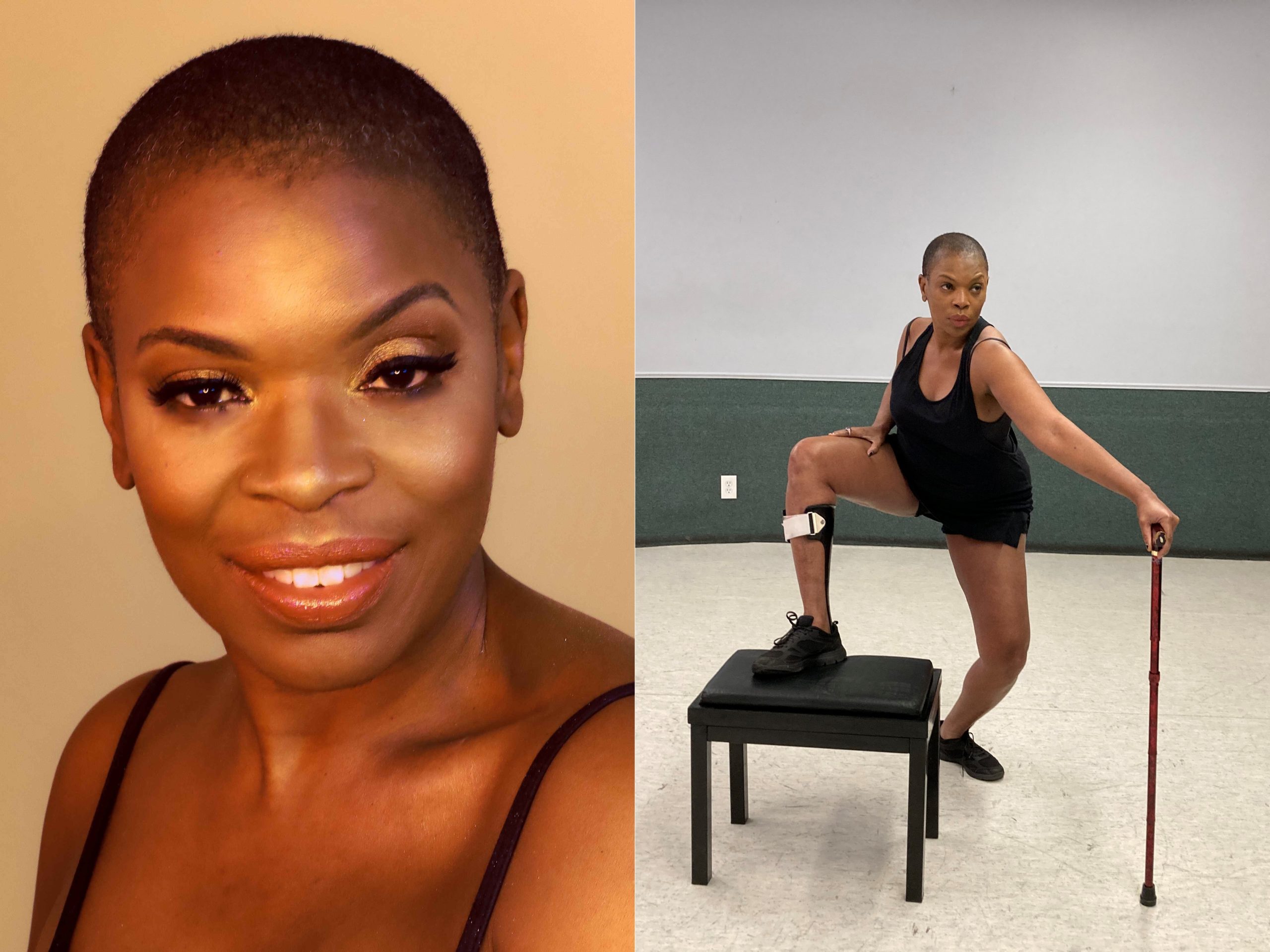

By D. Kevin McNeir
Special to the AFRO
Zazel-Chavah O’Garra, born and raised in New York City, remembers how her immigrant parents from the West Indies shared encouraging stories about their ancestors and passed down their traditions to help her overcome prejudice, racism and other forms of oppression.
But after being diagnosed with a brain tumor at 38, she found herself drowning in unchartered waters. Then, drawing upon the strength of and stories about other Black women who had made a way out of no way, and with a strong support team, the former dancer, model and actress doggedly refused to let her disability determine her future.

Photo courtesy Zazel-Chavah O’Garra
“My career was going along well with contracts with both Wilhelmina Models and CESD Talent Agency when I began to have severe headaches, hot flashes and surges, which I later learned were actually small seizures,” O’Garra said, noting that it’s been 24 years since she underwent a 12-hour surgical procedure to remove a benign tumor located on the left side of her brain the size of a golf ball.
“When I regained consciousness following the surgery, my right side was completely paralyzed, my speech was impaired, and the neurosurgeon’s prognosis was far from optimistic. But even while I was in recovery and realized that physically I was no longer the same, my brain was still working overtime. The women in my life surrounded me and we agreed that God allows things to happen for a reason and that God had more work for me to do.”
She continued, “So, while I remain under periodic medical care and have serious side effects, I’m living a good life, contributing to my community, thriving in a positive relationship, and attempting to encourage other women with disabilities to remain positive and to seek new ways to live out their dreams.”
Still, O’Garra admitted that remaining positive and maintaining her self-confidence continues to be a daunting and difficult process, not because of her own fears and doubts, but because of the ways others – many who look just like her – have treated, or more accurately, mistreated her.
Prejudice comes from all sides for those within disabled community
“I remember telling my mother, If I didn’t have high self-esteem, I would have been a prime candidate for suicide,” O’Garra said, citing numerous examples of how she and other disabled people are often treated.

“Just hours after I awoke from surgery, a few of the nurses were looking at my portfolio and said, in my presence, how sad it was that I was no longer beautiful, no longer graceful and elegant, no longer a person who could live a productive life. But I knew better.”
Zeesy Schnur, executive vice president of the Brain Tumor Foundation, based in New York City, often calls upon O’Garra, who serves as a spokesperson for the Foundation, advocating for more financial support, encouraging others impacted by brain tumors, and touting the importance of more African Americans participating in clinical trials.
“Since our founding in 1988, we have worked with patients and their families in efforts to navigate the maze of medical issues, holding their hands as they look to the experts while facing anxiety and fear,” Schnur said.
The health advocate said the statistics on brain cancer can often be surprising to the average person.
“It’s a complicated issue because while the public views brain tumors as rare the facts say otherwise. In truth and to many people’s surprise, more than 1 million Americans are currently living with a brain tumor diagnosis [according to the American Brain Tumor Association]. And while we still do not know the cause of brain tumors, just over 94,000 will receive a primary brain tumor diagnosis this year [according to the National Brain Tumor Society],” Shnur said.

(Courtesy photo)
“Zazel was fortunate because her tumor was benign, not malignant, and therefore more treatable even though she – as is usually the case – will have to contend with a host of side effects for the rest of her life. What matters most in one’s recovery and their ability to handle the impact of a brain tumor is attitude. Zazel still dances, goes out and has fun, and enjoys talking to and being around others. I’ve seen her in action and she has a rare and amazing quality. She refuses to be defined by her disability and sees the world in a positive way.”
O’Garra said while she’s always been a gregarious person, she painfully realized that as a disabled woman, she was viewed and treated differently than before her brain tumor.
“I could write a book about the challenges I have faced to find love and companionship,” she said laughing softly. “I once prided myself as being a diva, a femme fatale. But that was the old me. Now, I have a limp, I wear a brace, I walk with a cane, and my right side is still partially paralyzed.
“After I explain what happened, a lot of men either want to meet me behind closed doors or decide that I’m not worth the trouble at all. Even when I go back home to the West Indies to visit relatives and friends, I’m looked at like I’m a freak. Some people are even afraid to get close to me like they may catch something. It’s not easy and it hurts a lot. But I hold my head up high and I ignore, as best I can, the ignorance of others.”
In her more vulnerable moments, O’Garra said she relies on a small cadre of women on whom she has learned to lean and who understand her frustrations, including her older sister Kathy, an accomplished judge in the state of New York, and Dr. Donna Walton, an author, actor and advocate whose work focuses on the intersection of disability, race and representation.

(Photo courtesy Donna Walton)
Walton, who became disabled at 18 when she was diagnosed with a rare form of bone cancer that required the amputation of her left leg above the knee, both whispered and shouted in O’Garra’s ear, encouraging her to reclaim her life.
O’Garra credits her friend with being that rare ship in the storm. Walton, meanwhile, said their friendship represents what can happen when the disabled refuse to be diminished.
“The moment after the amputation, my life was reshaped, forcing me to confront a world that wasn’t designed with me in mind,” Walton said. “My family was my foundation, and while they didn’t always have the language for what I was experiencing, they had love and that sustained me.
“Over time, I found support in mentors, friends, and eventually a community of Black disabled women who understood the complexity of my journey. Support, for me, has always been about who sees you fully and helps you imagine a future beyond the moment of crisis. As two women with disabilities, Zazel and I understand each other in ways that don’t require explanation. She’s a force – an artist, a visionary, a woman who moves with grace and fire. She inspires me, challenges me and affirms the importance of community. Her presence in my life is a gift.”
Yes, even those with disabilities can dance
Nowadays, at least from 9 a.m. to 5 p.m., O’Garra works as a licensed social worker, assisting and supporting those with traumatic brain injuries or who are suffering from chronic illnesses.
But that’s not all. During the early stages of her recovery, upon the advice of her friend Donna, she agreed to speak and dance for Brain Tumor Awareness Day in New York City. She said in the midst of her performance she was reborn.
“I discovered that even with my disability, I could still be a dancer,” O’Garra said. “On stage, even while in a chair, I lifted my head, felt my face light up, and danced. I received a standing ovation. People were amazed – many could not believe what I had accomplished.”
O’Garra’s creative juices began to flow and 10 years ago, she founded the ZCO Dance Project – a physically integrated dance company composed of dancers with physical and mental disabilities. The dance company has performed at theaters in New York City and in other cities along the East Coast.
“We recently performed at The Tank in Manhattan with two live performances for an evening of dance theater in collaboration with the Deaf Music Ensemble,” she said. “Our program, ‘Invisible/Visible: Telling It Like It Is,’ opened with spoken word delivered by Gha’il Rhodes Benjamin. And with choreography conceived by Chris Heller, we took the audience on a theatrical journey which seamlessly connected expressive movement, music, and integrated sign language into one powerful statement.
“I hope those who see us perform will be more open-minded and understanding of individuals who live with mental or physical disabilities. I pray that they will be inspired by the power, presence and possibilities our performers bring to the stage. Either way, we refuse to allow the short-sightedness of others or the disabilities with which we live to define us.”
For more information about ZCO Dance Project, or to reach O’Garra, email her at zcodanceproject1@gmail.com.
The post Brain tumor survivor reclaims her life, reshapes art and advocacy beyond disability appeared first on AFRO American Newspapers.