“You Can’t Cancel History”: I Kissed a Girl cast on cancellation and the fight for lesbian representation
This Lesbian Visibility Week, the cast of the beloved sapphic dating show come together with SLT Studios to reflect on sapphic representation, and the community and cultural impact the show leaves behind The post “You Can’t Cancel History”: I Kissed a Girl cast on cancellation and the fight for lesbian representation appeared first on BRICKS Magazine.
 Black News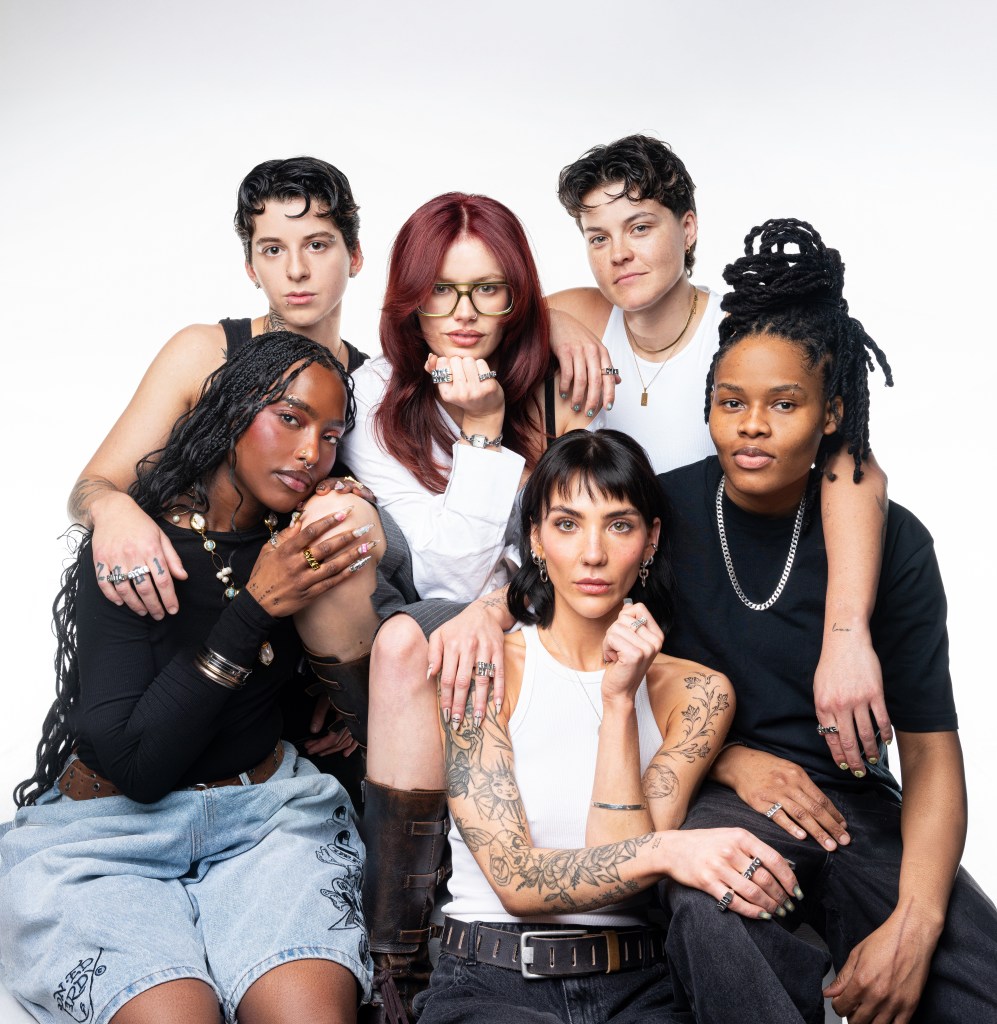
CREATIVE DIRECTOR Rupert McMinn
PHOTOGRAPHER Danni Jones
PHOTOGRAPHY ASSISTANT Lúa Maro
PRODUCERS Joss Peter & Amy Spalding
PRODUCTION PARTNER ALYGN Media
VIDEOGRAPHERS Naomi Ellison & Amy Spalding
MUA Clara Milnes
HAIR STYLIST Dan Adams
STUDIO Flash Studios
PRODUCTION CREDITS Lucy Spalding & Oscar Goldblatt
When BBC’s I Kissed A Boy was first announced in May 2022, it was celebrated as a milestone for UK reality TV, and the broadcaster was applauded for launching a format centred entirely on gay relationships, rather than retrofitting representation into a straight show. However, it was not until the show’s second season, I Kissed A Girl, released in 2024, that the series received widespread audience and critical acclaim, winning Best Media Moment at the DIVA Awards and a GLAAD Award nomination.
Hosted by pop icon turned resident cupid, Dannii Minogue, the show hinged on a simple but effective twist: 10 contestants are matched and meet for the first time with a kiss, before deciding whether to pursue that connection or explore others within the group. From there, the format unfolded across a shared Love Island-style villa – this time, a masseria in Puglia – where relationships are tested through dates, recouplings, and the gradual introduction of new arrivals. Unlike popular dating shows for straight contestants, however, the show was driven by a different emotional dynamic: rather than relying purely on competition or spectacle, both I Kissed A Boy and I Kissed A Girl shone a light on open communication, connection among various gay communities, and the natural fluidity of queer dating.
“Growing up, you might have seen lesbians on TV, but in a stereotypical way – lots of trauma, lots of negative stereotypes,” says former contestant Thea Hallow. “I Kissed a Girl showed lesbians beyond their sexuality. It was just a group of women who happened to also be lesbian. You were just existing and living. Not weird, not niche; just normal.”

Growing up, you might have seen lesbians on TV, but in a stereotypical way – lots of trauma, lots of negative stereotypes. I Kissed a Girl showed lesbians beyond their sexuality. It was just a group of women who happened to also be lesbian. You were just existing and living. Not weird, not niche; just normal.
Thea
Tragically, the BBC axed the franchise in March, citing “funding challenges” just weeks after releasing a teaser trailer for its final series. This prompted outrage online, with nearly 15,000 viewers signing a Change.org petition demanding the BBC recommission the shows, and a Freedom of Information request has also been submitted to clarify how much of the licence fee is actually being allocated to LGBTQIA+ programming, and how those decisions are being made.
“It feels like – of course it’s happening again,” says former contestant Amy Spalding. “We are used to, as queer people, seeing our characters killed off on TV. We’re used to seeing tragic plot lines. So the fact that we finally kind of got it, and then it’s been snatched away – it feels so typical. It’s also just heartbreaking.”
It feels like – of course it’s happening again. We are used to, as queer people, seeing our characters killed off on TV. We’re used to seeing tragic plot lines. So the fact that we finally kind of got it, and then it’s been snatched away – it feels so typical. It’s also just heartbreaking.
Amy

The BBC’s reported “funding challenges” include forking out for a 4-week stay at the Polignano masseria, which would cost members of the public approximately £80,000 if replicating a 4-week stay for all 8 bedrooms across the villa. While undoubtedly expensive, this is a mere fraction of the £1.6 billion BBC budget for original TV commissions, and presumably much less than is spent on other shows – such as 3-4 weeks in Aldross Castle for The Traitors, which costs an eye-watering £45,000 for a 2-day wedding package. And, of course, they could simply relocate I Kissed A Girl to a more local filming location, if international travel was the sole concern.
“It seems like a first world problem – a show’s been canceled – but it’s showing a bigger picture,” Thea adds. “Every minority is getting hit: lesbians are being hit, trans people have been hit. There are literally laws against trans women in the UK. This just shows how society is regressing when we’re supposed to be progressing.”
As the UK’s first lesbian-only dating show, I Kissed a Girl didn’t just centre queer women, but it let the real, often unspoken dynamics of sapphic dating unfold without softening them for a mainstream gaze. Across the season, attraction wasn’t treated as some utopian free-for-all: it was shaped by presentation, by desirability politics, by the same internalised hierarchies that exist within queer spaces themselves. Amy’s experience, as someone who was constantly flirted with but rarely picked, exposed the myth that queer dating exists outside of these patterns. Despite clear chemistry and connection, she was repeatedly repositioned as a friend, and was forced to navigate the gap between attraction and commitment in real time.
“You can’t be what you can’t see,” Amy explains. “Little queer kids who don’t even know they’re queer yet – if they can’t see that on TV, it’s going to prolong such a heart-wrenching experience of self-discovery. Having it in mainstream media is just invaluable; it is the most important thing.”

Not a lot of people are lucky enough to be out in the open. For some people, it’s not safe, especially living in certain households. Sometimes this representation is all we have. Online, in the media, in movies and TV shows. That’s their safe space.
Fiorenza
For other former contestants, the representation also provided their first safe space to explore their sexuality safely in rooms of only single, sapphic women outside of traditional queer environments. Fiorenza Coccoza says she came out during lockdown, meaning she didn’t get to discover her queer identity in community spaces. “Until the show – it opened up a whole different world for me; meeting a big variety of queers,” she shares. “Not a lot of people are lucky enough to be out in the open. For some people, it’s not safe, especially living in certain households. Sometimes this representation is all we have. Online, in the media, in movies and TV shows. That’s their safe space.”
At the same time, the show offered a kind of radical honesty that rarely survives the edit in straight formats. We saw this in the show’s final chemistry test, when Meg admitted she was falling in love with Eva, only for Eva to gently but clearly not meet her there, spooked by the weight of it. This played out again in Cara and Georgia’s relationship, which for weeks felt inseparable, until small fractures around communication quietly unravelled into an off-screen split. These weren’t tidy narratives or producer-driven twists; they were recognisable patterns of queer dating explored openly and without judgement; where feelings escalate quickly, and the distinction between romance and friendship is frequently muddied.
“There were so many different girls, on very different parts of their gay journey, that everyone could see themselves in someone,” says former contestant Georgia Robert, “Maybe not completely – but you’d be like, ‘okay, this is a bunch of girls, they’re quite cool, they’re all young. I can see it.’”
It’s frustrating and annoying that another gay show is getting cancelled, but the response has been almost like a rallying battle cry – like, no, fuck this, we’re actually going to do something about it. People are saying: you’re not cancelling lesbians. It’s not happening.
Georgia

It was this same honest representation that made the following season of I Kissed a Boy feel equally as important to its audience. The inclusion of Lars Fellows, the show’s first trans contestant, wasn’t played as a tokenised “moment”, but as part of an already expanding ecosystem of queer visibility that understands identity, attraction, and connection as fluid. Lars shared his concerns about dating within gay communities, and was met with openness and understanding in a moment that felt genuinely groundbreaking for British television. Both I Kissed a Boy and I Kissed a Girl have pushed surface-level representation into something far more meaningful: queer intimacy with all the messy, specific, and truly authentic moments kept in.
The show’s numbers alone make the decision hard to justify. The first episode of I Kissed a Girl pulled in 163,000 viewers, more than double (103% higher) than the average for that slot, with 7-day consolidated figures rising to 215,000, boasted the highest proportion of viewers under 35 on BBC iPlayer during its run and significantly outperforming expectations for a BBC Three release. Beyond linear viewing, the show generated over 15 million social impressions, pointing to a level of cultural traction that extends far beyond overnight ratings.
And yet, the BBC has chosen to axe the franchise before the second series has even started airing, effectively making a judgement call before the full scope of audience growth, catch-up figures, and long-tail engagement has had a proper chance to land. It’s a disappointing move that suggests queer programming is still being treated as expendable, rather than as part of the broadcaster’s remit to reflect the audiences who fund it.


The show’s cancellation lands at a time when queer representation is already in steep decline: GLAAD’s 2024–25 ‘Where We Are on TV’ report found that LGBTQIA+ characters on broadcast TV have fallen by 62% since 2021-22, with lesbian characters dropping from 31% to 26% of all broadcast LGBTQIA+ representation in a single year. 41% of all LGBTQIA+ TV characters are set not to return to screens in 2026.
“It’s frustrating and annoying that another gay show is getting cancelled,” says Georgia. “But the response has been almost like a rallying battle cry – like, no, fuck this, we’re actually going to do something about it. People are saying: you’re not cancelling lesbians. It’s not happening.”
After airing, I Kissed a Girl extended far beyond the screen, turning its cast into a new wave of sapphic micro-celebrities. They aren’t distant reality stars, but visible fixtures within the community: appearing on Pride floats, at grassroots fundraisers, and across social media timelines. That proximity matters to audiences, and has sustained engagement for the show – leading to viral fan edits, as well as vital commentary on ongoing issues still faced by queer communities – giving the show a cultural afterlife that has already outlasted its runtime.
So many girls have sent us messages about getting excited for more seasons. Having that taken away – when there’s so much money being put into shows like Love Island – are we important?
Cara

“So many girls have sent us messages about getting excited for more seasons,” says former contestant Cara Kinney. “Having that taken away – when there’s so much money being put into shows like Love Island – are we important?”
To combat the cancellation, a group of former castmates – Amy, Cara, Georgia, Naee, Fiorenza, and Thea – have come together with Amy’s dykeonic jewellery brand SLT Studios – best known for its loud-and-proud sterling silver rings – to celebrate authentic sapphic representation this Lesbian Visibility Week.
Their focus now is to continue to push for improved representations of queer women across media. “The Black lesbian community needs more representation; you don’t really see us a lot on TV,” says Naee Stoute. “On I Kissed a Girl, I was the only one classified as a stud: a Black, masculine-presenting woman.”

The Black lesbian community needs more representation; you don’t really see us a lot on TV. On I Kissed a Girl, I was the only one classified as a stud: a Black, masculine-presenting woman.
Naee
“This cancellation comes at such a bleak time when it comes to queer rights,” Amy continues. “Our trans siblings are literally having their rights stripped away from them. This is just another example of the kind of right-wing takeover that’s happening. It’s heartbreaking, but we have to keep going. We can’t accept it. We can’t settle for it. We have to be more visible than ever.”
“Nobody’s free until we’re all free,” adds Thea. “We need to collectively push for everyone’s freedom: trans people, people of colour, disabled people. Then we stop being a minority group and become a more powerful group. You can’t shut us down.”
Sign the Change.org petition here, and catch up on I Kissed A Girl here.
Enjoyed this story? Help keep independent queer-led publishing alive and unlock the BRICKS Learner Platform, full of resources for emerging and aspiring creatives sent to you every week via newsletter. Start your 30-day free trial now.
The post “You Can’t Cancel History”: I Kissed a Girl cast on cancellation and the fight for lesbian representation appeared first on BRICKS Magazine.