What Julius Malema’s 5-Year Sentence Really Means for the People
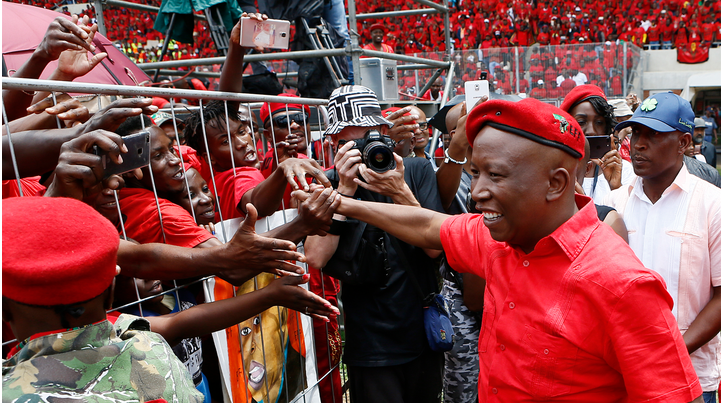
The sound outside the KuGompo City Magistrate’s Court wasn’t just noise; it was a heartbeat. If you stood in the middle of that sea of red berets on April 16, you could feel it—the rhythmic chanting of “Igama lama khosikazi” and the defiant energy of thousands who believe their champion is being cornered. Julius Malema, [...]
 Black News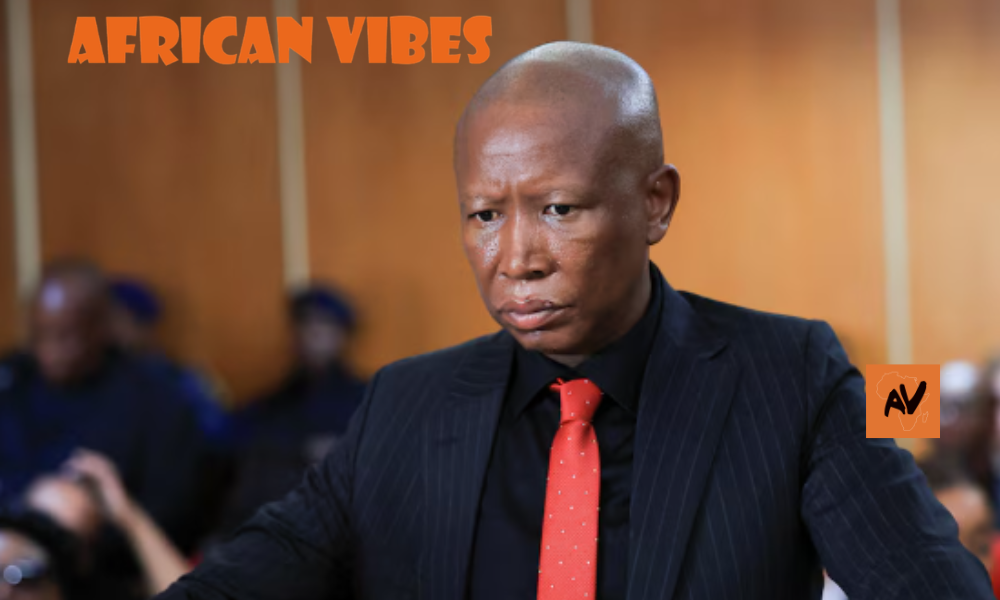

The sound outside the KuGompo City Magistrate’s Court wasn’t just noise; it was a heartbeat. If you stood in the middle of that sea of red berets on April 16, you could feel it—the rhythmic chanting of “Igama lama khosikazi” and the defiant energy of thousands who believe their champion is being cornered.
Julius Malema, the “Commander-in-Chief” of the Economic Freedom Fighters (EFF), has spent his life dancing on the edge of political storms. But this time, the wind didn’t come from a political rival or a heated debate; it came from the quiet, cool gavel of the judiciary. Magistrate Twanet Olivier’s five-year prison sentence for Malema is a moment that feels deeply personal for South Africans on both sides of the red line.
The Moment That Changed Everything
We all remember the video from 2018. It was the EFF’s 5th birthday, a high-octane celebration at Sisa Dukashe Stadium. In the heat of the moment, Malema fired an assault rifle into the sky. To his supporters, it was a symbol of revolutionary spirit—a “celebratory shot” for a movement that refuses to back down. To the court, it was a dangerous breach of the laws meant to keep every South African safe.
The defense argued it was a toy, a prop in a grand political theater. But Magistrate Olivier wasn’t looking at the theater; she was looking at the law. Her ruling was clinical yet heavy:
“It wasn’t an impulsive act. It was the event of the evening.” In that moment, the “toy gun” argument fell silent, replaced by the weight of a five-year sentence for unlawful possession and reckless endangerment.
More Than a Politician: The “Juju” Factor
Why does this hurt so many people? Because for the young man in a township with no job, or the student struggling for a future, “Juju” is more than a politician—he’s the one who says the things no one else dares to say. He represents a brand of African progress that is loud, unapologetic, and focused on land and dignity.
When the EFF calls this ruling “malicious,” they aren’t just talking about a court case; they are expressing a deep-seated fear that the system is designed to swallow those who try to change it. On the flip side, many South Africans see this as a moment of hope—a sign that the rule of law is finally colorblind and status-blind. It’s a messy, emotional tug-of-war over what “justice” actually looks like.
ALSO READ: Did South Africa Just Signal the End of Western Supremacy by Rejecting the U.S. Gavel?
The 2026 Shadow
The timing is like something out of a political thriller. With the 2026 local elections breathing down our necks, the EFF is facing a future where their North Star might be behind bars. Under the Constitution, a sentence longer than 12 months means you can’t sit in Parliament.
- The Big Question: Can the EFF survive without Malema’s fire?
- The Martyr Effect: Will this sentence actually make him stronger, turning a courtroom defeat into a ballot-box victory?
A Long Road Ahead
The “Commander” isn’t going anywhere just yet. His legal team, led by Advocate Lawrence Hodes, immediately secured leave to appeal. For now, he remains a free man, a Member of Parliament, and the face of the Red Berets. This legal battle could stretch on for years, moving through higher courts while the country watches with bated breath.
Conclusion: A Defining Moment for Democracy
The sentencing of Julius Malema is a bittersweet moment for the continent. On one hand, it demonstrates the independence of the South African judiciary—a hallmark of African political leaders being held to account. On the other, it highlights the deep polarization within a nation still grappling with the scars of its past.
As the “Commander-in-Chief” prepares for his next battle in the higher courts, the rest of Africa watches. This is not just a trial about a firearm; it is a trial about the soul of South African democracy and the compromises required to ensure that the law remains the ultimate equalizer.